
Last updated November 15, 2026
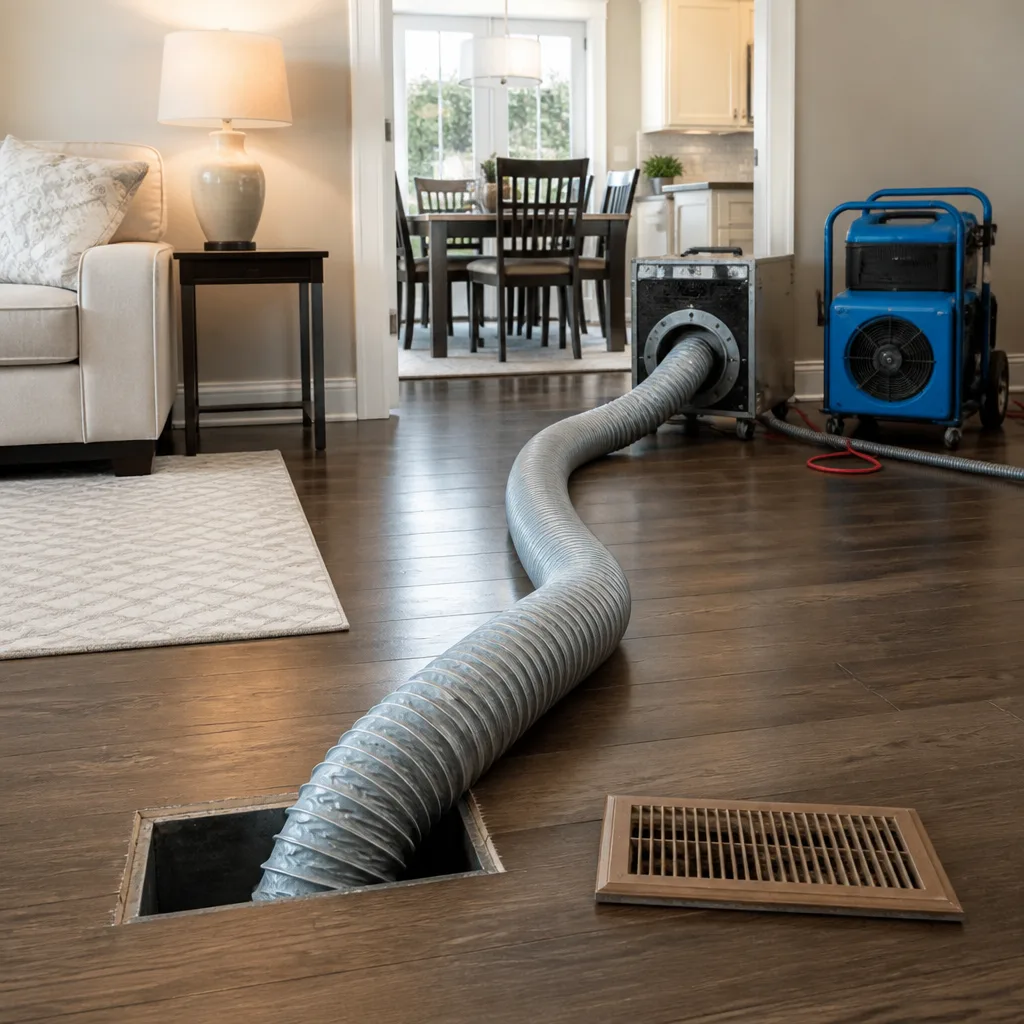 Whole-home duct cleaning
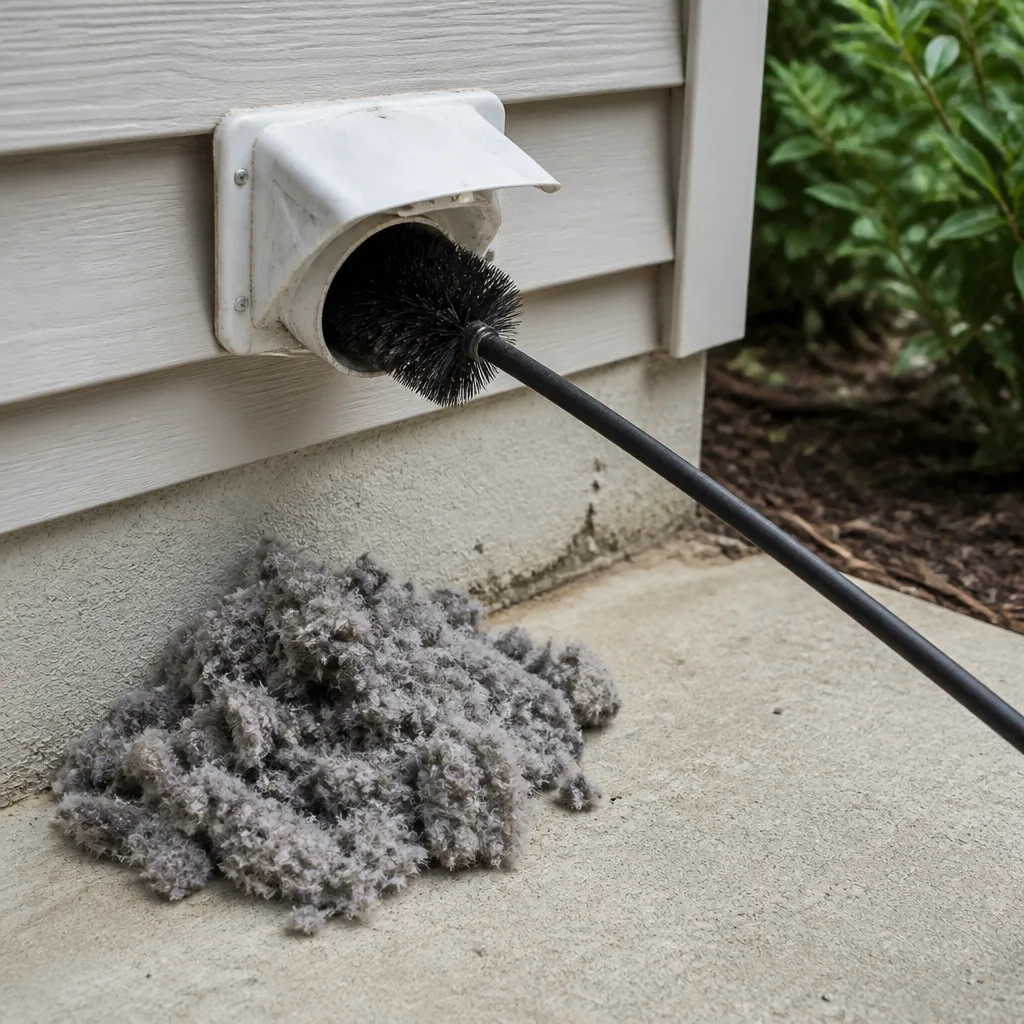 Dryer vent cleaning
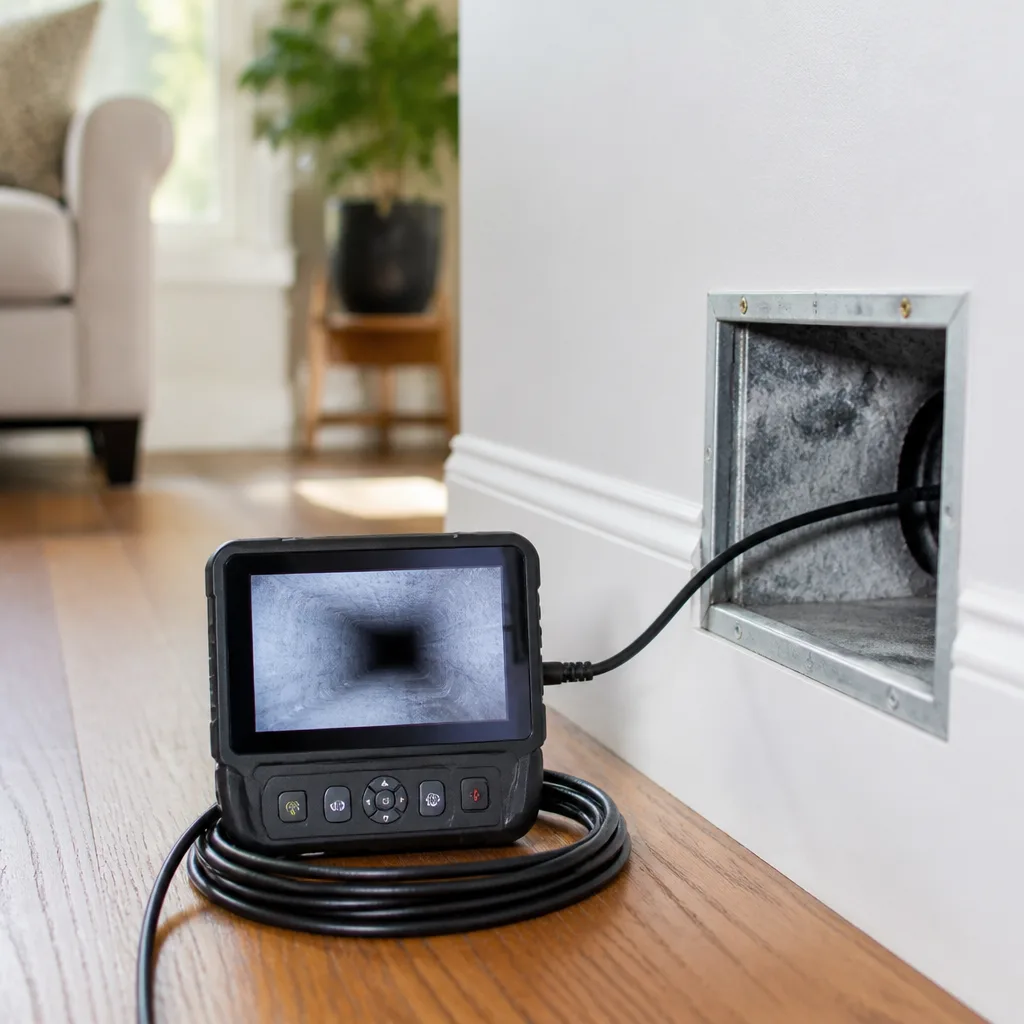 Camera inspection
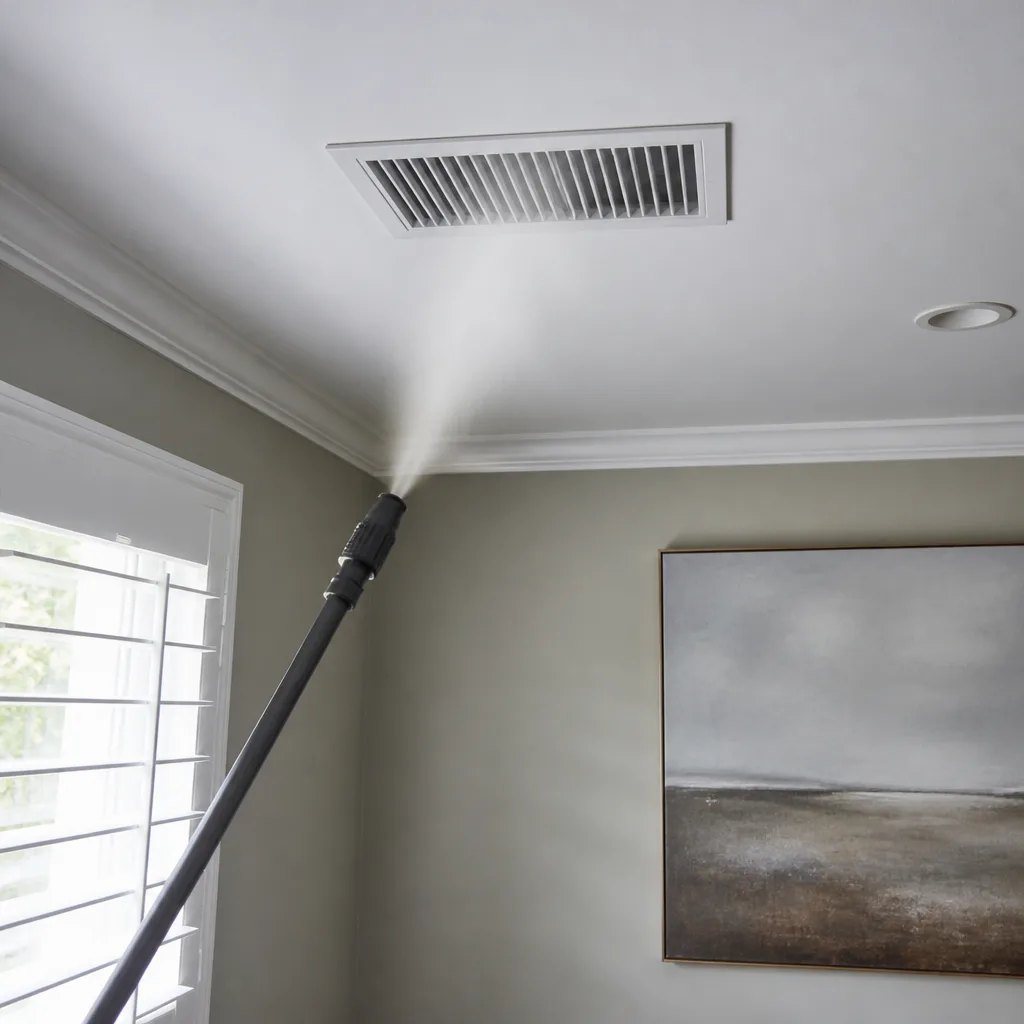 Sanitizing & deodorizing
Whole-system duct and dryer vent check with before-and-after photos - you see exactly what came out of your vents
That "$99 whole-house special" is a bait ad - the real number appears once they are in your hallway, or the "clean" is a shop-vac at the register. We photograph the inside of your ducts before and after instead.
Air Duct Cleaning Warning Signs: A Boulder Homeowner’s Reference Guide
Dust on your supply registers isn’t a warning sign. It’s normal. Every register collects household dust between cleanings, and a thin film on the grille tells you almost nothing about what’s happening inside the duct system. The signs that actually point to a duct problem are subtler: airflow that favors one room and starves another, an odor that shows up only in the first ten minutes of a heating cycle, a blower that runs a little longer each month. This guide maps those signs to probable causes, the tool or test that confirms each one, and what the fix really involves. We’ve written it as a diagnostic reference for Boulder homeowners who’d rather understand the system than guess at it.
Quick Answer
The warning signs that most reliably indicate a real duct problem in Boulder are directional airflow imbalance between rooms, odors that appear only during the first 10 to 15 minutes of operation, an unexplained 15 to 20 percent rise in heating costs, and the presence of fine gray dust on horizontal surfaces near supply vents after smoke events. Visible dust on registers and a musty basement smell are less diagnostic on their own. Each sign maps to a specific cause, and a professional can confirm which one you’re dealing with using negative-air pressure equipment and camera inspection before recommending cleaning or repair.
Styles & brands we work with
- Whole-home duct cleaning
- Dryer vent cleaning
- Camera inspection
- Sanitizing & deodorizing
Table of Contents
- Why Odor Timing Is the Most Useful Diagnostic You Have
- Airflow Imbalance Between Rooms: The Tissue Test and What It Reveals
- The Post-Wildfire Smoke Symptom Cluster in Boulder
- What an Energy Bill Increase Actually Confirms
- When a Duct Problem Crosses From Cleaning Into Repair
- Mold, Moisture, and the Contamination-Level Call
- Common Mistakes to Avoid
- When to Call a Professional
Why Odor Timing Is the Most Useful Diagnostic You Have
Most homeowners describe a smell as “musty” and stop there. That’s not a diagnosis. When the odor appears tells you far more than how the odor smells. Two homes can have identical musty air and completely different problems.
A musty smell that shows up in the first 10 to 15 minutes of the furnace or air conditioner running, then fades, usually points to surface debris. Dust, pet dander, and dried organic material have settled on the heat exchanger or the evaporator coil. When the system starts, that coating heats or condenses and releases a smell. Once the surfaces reach operating temperature, off-gassing slows and the odor drops. This is a debris-burnoff pattern, and it responds well to cleaning the coil and nearby plenum surfaces.
A musty smell that persists for the entire cycle, or gets stronger the longer the system runs, is a different problem. That pattern is consistent with an active biological colony somewhere in the system: porous duct liner, wet fibrous insulation, or a condensate pan that never fully drains. Persistent odor during operation means whatever is producing it is being continuously reintroduced to the airstream.
What each pattern suggests
- Odor only at startup, gone after 15 minutes: surface debris on the heat exchanger or coil. Cleaning scope, not repair scope.
- Odor throughout the cycle, worse with humidity: moisture source or active growth in duct liner or insulation. Needs inspection before cleaning.
- Odor only in one room, all cycle: local problem near that branch run. Look at the takeoff, boot, and register connection.
- Chemical or solvent odor: not a duct issue. Stop using the system and have the source checked.
To confirm a persistent-odor diagnosis, a professional uses a negative-air machine in a closed-system configuration to isolate a branch, then compares particle counts and odor before and after. We run a Nikro negative-air and HEPA setup for exactly this reason: it lets us establish whether the odor source is inside the duct run or in the equipment itself. Boulder homes with basement or crawlspace duct runs are especially prone to moisture-driven odor because the runs stay cooler and condensation forms on the outside of uninsulated sections.
What you can check without opening anything
- Run the fan only (no heat, no cooling) for 15 minutes and note whether the odor appears. Fan-only isolates airflow from combustion and cooling.
- Note the exact minute the odor peaks and when it fades. Write it down. That timing is diagnostic.
- Check every room separately. This tells you whether the source is trunk-level or branch-level.
- Look at the return grille for dark staining around the edges, which can indicate long-term moisture at that location.
If the pattern is persistent rather than startup-only, the next step is not cleaning. It’s finding the moisture. Cleaning a system with an active moisture source removes the symptom briefly and it returns.
Airflow Imbalance Between Rooms: The Tissue Test and What It Reveals
Every duct system delivers somewhat uneven airflow. One bedroom gets a little more than the one across the hall, and that’s normal. What is not normal is a directional asymmetry: strong flow on one side of the house, weak or almost nothing on the other. That pattern points to a physical restriction or a disconnection, not a balance issue.
The tissue test: what to do at each register
- Set the system to fan only so heating or cooling isn’t cycling on and off.
- Hold a single square of lightweight tissue flat against the supply grille with two fingers at one corner and let go.
- Note how the tissue behaves: pulled tight and held flat, fluttering slightly, or falling away.
- Repeat at every supply register in the house and rate each one “strong,” “weak,” or “none.”
- Write the results on a simple floor plan sketch. The pattern matters more than any single reading.
If three registers on the east side of a home are strong, and the two in a converted basement bedroom are weak, the tissue test has done its job by telling you the problem is upstream of those two registers rather than in the room.
Reading the pattern
- One room weak, all others strong: branch duct restriction, closed damper, or a crushed flex run. Common in older Boulder homes where a run has been pinched during a remodel.
- An entire side of the house weak: main trunk damage, a disconnection at a takeoff, or a collapsed section of duct liner.
- All registers weak: not usually a duct problem. Look at the filter, blower wheel, and return path first.
- Some registers pushing air out while others pull air in: duct leakage at a seam or a disconnected run. When ducts leak, the system can pull air from unconditioned space in one area and push it out in another, and the room with the return-plenum leak can feel like a supply is blowing back into it.
Imbalance is one of the signs that most often leads to a duct repair, not a duct cleaning. A pinched flex run isn’t going to be fixed by running a brush through it. That’s why air duct cleaning should always be paired with an inspection that identifies structural issues before the cleaning equipment is even connected. Cleaning a system with a crushed run just moves dust around it.
The Post-Wildfire Smoke Symptom Cluster in Boulder
Boulder sits in a geography where wildfire smoke has become a seasonal reality. The smoke doesn’t just affect outdoor air. It enters the duct system through the return air path, through leaks in the duct envelope, and through door and window gaps that open the envelope. Once inside, fine particulates settle on duct walls, on the blower wheel, and on the evaporator coil. They don’t simply air out.
The cluster to watch for is specific. It’s not the same as ordinary dust buildup.
The four signs of smoke-related duct contamination
- Fine gray dust on horizontal surfaces near supply vents. Not regular household dust, which is fuzzy and brownish. Smoke-derived particulate is fine, gray, and tends to collect on the top edge of baseboards, on windowsills near vents, and on top of furniture below the registers.
- Persistent particulate smell during heating cycles. This is the odor of fine ash and smoke residue on the heat exchanger and plenum surfaces being warmed. It’s distinct from a musty smell and usually described as “campfire” or “burning” light reheat.
- Eye and throat irritation that doesn’t track with outdoor air quality. If the outdoor air quality index is good but you’re still irritated hours after coming inside, the source may be in the system, not the sky.
- HVAC filter clogging faster than usual. If a filter that normally lasts a standard change interval is visibly loaded well before then, fine particulate is entering the system at a higher rate than expected.
Smoke-related contamination is one of the situations where we bring in Abatement Technologies equipment. That gear is designed for contamination-level indoor air quality work and can handle fine particulate and mold spore capture that standard cleaning setups aren’t built for. The setup is a closed-system negative-air configuration, which means the return air path is sealed into the machine so the airstream is filtered rather than released into the room while the contact cleaning is happening.
One note about filters. A Honeywell or Aprilaire whole-home filtration unit will capture a lot of fine particulate, and if your home has one, the filter media may be doing more of the work than you realize. But the filter only catches what passes through it. Particulate that has already settled on duct surfaces needs to be physically removed, which is what the Rotobrush contact-cleaning system does: it agitates the duct wall while extracting material into a HEPA-filtered airstream.
If you live near the foothills or in west Boulder, where smoke events tend to deposit more heavily depending on wind direction, checking the duct system after a significant smoke season is a reasonable annual habit. It’s not urgent. It’s scheduled.
What an Energy Bill Increase Actually Confirms
An increase in heating or cooling costs is one of the most misinterpreted warning signs on every list. A high bill can mean a duct problem. It can also mean the coil is dirty, the filter is blocked, a window has failed, or the weather was simply different. The bill tells you something changed, not what.
The number worth paying attention to is a 15 to 20 percent unexplained increase, sustained across two or three comparable billing periods, with no change in household size, no new appliance, and no obvious weather explanation. That’s the delta that’s large enough to be a real efficiency loss and small enough to be missed on a month-to-month look.
How the three most common causes present differently
- Duct leakage: The bill rises gradually, and the pattern often tracks with the season: worst in the coldest months. Rooms farthest from the furnace feel colder than they should. In some cases you can hear air at a duct seam with the system running.
- Dirty evaporator coil: The bill rises mainly in cooling season. The system runs longer to reach the set point. The air coming from registers may feel slightly warmer than expected during cooling. Filter changes don’t fix it because the problem is downstream of the filter.
- Blocked filter or restricted return: The bill rises quickly and can appear in both heating and cooling season. The system runs but never reaches set point, or short-cycles. Replacing the filter usually restores performance within one cycle, which makes it the first thing to check.
Run the cost math cautiously. If you can identify which seasonal mode the bill tracks with, and the increase is in the 15 to 20 percent range, the next step is a system inspection, not a duct cleaning quote. In our experience, the diagnostic question is always “where is the loss happening” before “does this need cleaning.” A dirty system and a leaky system can look the same on a utility bill and require different work.
What confirms duct leakage
A duct leakage diagnosis usually needs a pressure test, and that requires access to the trunk and the branch takeoffs. If your home has an accessible attic or crawlspace, a technician can trace the main runs and check for disconnected joints, torn flex at the tie-ins, or mechanical damage. If the system is buried in walls, the confirmation comes from combining the bill pattern with an airflow test at the registers. That combination is what separates a duct-leak hypothesis from a coil or filter hypothesis.
When a Duct Problem Crosses From Cleaning Into Repair
Not every duct problem can be cleaned. Some need to be fixed first, and cleaning around them just moves debris into the leak. The signs that a home is in repair territory are usually visible to anyone willing to look, but most homeowners don’t know what to look for.
The repair signs
- Audible air leaks at seams. With the system running, stand near the furnace or air handler and listen. A hiss or rush at a seam or joint is air escaping. That’s a leak, not a normal operating sound.
- Visible daylight through register boots in crawlspaces or attics. Go to a supply register in an unconditioned space with the light off. If you can see daylight through the boot where it meets the duct, the connection is open. That’s air leakage straight into unconditioned space, and it’s a repair.
- Condensation on supply vents in summer. A properly insulated and sealed supply run doesn’t sweat in Boulder’s summer humidity. Condensation on the boot, register, or nearby ceiling tells you the run is either uninsulated or disconnected, letting warm humid room air reach the cold metal.
- Collapsed or pinched flex runs. Common after remodeling work where a run has been crushed behind a new finished wall.
- Visibly torn or degraded duct liner. If the interior liner has separated and is blocking airflow, cleaning equipment can make it worse.
We clean and we repair, and that matters because the two decisions are related. If a home has a disconnected takeoff in the crawlspace, the correct sequence is to reconnect and seal it, then clean. Cleaning first just moves dust into the crawlspace.
Duct repair is a separate service from cleaning. It involves reconnecting joints, resealing seams, replacing damaged sections, and restoring insulation where it’s failed. The scope is identified during inspection and confirmed before work starts. If your system has crossed into repair territory, cleaning is usually the follow-up rather than the first step.
Mold, Moisture, and the Contamination-Level Call
Mold inside a duct system is a specific scenario, and it deserves its own section because it changes the equipment and the process. It’s not a routine cleaning job. It’s a contamination-level indoor air quality situation, and the approach needs to reflect that.
What drives mold in ducts is moisture that never fully dries. In Boulder, the common sources are a leaky condensate pan, an evaporator coil that never drains, a crawlspace or basement duct run where condensation forms on the outside of uninsulated sections, or a supply run that has pulled humidity in through a disconnected joint. Whatever the source, mold doesn’t grow in dry ductwork, so the first question is always where the water is coming from.
Signs that suggest active growth rather than debris
- Persistent musty odor throughout the operating cycle, not just at startup.
- Dark staining or discoloration on duct surfaces or on the register boot, visible with a flashlight.
- Recurring allergy-like symptoms that are worse indoors and don’t resolve when outdoor allergens drop.
- Visible staining or moisture in the plenum or on the coil housing.
When we suspect active growth, we run the Abatement Technologies setup as a closed-system negative-air unit. The point of that configuration is that air from the contaminated space is filtered rather than released, and the cleaning equipment operates under negative pressure so nothing escapes into the living area while the surfaces are being worked. Rotobrush contact cleaning then agitates the duct wall material into the airstream where the HEPA capture can grab it. Guardsman protective treatments are available as part of the full-service scope if the cleaning has removed the source and the surface needs protection.
One important caveat: if you suspect a mold colony, don’t run the system to “test” the smell. Continuous operation circulates spores. Turn the system off, note the pattern of when the odor appears, and book an inspection.
For homeowners with a Honeywell or Aprilaire whole-home filtration system, the conversation is different. Those units can be part of the solution, but only if the media is clean and the unit is operating within spec. We work with both brands and can check the unit’s state as part of a broader indoor air quality assessment.
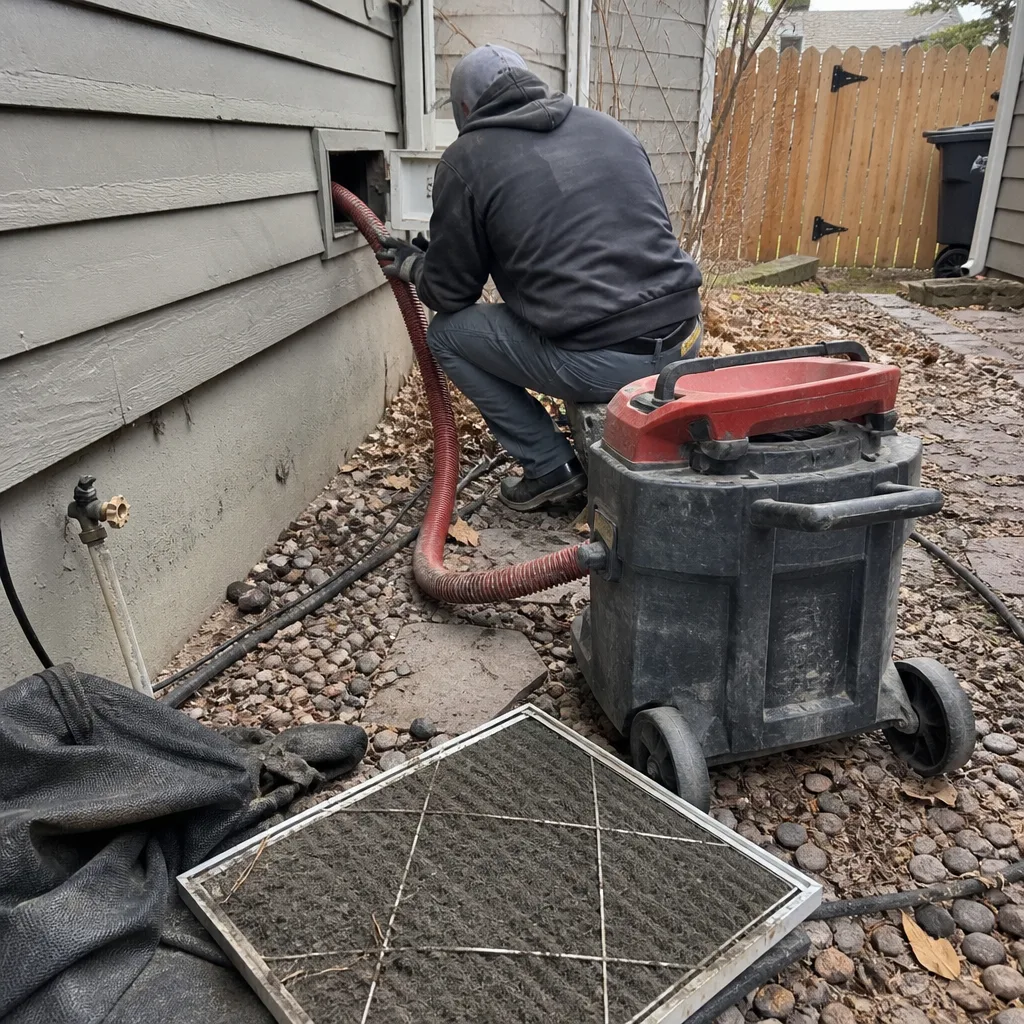
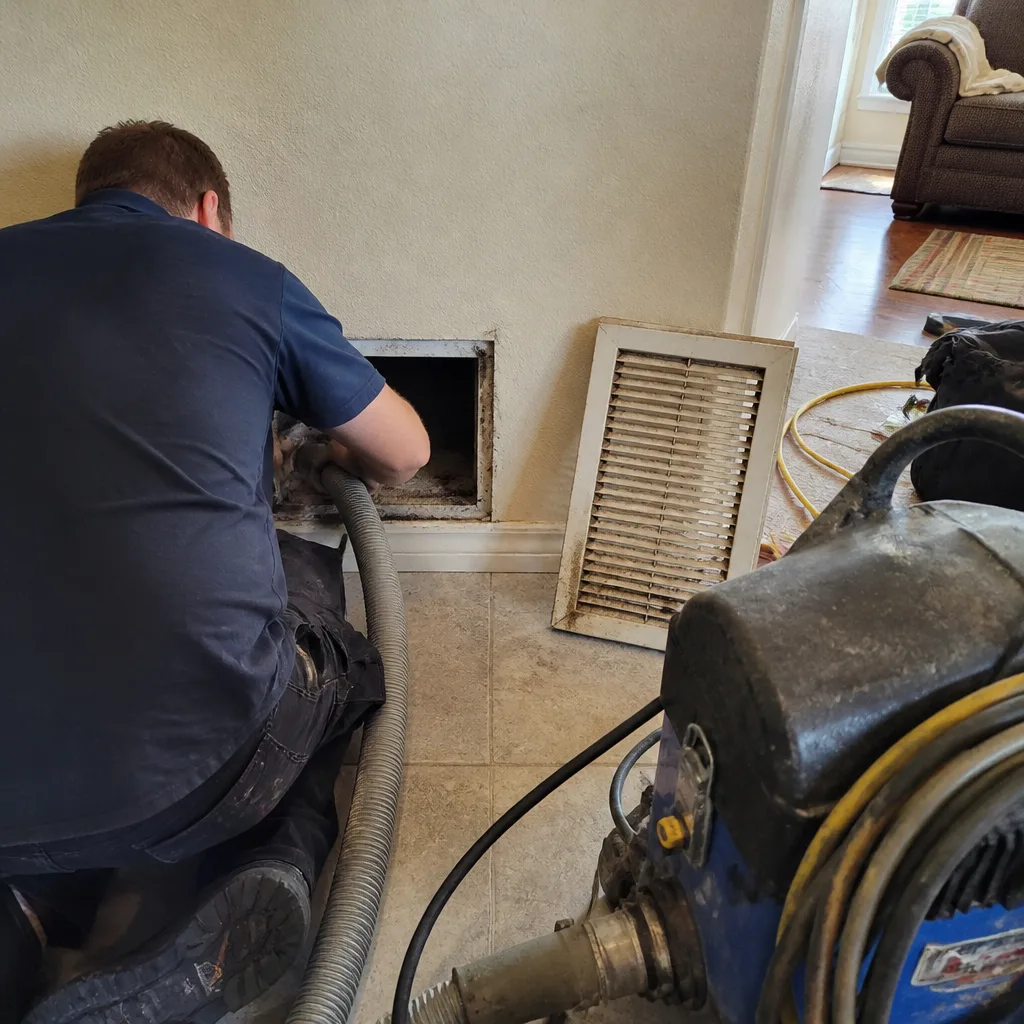
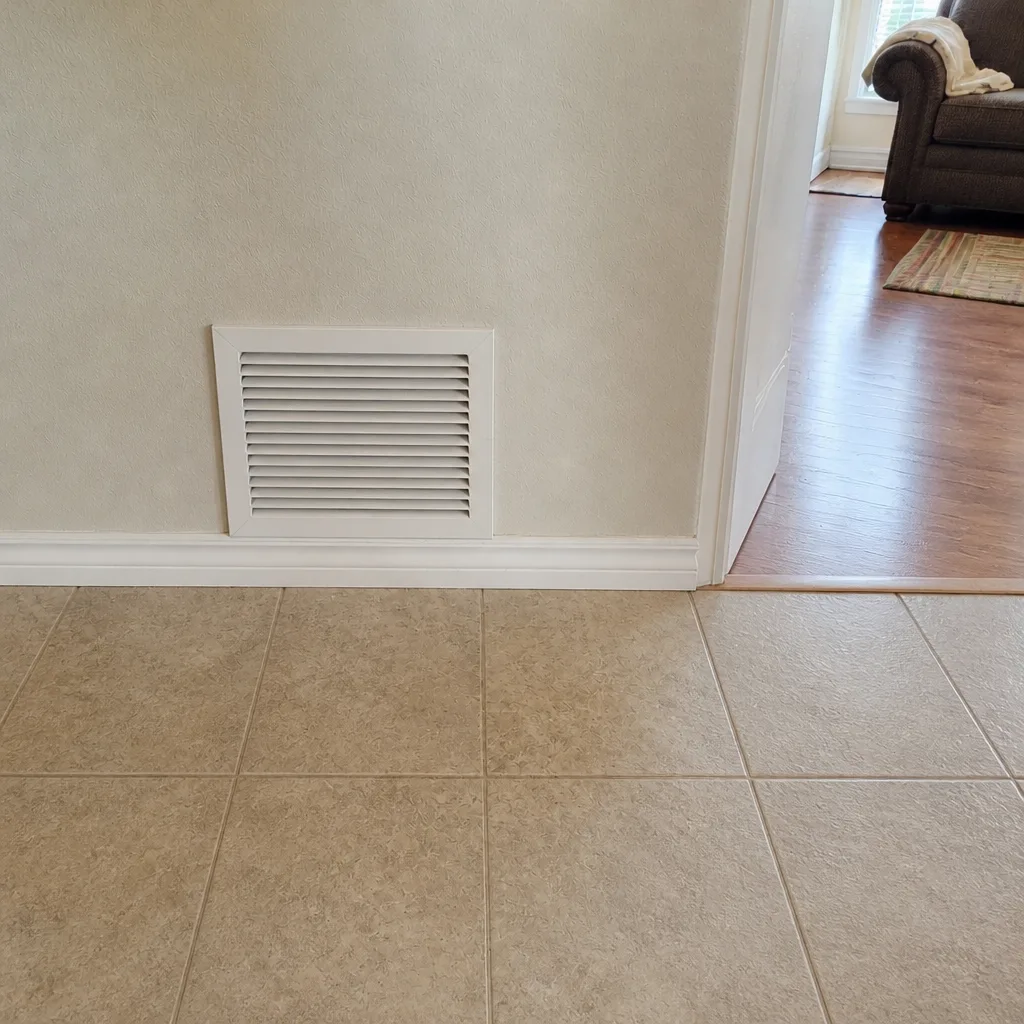
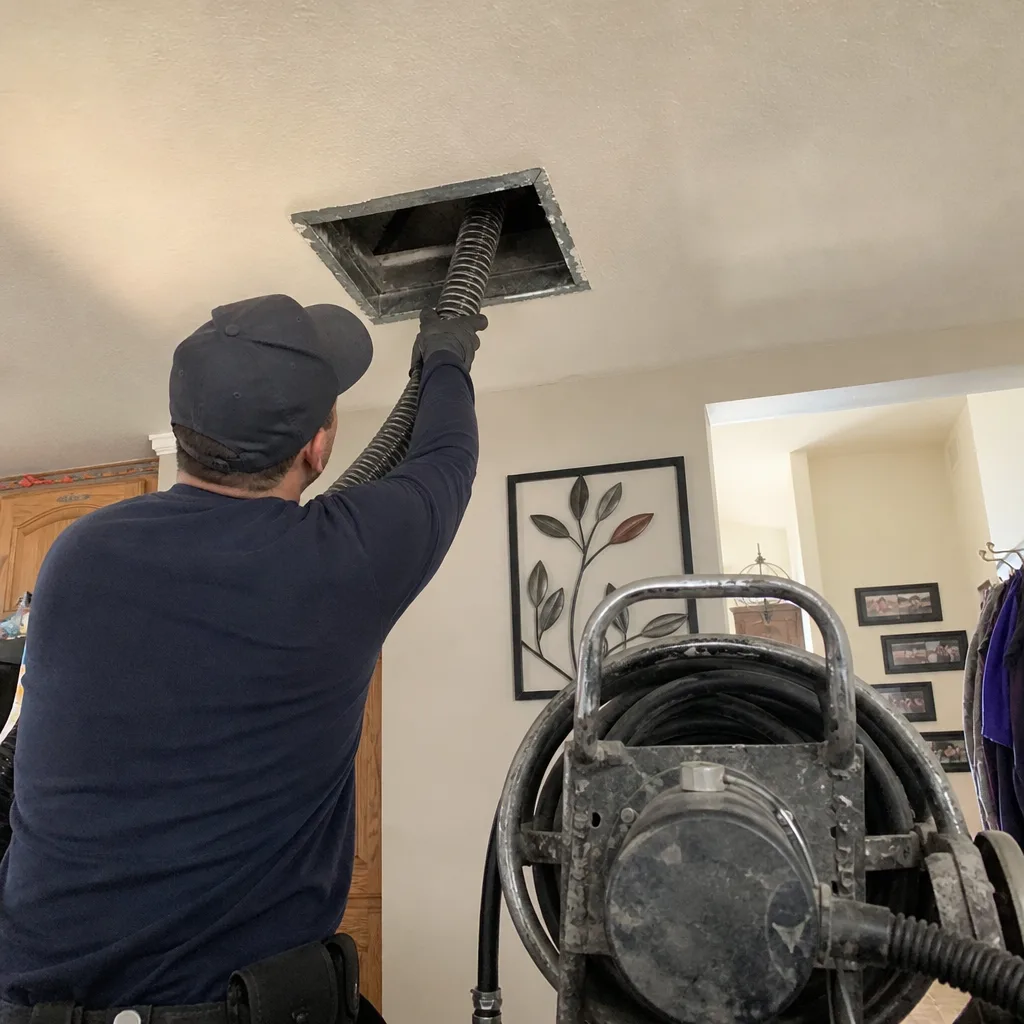
See the difference
 Before
 After
 Before
 After
 Before
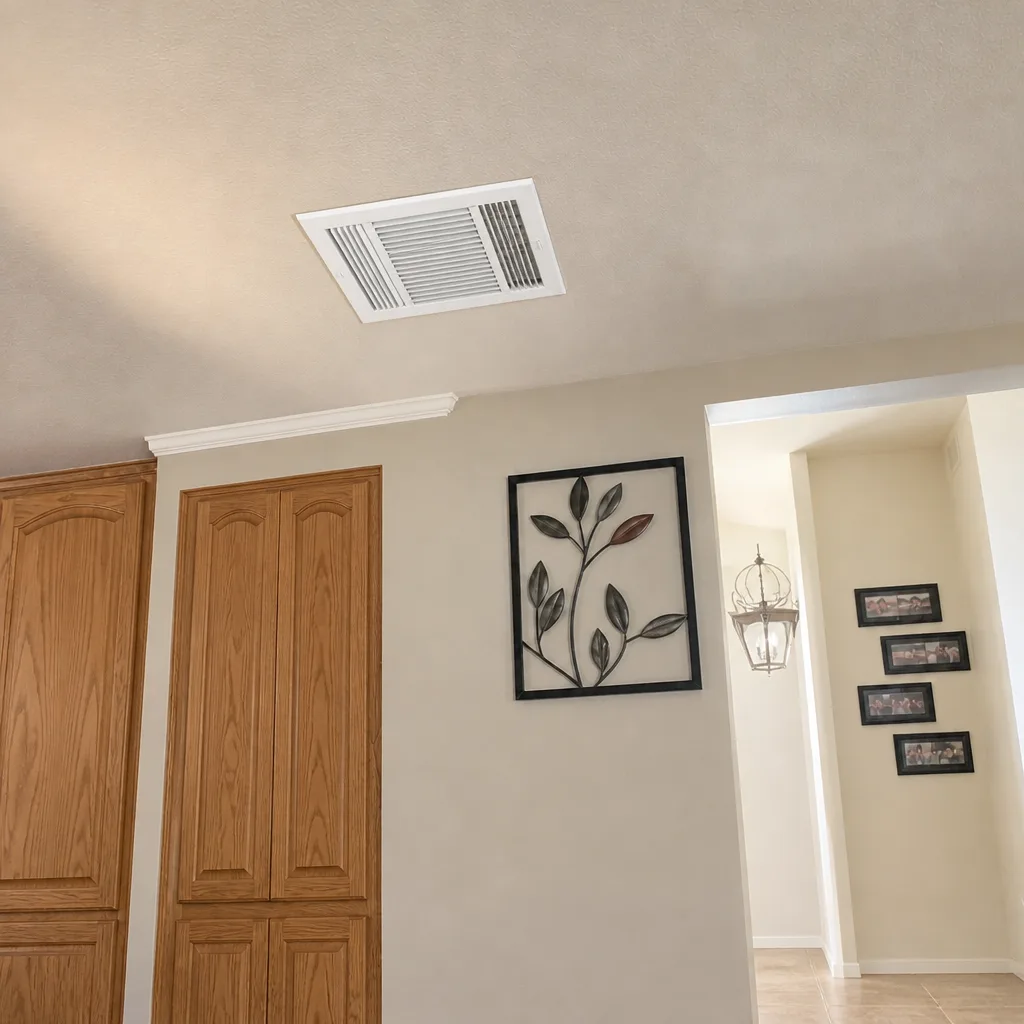 After
Dryer Vent: The Warning Sign Most Guides Undersell
The dryer vent is not part of the HVAC ductwork, but it’s a duct system, and it’s the one with a fire safety dimension. We treat dryer vent cleaning as a standalone fire-hazard mitigation service with its own process and equipment, not as something added to an HVAC job for convenience.
Signs to check for at the dryer
- The dryer takes longer than one cycle to dry a load that used to dry in one.
- The top or sides of the dryer feel hot to the touch during operation.
- The exterior vent flap doesn’t open with visible force when the dryer runs.
- Lint is visible at the exterior termination, or the run uses a flexible foil transition that has collapsed or torn.
- The dryer runs but the clothes are still damp at the end of the cycle with no setting change.
A long dryer run, foil transition duct, or a termination that’s covered by a screen should be inspected at least once. Lint accumulation is the fuel source in one of the leading causes of residential fires, and it builds up in a way that’s invisible from inside the laundry room. If the vent flap barely opens or the run is longer than a short straight path, that’s worth a look regardless of age.
Common Mistakes to Avoid
- Treating register dust as the primary warning sign. Visible dust on the supply grille is normal and means nothing about what’s inside the system. Chasing it with a cleaning crew leads to paying for a routine job that doesn’t address the actual symptom.
- Booking a cleaning without an inspection first. A duct problem can be a cleaning problem or a repair problem, and the two require different work. A cleaner who quotes the job before looking inside the duct run is skipping the diagnostic step.
- Accepting a low flat-bid quote without knowing what equipment is used. A consumer-grade shop vacuum passed off as a duct-cleaning rig is not the same tool as a Rotobrush contact-cleaning system with a HEPA-filtered extraction airstream. Ask what the equipment actually is before you book.
- Running the system to “test” a musty smell when the smell is persistent. If the pattern is persistent rather than startup-only, continuous operation may be circulating spores. Turn the system off and get an inspection.
- Assuming a high utility bill means the ducts need cleaning. A dirty coil, a blocked filter, and duct leakage all produce similar bill patterns. The bill alone doesn’t identify which one you have.
- Forgetting the dryer vent. The dryer vent is a separate system from the HVAC ducts, and it’s the one with a fire-safety dimension. A clean HVAC duct system and a lint-clogged dryer vent are two different problems, and the second is the one that matters most to fire safety.
- Ignoring smoke-season dust in Boulder. Fine gray dust on horizontal surfaces near supply vents after a wildfire smoke event is a specific sign, not the same as ordinary household dust, and it should be checked after significant smoke seasons rather than wiped away and forgotten.
When to Call a Professional
Some cases require an inspection and some can wait. The ones we’d call sooner include: persistent musty odor through the full operating cycle, airflow asymmetry that the tissue test confirms is structural, visible daylight through register boots in an attic or crawlspace, condensation on supply vents in summer, and fine gray dust appearing on horizontal surfaces near registers after a smoke event. These all point to a specific cause that can be confirmed with the right equipment.
Boulder Duct Cleaning offers free estimates across Boulder Duct Cleaning. We’ll look before we quote, and we’ll tell you the difference between a cleaning job and a repair job before anything gets connected. Call (877) 550-7147 to book an inspection. We answer 24/7. Fast dispatch from 7am to 7pm, Sunday through Friday.
Frequently Asked Questions
You need air duct cleaning if you have confirmed a specific symptom that maps to debris inside the system: startup-only musty odor, fine gray dust on horizontal surfaces after smoke events, or visual contamination found during inspection. Dust on registers alone is not a reason. Airflow imbalance and persistent odor are usually inspection-triggering signs because they can indicate a repair problem rather than a cleaning one. Call (877) 550-7147 for a free estimate and we’ll help you sort the sign from the noise.
A musty smell that appears only in the first 10 to 15 minutes of a heating cycle is usually surface debris burning off the heat exchanger or evaporator coil. Once the surfaces reach operating temperature, the off-gassing slows and the odor fades. A persistent musty smell through the full cycle points to a moisture source or active growth and needs a different response. Call (877) 550-7147 to book an inspection that distinguishes between the two.
The tissue test reveals the pattern of airflow across your supply registers, and the pattern tells you whether a problem is branch-level or trunk-level. A single weak register suggests a pinched or disconnected branch. An entire side of the house weak points to trunk damage or a takeoff disconnection. All registers weak suggests a filter, blower, or return-air problem. Call (877) 550-7147 for a free estimate if the pattern shows structural asymmetry.
Low quotes usually come from consumer-grade equipment passed off as a duct-cleaning rig, or from a scope that doesn’t include inspection, contact cleaning, and negative-air capture. A proper job uses a Rotobrush contact-cleaning system to agitate duct surfaces and a Nikro negative-air or HEPA setup to capture the material without releasing it into the room. Ask what equipment is used, what the scope includes, and whether before-and-after photos are provided. Call (877) 550-7147 for an exact quote; estimates are free.
Not necessarily. A 15 to 20 percent unexplained increase sustained across two or three comparable billing periods could indicate duct leakage, a dirty evaporator coil, or a blocked filter, and each presents slightly differently on the bill. Duct leakage tends to track with the coldest months. A dirty cooling coil tends to show up in cooling season. A blocked filter can show up in either, and replacing it is the first thing to check. Call (877) 550-7147 to book an inspection that identifies which one you’re dealing with.
Yes. Fine gray dust on horizontal surfaces near supply vents after a significant smoke event is a specific sign of smoke-related particulate in the duct system, and it’s distinct from ordinary household dust. If it’s paired with persistent particulate smell during heating cycles or eye irritation that doesn’t track with outdoor air quality, an inspection is worth booking. Abatement Technologies equipment handles contamination-level indoor air quality scenarios beyond routine dust removal. Call (877) 550-7147 for a free estimate.
The Bottom Line
The signs that actually indicate a duct problem are specific: odor timing, airflow asymmetry from the tissue test, fine gray dust near vents after smoke, a 15 to 20 percent sustained bill increase, and physical damage like audible leaks, visible daylight through boots, or summer condensation on supply vents. The generic warning-sign lists you see floating around are just symptom inventories. The signs that matter map to causes, and causes map to specific equipment and specific work. If any of the diagnostic signs here match what you’re seeing, book an inspection before you book a cleaning. Boulder Duct Cleaning offers free estimates, and we clean and we repair, which means we can tell you which one your system actually needs. Call (877) 550-7147 to get started.
Written by the team at Boulder Duct Cleaning.