
Last updated November 15, 2026
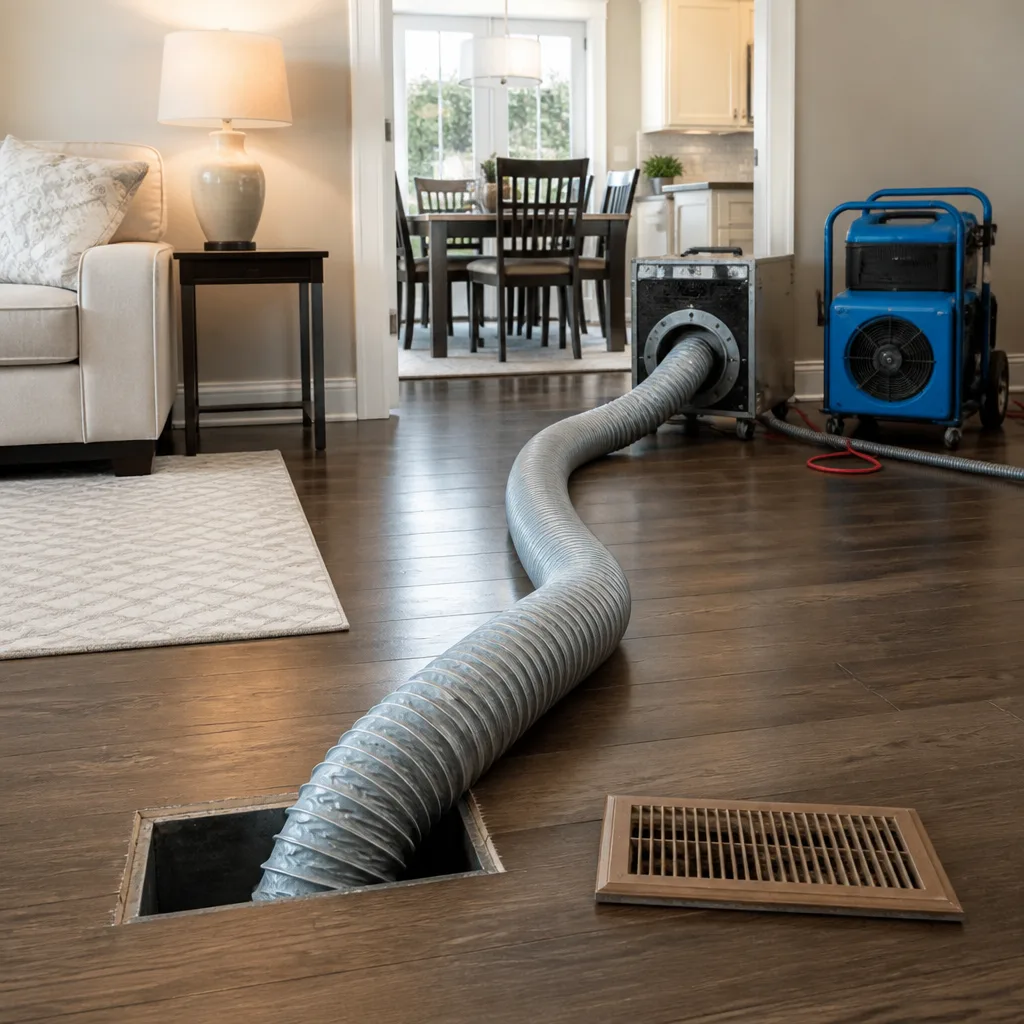 Whole-home duct cleaning
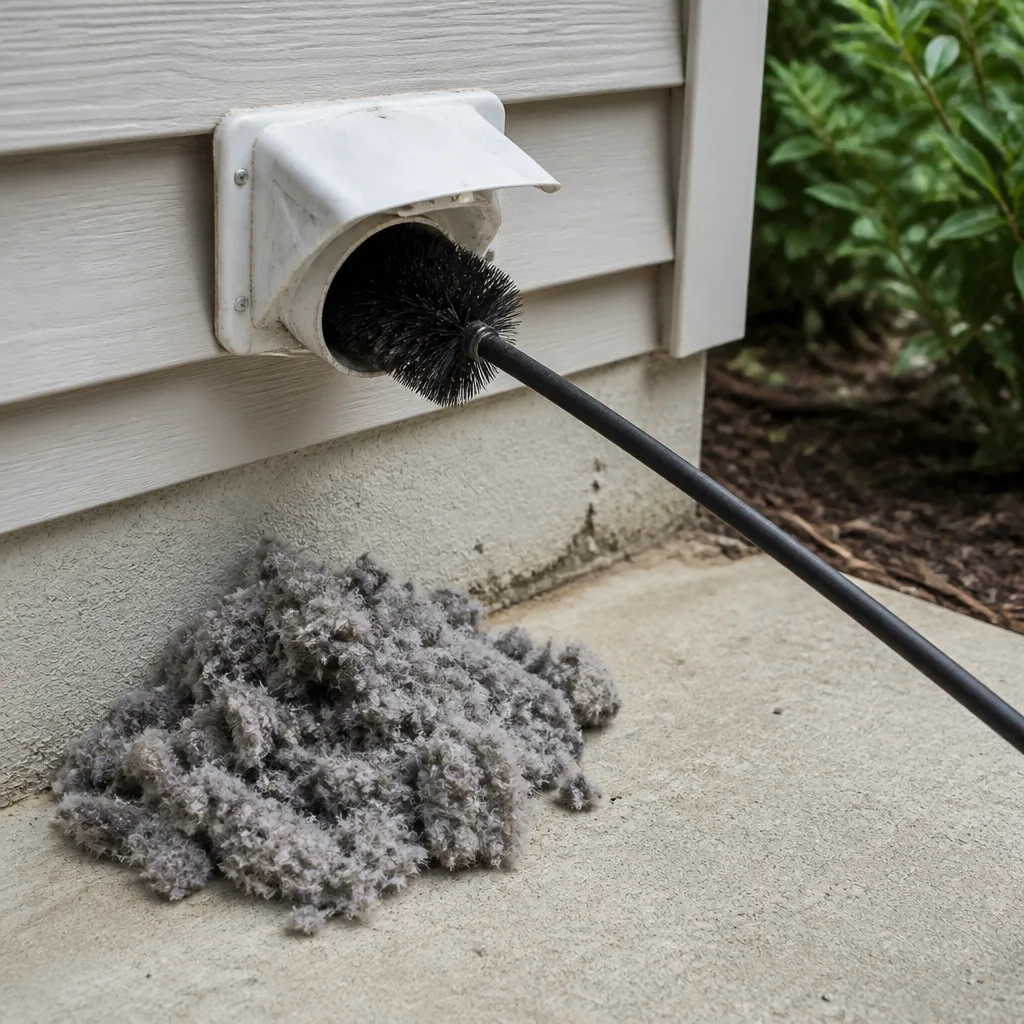 Dryer vent cleaning
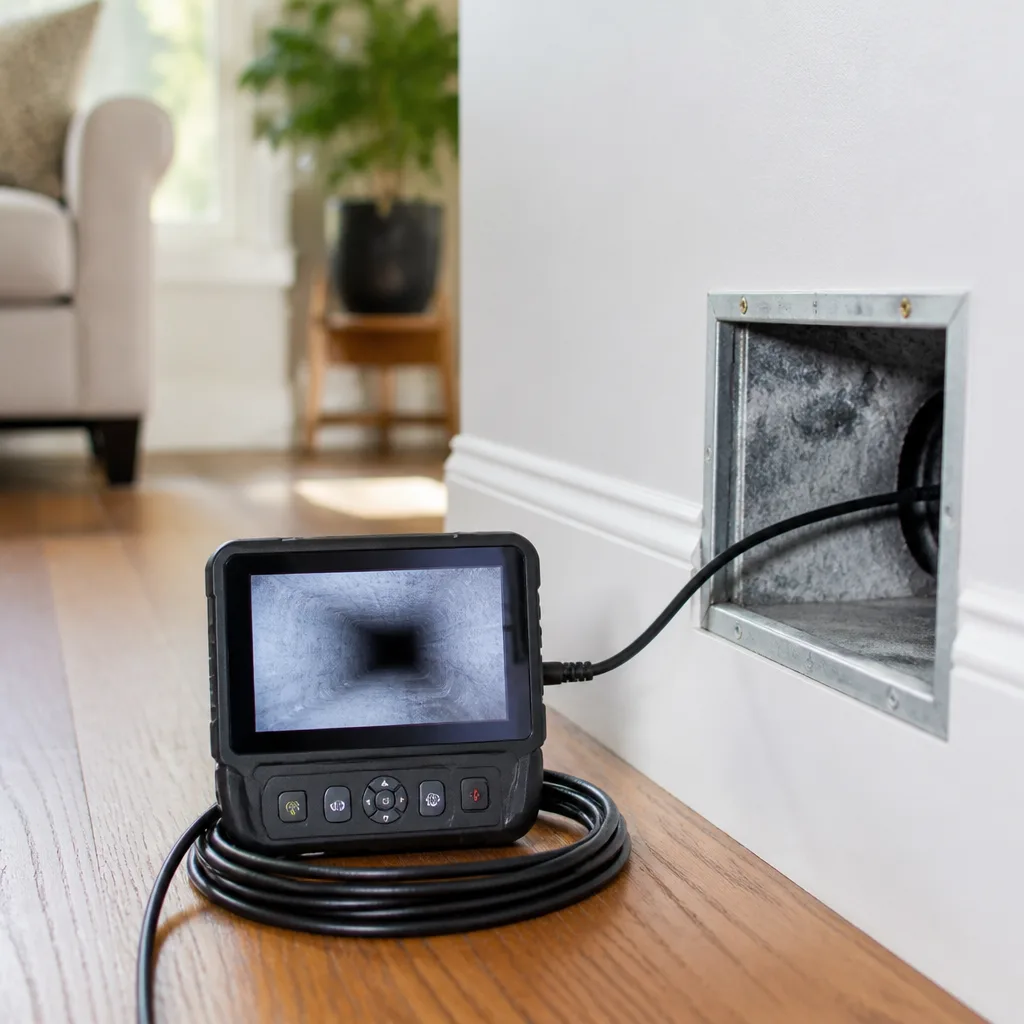 Camera inspection
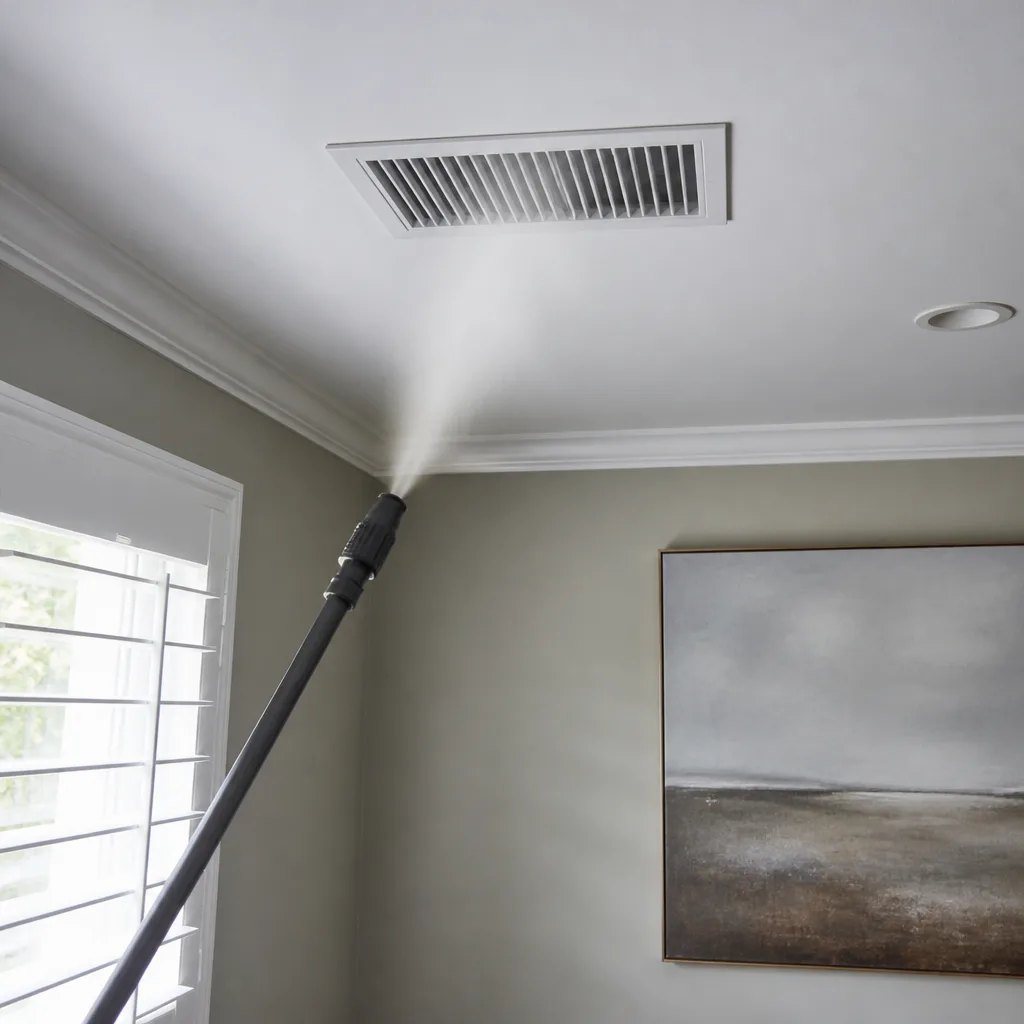 Sanitizing & deodorizing
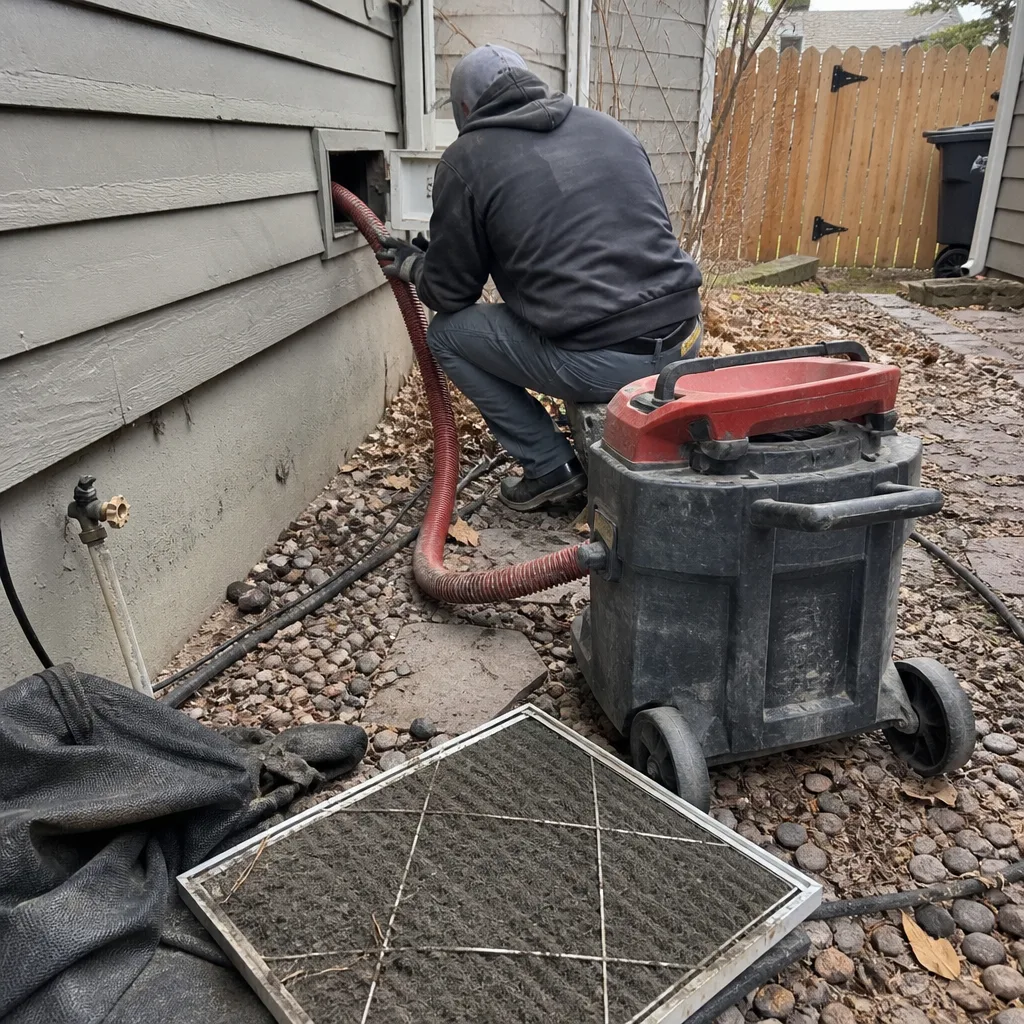
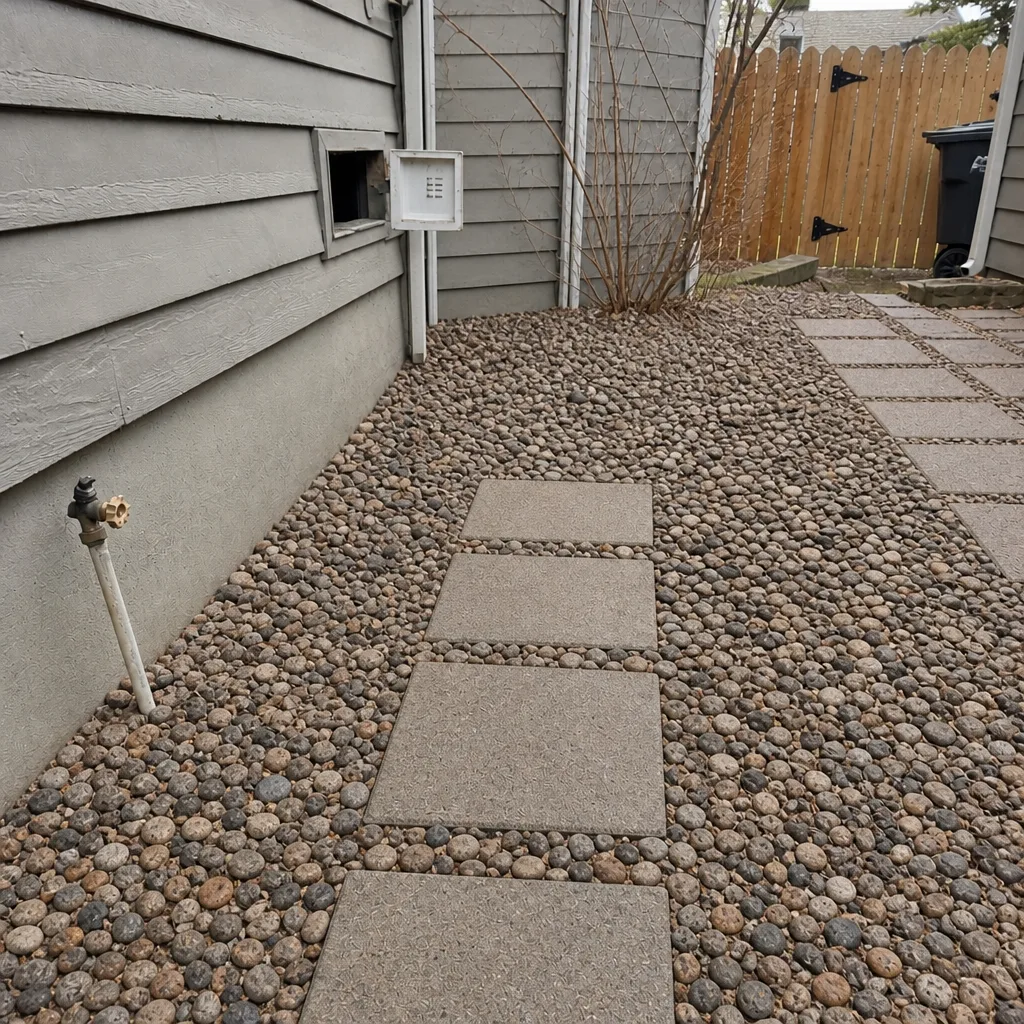
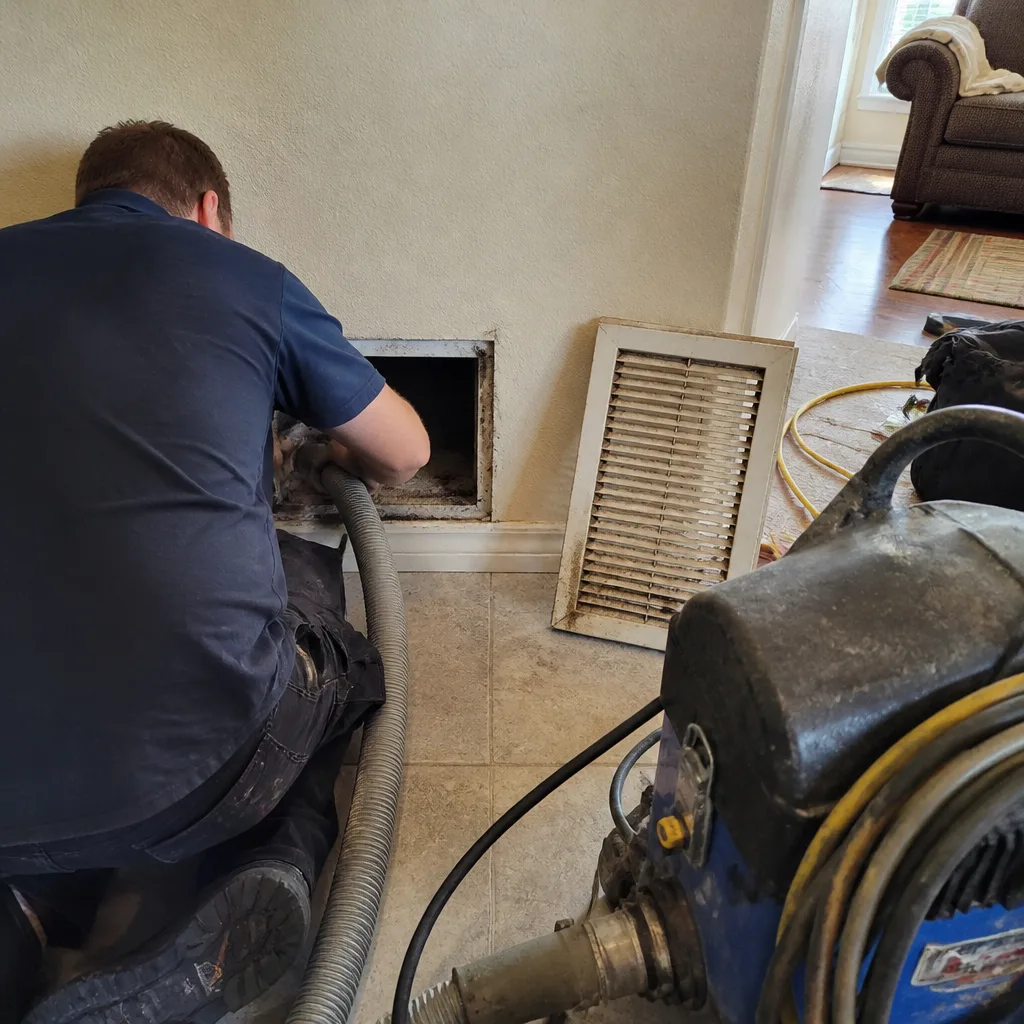
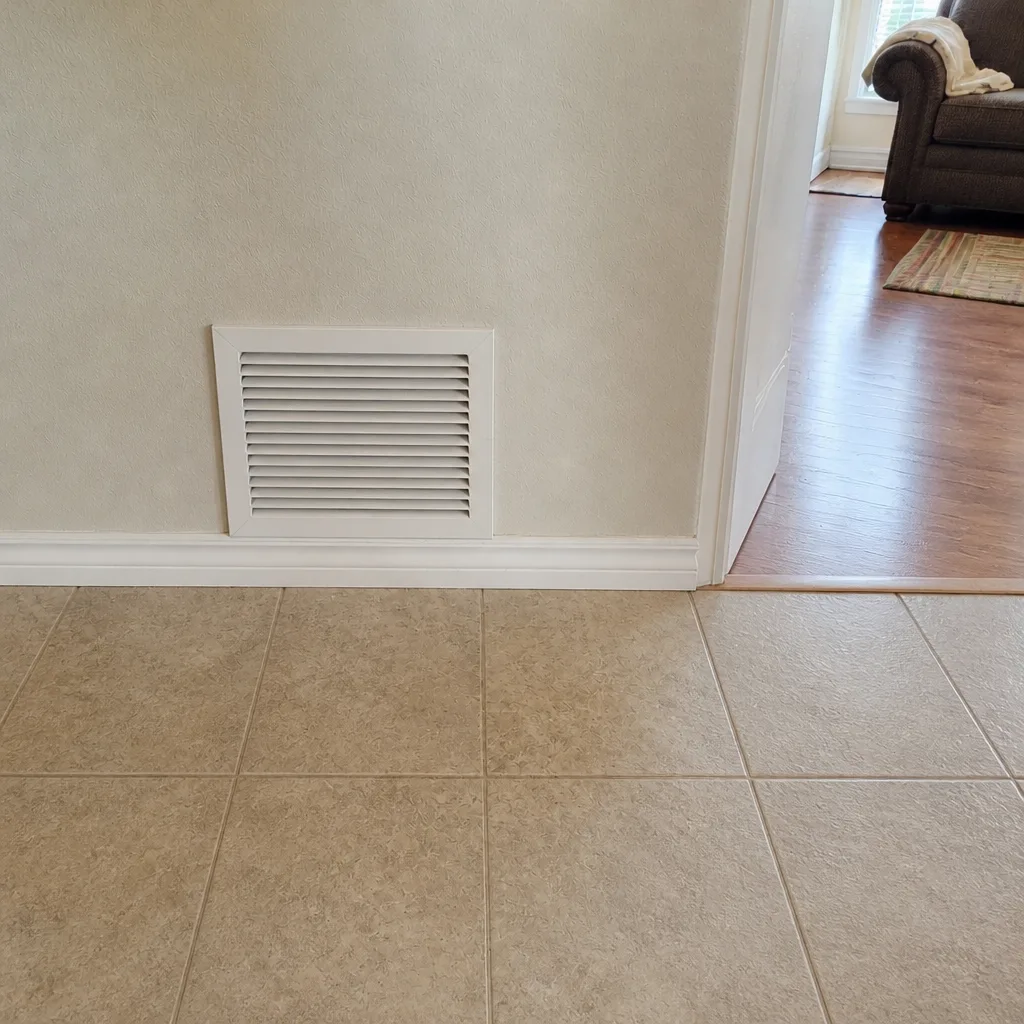
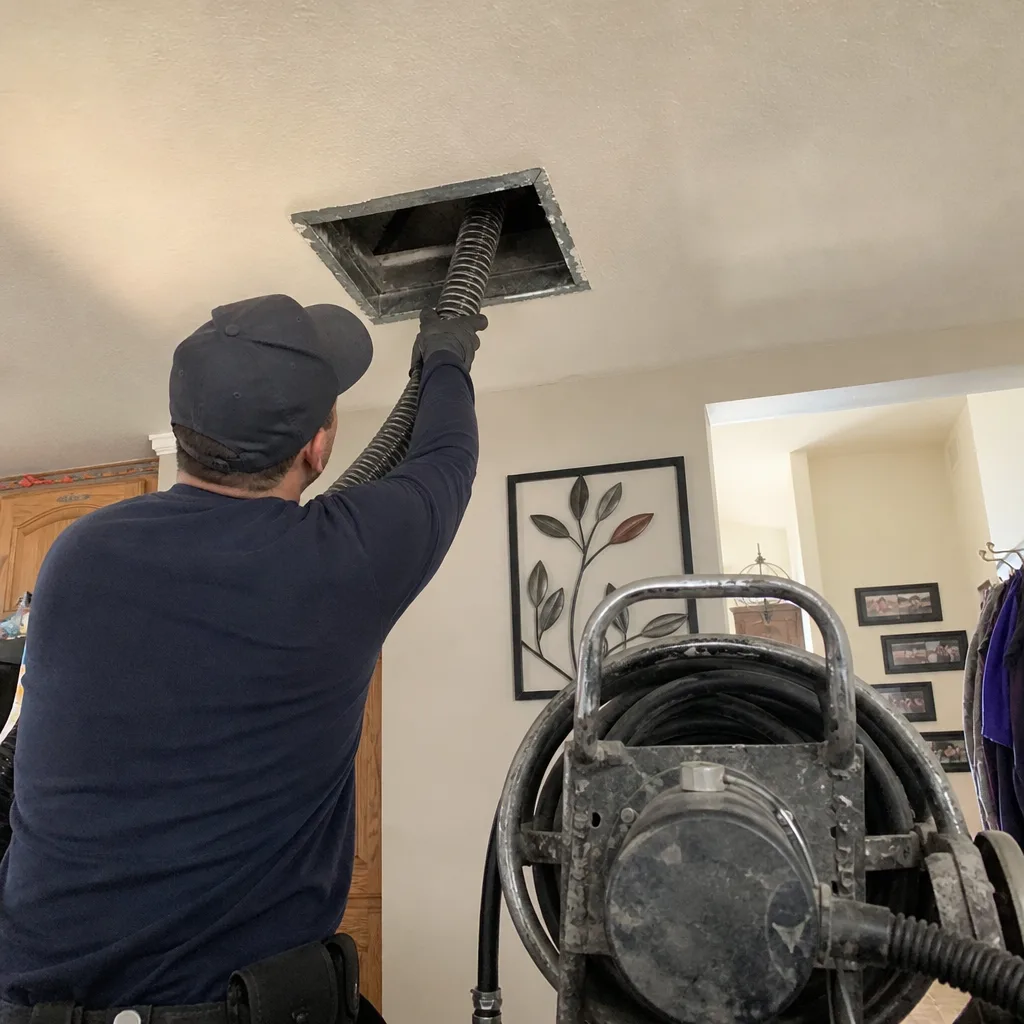
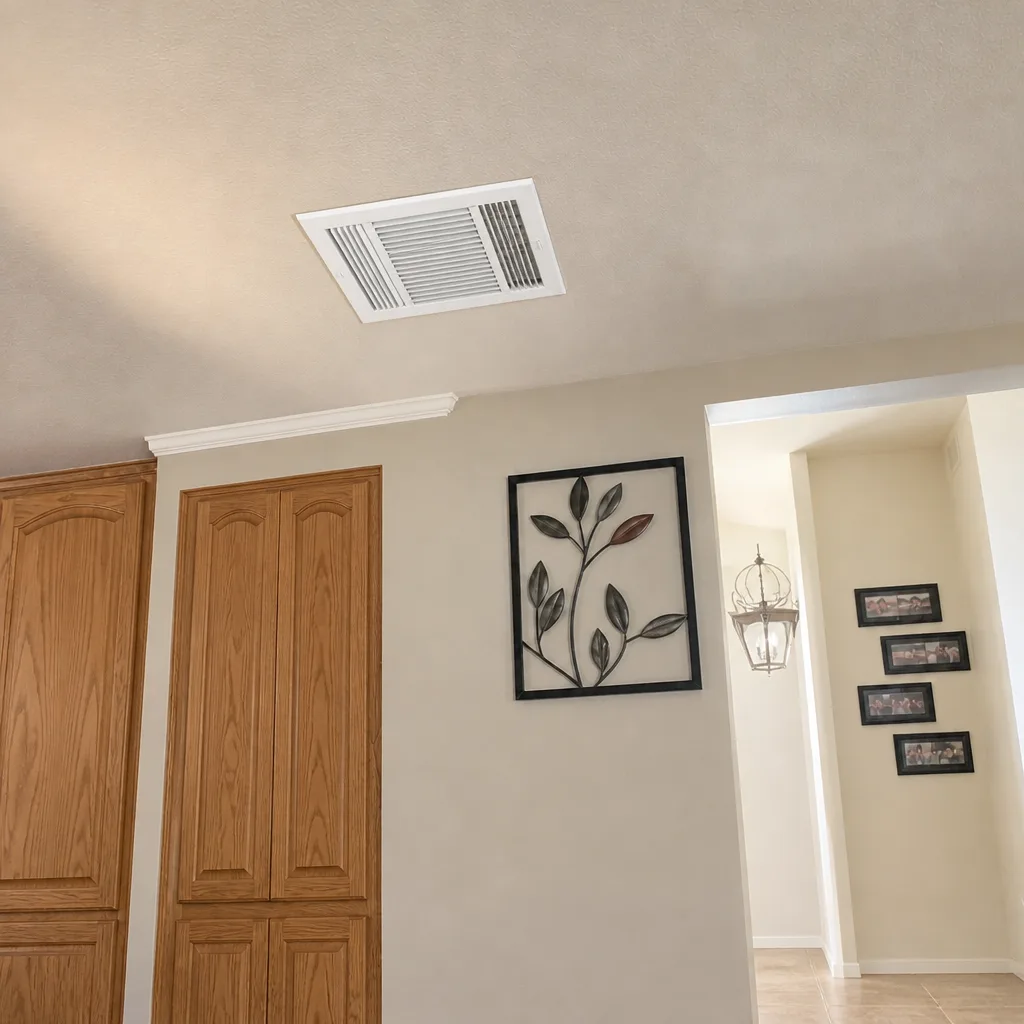
Whole-system duct and dryer vent check with before-and-after photos - you see exactly what came out of your vents
That "$99 whole-house special" is a bait ad - the real number appears once they are in your hallway, or the "clean" is a shop-vac at the register. We photograph the inside of your ducts before and after instead.
Air Duct Cleaning Troubleshooting in Boulder: Common Problems and How to Fix Them
If you just had your ducts cleaned and dust is back on your vents within two weeks, the problem usually isn’t your ducts. It’s that whoever cleaned them agitated the debris without capturing it – no negative pressure containment, no sealed HEPA exhaust. Plenty of Boulder homeowners call us after a bargain cleaning and describe exactly this pattern: visible dust returning fast, weak airflow in one room, a musty smell that faded for a few days and came back. Those aren’t random complaints. Each one is a diagnostic signal that points to either the duct system itself or the method the last contractor used. This guide walks through each symptom, tells you what it usually means, and explains what actually fixes it.
Quick Answer
Most air duct problems in Boulder fall into four categories: dust returning fast (no negative pressure containment during cleaning), weak airflow after cleaning (a collapsed or disconnected duct the wand passed right through), musty odor returning within days (biological growth upstream in the air handler or coil), and rattling or whistling after a job (a dislodged access panel or unsealed test hole). Each symptom points to a different fix, and none of them are solved by simply scheduling another cleaning.
Styles & brands we work with
- Whole-home duct cleaning
- Dryer vent cleaning
- Camera inspection
- Sanitizing & deodorizing
Table of Contents
- Why Is Dust Back on My Vents Within Two Weeks?
- Why Is My Airflow Weak After Cleaning?
- Why Does a Musty Odor Come Back Within Days?
- Why Do My Ducts Rattle or Whistle After Cleaning?
- How Do I Tell If the Problem Is the Duct System or the HVAC Unit?
- What Does Static Pressure Tell You About a Duct System?
- How Do You Zone-Test Each Register?
- When Does a Duct Problem Need Repair, Not Cleaning?
Why Is Dust Back on My Vents Within Two Weeks?
Dust returns fast because the cleaning job left debris in the system. That’s the direct answer, and it points to one missing piece of equipment: negative pressure containment. A proper cleaning traps the whole duct system under negative pressure with a high-CFM vacuum – a truck-mount unit or a portable like a Nikro or Abatement Technologies machine – while a contact-cleaning tool loosens debris from the duct walls. Everything released gets pulled toward the vacuum and captured through a HEPA filter. The air in your home stays clean, and the ducts end the job actually empty.
What fails instead is the agitation-only approach. A technician runs a brush or a shop-vac-style whip through the ducts and knocks debris loose, but nothing is holding the system under vacuum. Fine particulate – the stuff that settles on your registers, your shelves, your furnace filter – gets redistributed through the house instead of removed. You see the dust come back in days because it never left. It just moved.
There’s a second, quieter reason dust returns fast in Boulder: a leaky or disconnected return duct. Boulder’s housing stock includes a lot of older homes with flex duct runs in unconditioned crawlspaces and attics, and flex duct that’s been pinched, torn, or pulled loose at a collar will pull attic or crawlspace air straight into the return. That air is dusty by nature. No amount of cleaning fixes it. The duct has to be repaired and reconnected before cleaning means anything.
How to tell the difference:
- Dust returns everywhere, evenly: the cleaning method is the likely culprit. Ask what vacuum was used and whether the system was under negative pressure.
- Dust concentrates near one or two rooms: suspect a leak or disconnect on the branch serving those rooms, especially if they’re on a long run or in a hot attic zone.
- Dust is gritty or smells like attic: a return-side leak is pulling outside air in. Repair, not re-cleaning.
When we run a cleaning, we use Rotobrush contact cleaning under Nikro negative-air containment so the debris leaves the system instead of settling back into it. That’s the whole point of the equipment.
Why Is My Airflow Weak After Cleaning?
Weak airflow after a cleaning almost always means a duct the wand passed right through. A cleaning tool travels the inside of a duct run; it doesn’t inspect the connection points, the collars, or the flex duct that’s collapsed somewhere between the register and the trunk. If a length of flex duct has kinked, crushed, or torn loose from its boot, the cleaning does nothing to fix it – and the room stays starved of air no matter how clean the ducts are.
In Boulder, this pattern shows up most in homes with flex duct in unconditioned space. Temperature swings between a sunny south-facing attic and a cold night are hard on flex. Duct that sags, gets compressed by insulation, or is pulled tight around a corner will collapse over time. The run that used to deliver 200 CFM delivers far less, and the register in that room feels weak compared to the rest of the house.
Zone testing is how you find it. The process is straightforward:
- Write down every supply register in the house and the room it serves.
- With the system running, hold a handheld anemometer (or a piece of tissue for a rough test) at each register and note the relative airflow.
- Compare rooms of similar size and duct length. A register that’s dramatically weaker than its neighbors is the suspect.
- Trace that branch back through the attic, crawlspace, or wall cavity to the trunk. Look for a collapsed section, a disconnected collar, or a crushed length of flex.
- Measure the static pressure at the air handler (more on this below) to confirm whether the whole system is restricted or just one branch.
Weak airflow in one zone after a cleaning is the single most common thing we’re called back to look at, and it’s almost never a cleaning problem. It’s a repair problem. That’s why we offer air duct repair as a service alongside cleaning – identifying the collapse and fixing it, rather than cleaning around it and leaving the room cold.
If a whole-house pattern is weak – every register feels low – the cause is usually the air handler itself: a dirty blower wheel, a filter that’s over-restricted, or a coil that’s loaded up. Rule that out before assuming the ducts are the problem.
Why Does a Musty Odor Come Back Within Days?
A musty smell that returns within days means biological growth is upstream of where the cleaning reached. Duct cleaning tools travel the ducts. They don’t automatically reach the evaporator coil, the blower compartment, the drain pan, or the plenum above the air handler. If the growth is in any of those places, cleaning the ducts leaves the source untouched, and the smell comes back as soon as the system runs again and pushes that air through the house.
This is where the equipment question gets serious. Routine dust removal and contamination-level remediation are different jobs with different machines and different chemistry. Removing mold spores and fine biological particulate from an air handling system requires a HEPA-equipped negative-air setup capable of capturing particles that small – not a shop vac, and not a “fog it and hope” approach. It also requires an EPA-registered fogger application, applied to the right surfaces, at the right concentration, so the growth is actually treated rather than just masked.
The steps for a contamination-level situation look like this:
- Contain the system under negative pressure with HEPA filtration before touching anything, so spores don’t spread into the living space.
- Inspect the air handler, coil, drain pan, and plenum – the places cleaning tools don’t reach.
- Clean the mechanical components and the duct surfaces with contact tools.
- Apply an EPA-registered fogger to the affected surfaces to treat biological growth.
- Verify the source is gone before restoring normal airflow, and check the drain pan for standing water, which is often the original cause.
We keep Abatement Technologies equipment available for exactly these situations. It’s a different class of work than routine cleaning, and if a contractor can’t explain how they’ll contain the air handler during treatment, the odor will be back within days. If the source is a wet coil or a drain pan that isn’t draining, that has to be corrected or the growth returns regardless of how well the ducts are cleaned. Some of the growth you smell in Boulder homes is triggered by the cooling season: a coil that stays damp through a humid stretch becomes a growth site.
If the odor is more like a chemical or burning smell rather than musty, stop running the system and have it inspected. That’s not a duct cleaning issue – that’s a mechanical problem that needs a professional in front of it.
Why Do My Ducts Rattle or Whistle After Cleaning?
Rattling or whistling after a cleaning points to a dislodged access panel or an unsealed test hole. That’s the specific answer, and it’s a repair step many discount crews skip entirely. Duct cleaning requires access – a technician cuts an access port into the trunk or a branch, runs the tools, then has to seal the port back up. If that seal is done with a piece of tape that peels off in a week, or if it isn’t done at all, you get a leak. A leak in the supply side vents air into an attic or wall cavity. A leak in the return side pulls unconditioned air into the system. Both make noise.
Whistling specifically comes from air moving through a small opening at speed – a good sign the hole is still open. Rattling is more often a panel that’s been reattached loosely, or a flex duct run that’s vibrating because it’s no longer supported properly after the technician moved it around.
In older Boulder homes with sheet metal duct, the access panel at the air handler is a common culprit. Those panels get removed for cleaning and need to be re-seated properly with the correct fasteners to make a clean seal. In newer homes with flex duct, the access ports cut for cleaning are the usual source.
What to check before you call anyone:
- Look for visible holes in the ductwork near the air handler and along any accessible trunk in the attic or basement.
- Check whether the access panel at the air handler is fully seated and screwed down.
- If a test hole was cut in a duct, verify there’s a proper seal over it – not just tape.
- Note which rooms or areas the noise comes from, so the technician doesn’t have to find it from scratch.
Sealing is how this gets fixed – mastic on the seams, new access doors where the old cut was, and a proper re-seat of the air handler panel. If the noise started right after a cleaning, it’s a repair, and it’s a specific one. We treat air duct repair as a standalone service at Boulder Duct Cleaning for exactly this reason: a good cleaning can leave a small repair behind, and somebody has to own that.
How Do I Tell If the Problem Is the Duct System or the HVAC Unit?
Static pressure readings are the dividing line. Static pressure measures the resistance to airflow inside the duct system, and it tells you whether the system is delivering the air the equipment was designed to move. A reading in the normal range with weak airflow in the living space points to the HVAC unit – the blower, the coil, or the filter. A reading well outside the normal range points to the duct system itself: too much restriction, a collapsed run, an undersized trunk, or a return path that’s too small.
A technician takes the reading with a manometer at test ports on the return and supply sides of the air handler, then compares the total to the equipment’s rated capacity. The difference between what the equipment is rated to move and what the ducts are actually passing is the restriction. That number then tells you which way to investigate.
You can also narrow it down without instruments, using a few practical checks:
- Filter test: pull the filter and run the system briefly. If airflow improves noticeably, the filter is over-restricted. Replace it with one in the correct MERV range for the equipment.
- Blower test: if airflow at every register is weak but the ducts are visibly intact and sealed, the blower wheel may be dirty or the blower motor failing.
- Coil test: if the system cools poorly and airflow is weak, an iced or dirty evaporator coil is a likely cause. That’s an HVAC service call.
- Return test: if a single return is undersized or blocked, the whole system runs starved. Check for furniture or a closed door blocking the return grille.
The key distinction: if the ducts are the problem, cleaning won’t fix it and neither will a new HVAC unit. If the HVAC unit is the problem, cleaning the ducts is good hygiene but it won’t restore airflow. Getting that first diagnosis right saves money and repeat visits.
In Boulder, this matters a lot because a lot of homes have had additions, finished basements, and equipment upgrades over the years without a corresponding duct modification. A duct system sized for the original house often can’t keep up with an added conditioned zone, and static pressure shows it clearly. If you’re chasing airflow problems across a home that’s been remodeled, duct sizing is often the underlying issue, not the last cleaning.
What Does Static Pressure Tell You About a Duct System?
Static pressure tells you how hard the blower is working to push air through the system, and whether the ducts are letting it do its job. It’s the single most useful measurement in duct diagnostics because it separates “the system is restricted” from “the equipment isn’t producing.”
The reading is taken in inches of water column, at test ports installed on the supply plenum and the return plenum, with the system running. The technician subtracts the return reading from the supply reading to get total external static pressure, then compares that to the equipment manufacturer’s rated maximum. A total that comes in above the rated maximum means the ducts and filter are together restricting airflow more than the equipment is designed for.
What the readings tell you:
- High total static: restriction somewhere in the system – usually a filter that’s too restrictive, undersized return ducts, or collapsed duct runs. This is a duct and filter problem, not a cleaning problem.
- Normal static with weak airflow: the equipment itself isn’t moving the air it should. Suspect the blower motor, the blower wheel, or the coil.
- Low static on the supply side with good return: a supply-side leak is dumping air into an unconditioned space before it reaches the registers.
- High return static: a return that’s too small or blocked. Common in older Boulder homes where a return was originally sized for a single furnace and never updated.
Ask for the actual numbers on your service report. A contractor who can show you the static pressure readings before and after work is a contractor who can prove what they did. A contractor who can’t take the reading at all is a contractor who’s guessing – and guessing is how a duct problem gets “fixed” by booking another cleaning.
How Do You Zone-Test Each Register?
Zone testing is the room-by-room audit that tells you which part of the duct system is underperforming. It’s simple, it doesn’t require cutting anything open, and it’s the fastest way to separate a whole-house problem from a single-branch problem.
The process:
- Map the system. List every supply register and every return grille by room, and note which branch each one sits on if you can trace it.
- Measure at each register. With the system running and filters clean, hold an anemometer at each supply for a steady reading, or use a piece of tissue for a rough visual. Record every reading.
- Compare similar rooms. Two bedrooms of equal size and similar duct length should read roughly the same. A room that reads at half the airflow of its neighbor is the suspect branch.
- Check the returns. A room with good supply but poor return is choked. Verify the return grille is open, unobstructed, and connected.
- Trace the suspect branch. Follow it through the attic, crawlspace, or wall cavity back to the trunk. Look for collapse, a disconnect at the boot collar, or crushed flex.
- Confirm with static pressure. Take total static at the air handler to confirm whether the whole system is restricted or just one zone.
What you’re looking for isn’t a perfectly even house – no duct system delivers perfectly even airflow – but the pattern of the unevenness. One weak room means one branch needs repair. Every room weak means the problem is at the air handler or in the trunk. A house where the rooms closest to the air handler are strong and the far rooms are weak means the duct system has more restriction than the blower can overcome, usually an undersized return or an oversized supply run.
Zone testing is also how you prove a cleaning did what it claimed. If a room was weak before the cleaning and is still weak after, the cleaning didn’t address the cause. That’s not a reason to clean again. That’s the reason to look at the duct system itself.
When Does a Duct Problem Need Repair, Not Cleaning?
A duct problem needs repair, not cleaning, when the duct system is physically compromised – disconnected, collapsed, crushed, or leaking. Cleaning is a hygiene service. It removes debris from a duct system that is otherwise intact. It does not reconnect a collar, restore a collapsed run, or seal a leak, and no amount of cleaning will fix a system that’s pushing air into an attic or pulling it from a crawlspace.
The signals that point to repair:
- Airflow that fails to improve after a cleaning, especially in one zone.
- Dust returning fast near specific rooms rather than everywhere.
- Visible disconnection at a boot collar, or crushed flex duct accessible in the attic or crawlspace.
- Whistling or rattling that started after an access point was cut.
- Static pressure readings that show the system is restricted beyond the equipment’s rated capacity.
- A room that has never been comfortable since an addition or equipment change was made.
We see this often in Boulder homes where the original duct system has been added to over time – a finished basement, a new bedroom, a replacement furnace in a different location. The duct runs often weren’t re-engineered to match. The system still heats and cools, but unevenly, and no cleaning makes it even.
Repair means reconnecting what’s loose, replacing what’s collapsed, sealing what’s leaking, and re-sizing what’s undersized. That’s a different job than cleaning, and it’s why we offer it separately. If you’re not sure which one you’re dealing with, the static pressure and zone readings are how you decide – not by booking another cleaning and hoping.
Common Mistakes to Avoid
- Booking another cleaning to fix dust that came back. If dust returns within two weeks, the last cleaning didn’t capture the debris. Repeating that method repeats the result. Ask about negative pressure containment before you book.
- Assuming weak airflow means the ducts are dirty. Weak airflow in a single zone usually means a damaged or disconnected duct. Weak airflow everywhere usually means the air handler, the filter, or the coil. Cleaning rarely fixes either.
- Treating a musty smell with another duct cleaning. If growth is in the air handler, coil, or drain pan, cleaning the ducts doesn’t reach it. The source is upstream, and it needs to be treated as a contamination situation, not routine cleaning.
- Ignoring a rattle after a cleaning. A whistle or rattle usually points to a leak – a test hole left open or an access panel reattached loosely. That’s a leak you’re paying for every month through your energy bill. Get it sealed.
- Accepting a job with no readings and no photos. A reputable contractor can show you static pressure readings and before-and-after photos of the ducts they cleaned. A contractor who can’t is a contractor who’s guessing.
- Skipping the dryer vent while you’re at it. The dryer vent is a separate system from the HVAC ducts, and it’s a fire-safety concern in its own right. It needs its own service, not a pass-through from a duct cleaning.
- Choosing on price alone. Boulder has a wide range of duct cleaning quotes because it covers a wide range of methods, from a brush-and-shop-vac outfit to full negative pressure containment with contact cleaning. The equipment is the price difference, and it’s the reason for the price difference.
See the difference
 Before
 After
 Before
 After
 Before
 After
When to Call a Professional
Call a professional when a symptom has a mechanical cause you can’t see – when airflow fails to improve, when an odor returns within days of a cleaning, when you hear a new rattle or whistle, or when you suspect a duct has come loose in an attic or crawlspace. Those situations need someone with a manometer, a borescope, and a negative-air vacuum, not a homeowner with a flashlight. Call a professional sooner if the system has been running with a dirty filter for a long stretch, if you’ve just finished a major renovation that filled the return with construction dust, or if the dryer is taking longer than it used to and you’re concerned about the vent. Boulder Duct Cleaning offers free estimates in Boulder – call (877) 550-7147. We clean and we repair, so we can tell you which one your system actually needs.
Frequently Asked Questions
Air duct cleaning in Boulder is priced per system, not per vent. We give a written estimate for the whole duct system after we see it, because the price depends on the size of the system, the number of branches, and whether there’s contamination-level work involved. We don’t use a teaser coupon price to get in the door and then build the invoice once the technician is on site. One flat price per system, agreed before any work starts, with before-and-after photos of your own ducts. Call (877) 550-7147 for an exact quote – estimates are free.
Because the equipment is different. A low quote usually means no negative pressure containment, no HEPA filtration, and no contact cleaning – just a brush run through the ducts with debris left to settle back into the house. A proper cleaning uses a high-CFM vacuum holding the system under negative pressure and a contact tool scraping debris loose to be captured through a HEPA filter. That equipment costs money to run, and it’s what the difference in quotes comes down to. Ask any contractor what vacuum they’ll use and how it captures debris. Call (877) 550-7147 if you’d like to see what we use and why.
You ask for the readings and the photos. Static pressure readings before and after the job tell you what the system was pulling and what it’s pulling now. Before-and-after photos of the ducts show you what was there and what’s there now. A contractor who can show you both is a contractor who did the work. Call (877) 550-7147 and we’ll walk you through what a full report looks like.
For most homes, every few years is reasonable – not annually. The interval depends on the home, whether there are pets, how often the filter is changed, and whether there’s been a renovation. The honest answer is to clean when there’s a reason to clean, not on a schedule that only serves the contractor. If your system is clean and holding, waiting is fine. If there’s a specific trigger – allergies, construction dust, a musty smell – that’s your reason. Call (877) 550-7147 for a free estimate and an honest read on whether you actually need it.
Yes – that’s exactly why we offer air duct repair as a service alongside cleaning. If we find a disconnected collar, a crushed flex run, or a leaking access panel during a cleaning, we can fix it rather than cleaning around the problem. Call (877) 550-7147 and describe what you’re seeing – we’ll tell you whether it sounds like a cleaning job, a repair job, or both.
Yes. Dryer vent cleaning is a standalone fire-safety service with its own process and equipment, and we work on Honeywell and Aprilaire whole-home air filtration and humidification systems as part of the indoor air quality scope. We also offer Guardsman-brand protective treatments as part of full-service work. Call (877) 550-7147 for a free estimate on any of it.
The Bottom Line
Most duct problems Boulder homeowners try to fix with another cleaning are repair problems or contamination problems, not dirt problems. Dust that returns within two weeks means the last job didn’t capture debris. Weak airflow in one room means a duct is damaged. A musty smell coming back means the growth is upstream in the air handler. A rattle or whistle means a leak was left behind. Get the diagnosis right first: static pressure readings and zone testing tell you whether the issue is the duct system or the HVAC equipment, and that determines whether you need cleaning, repair, or both. See exactly what we use and why before you book. Start with a free estimate.
If you’re in Boulder and something after a cleaning still doesn’t feel right, call Boulder Duct Cleaning at (877) 550-7147. We answer 24/7. Fast dispatch from 7am to 7pm, Sunday through Friday.
Written by the team at Boulder Duct Cleaning.