
Last updated November 15, 2026
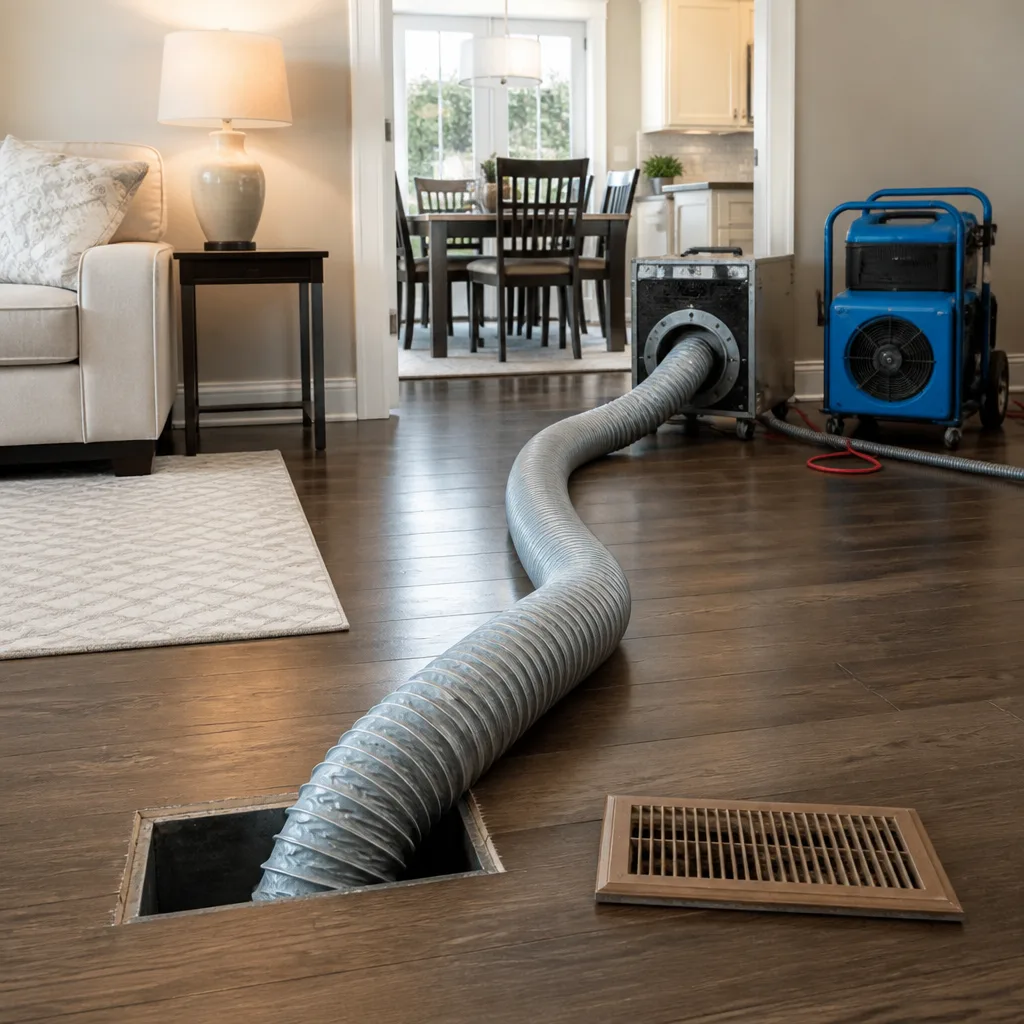 Whole-home duct cleaning
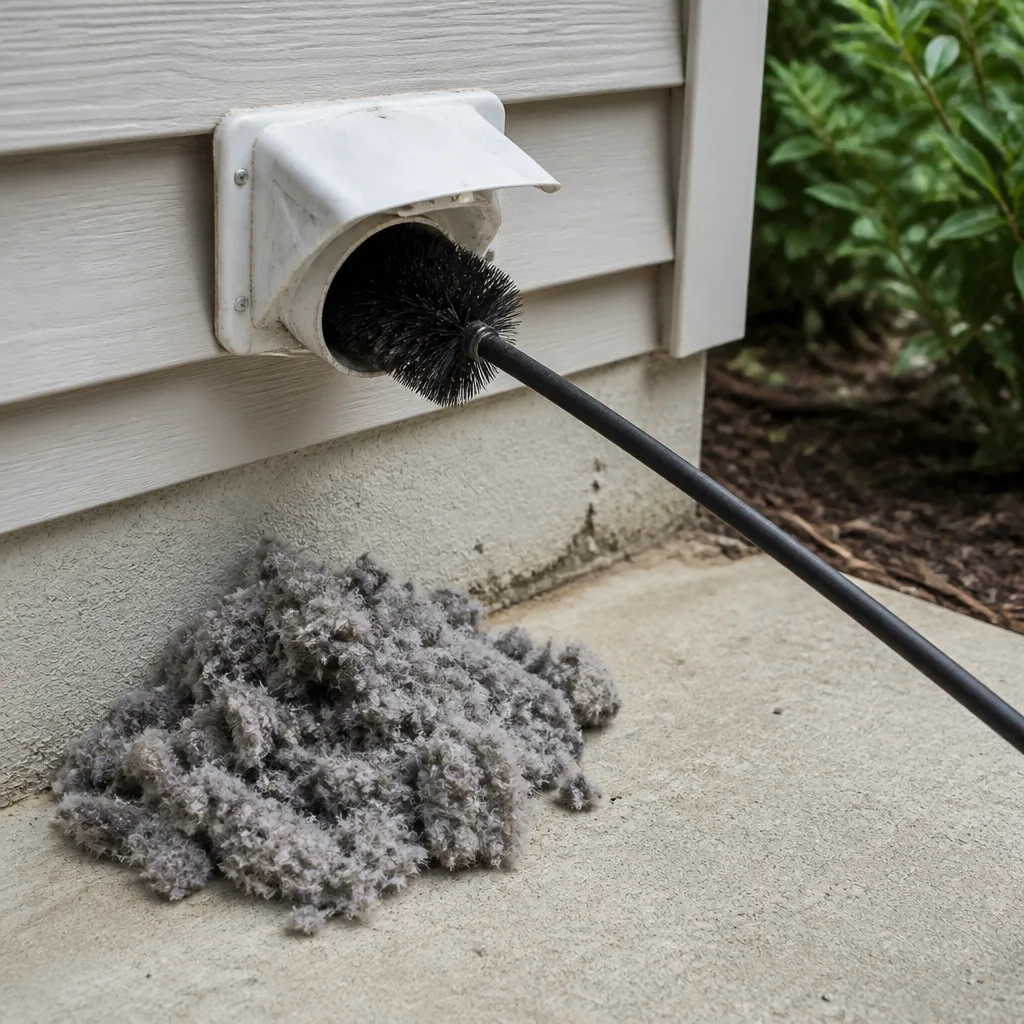 Dryer vent cleaning
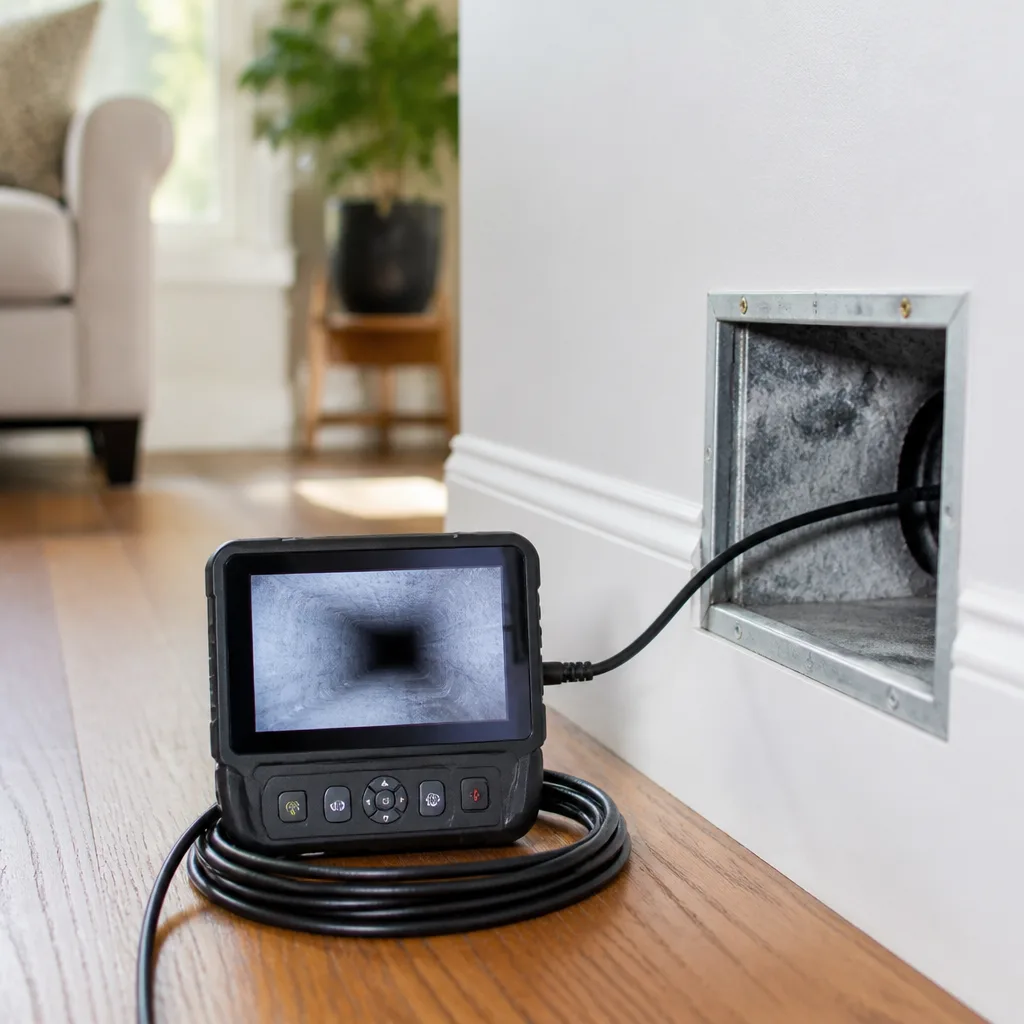 Camera inspection
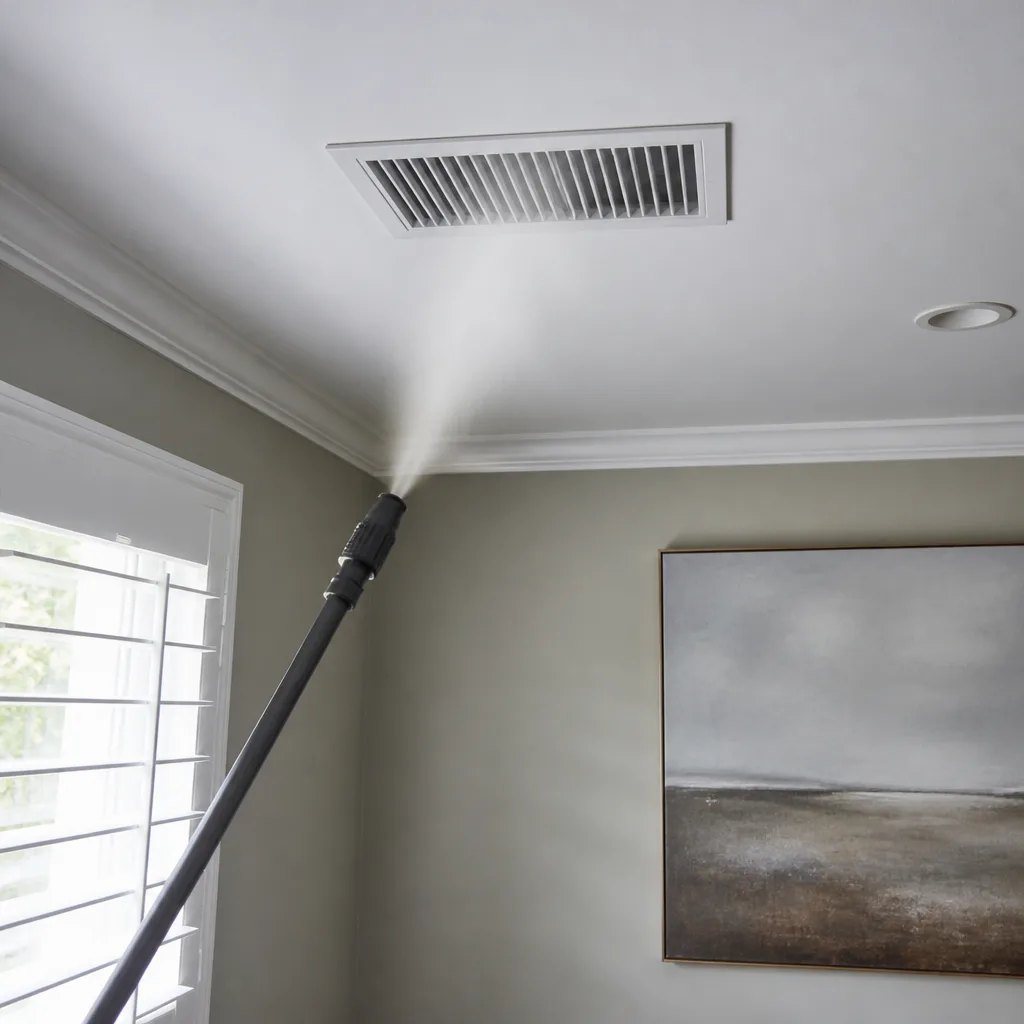 Sanitizing & deodorizing
Whole-system duct and dryer vent check with before-and-after photos - you see exactly what came out of your vents
That "$99 whole-house special" is a bait ad - the real number appears once they are in your hallway, or the "clean" is a shop-vac at the register. We photograph the inside of your ducts before and after instead.
Air Duct Cleaning Maintenance Checklist for Boulder Homeowners
Most duct cleaning advice you’ll find online says to schedule a cleaning every three to five years. That schedule was written for flat, humid Midwest climates where the main enemy is moisture and the seasons mostly behave. Boulder isn’t that place. A Front Range city that pulls wildfire smoke through its valleys in August, gets scoured by Chinook winds in winter, and hosts constant construction dust as the city builds outward needs a calendar built around those actual triggers, not a generic interval. In this guide we’ll walk through a month-by-month maintenance framework tuned to Boulder’s climate, the MERV ratings that make sense here and when a higher one can hurt your system, the DIY checkpoints you can handle yourself, and the signs that you’ve moved past maintenance and into professional remediation.
Quick Answer
A Boulder duct maintenance checklist should be organized around local seasonal events, not a fixed multi-year interval: upgrade filtration before fire season in June, inspect for smoke residue after any major smoke event in late summer or fall, check the blower and duct connections before heating season in October, and document register and filter condition between professional cleanings so a contractor can benchmark real degradation. Running the right MERV filter for the current air quality event, verifying flex duct connections after freeze-thaw cycles, and knowing the signs of failed maintenance matter more than hitting a calendar year.
Styles & brands we work with
- Whole-home duct cleaning
- Dryer vent cleaning
- Camera inspection
- Sanitizing & deodorizing
Table of Contents
- Why Boulder’s Climate Changes the Duct Cleaning Schedule
- The 12-Month Boulder Duct Maintenance Calendar
- Filter MERV Ratings for Boulder Air Quality Events
- DIY Checkpoints Between Professional Cleanings
- What to Document for Real Benchmarking
- Signs Maintenance Has Failed and You Need Remediation
- Common Mistakes to Avoid
- When to Call a Professional
Why Boulder’s Climate Changes the Duct Cleaning Schedule
The standard three-to-five-year duct cleaning interval assumes a climate where the air your system moves is fairly consistent. Boulder throws four very different kinds of air at your ductwork over the course of a year. Understanding each one explains why a maintenance checklist here has to be seasonal rather than tied to a single calendar number.
Wildfire smoke. Late summer and fall smoke events push fine particulate deep into return ductwork. The particles that make it past your filter settle on duct walls, the blower wheel, and the evaporator coil. A single heavy smoke season can load a system more than a full year of ordinary household dust.
Chinook wind events. Boulder’s downslope winds drive fine dust and grit into every gap in the building envelope. Open windows during a warm Chinook day pull that material straight into return grilles. Homes near open space or newly graded development edges collect noticeably more.
Construction dust. Boulder’s ongoing development, infill, and renovation activity means fine gypsum and concrete dust is a fact of life in many neighborhoods. That dust is heavier and more abrasive than ordinary household lint, and it settles in duct runs where ordinary cleaning doesn’t reach.
Freeze-thaw cycles. Repeated freezing and thawing stresses flex duct connections, especially in crawlspaces, attics, and rim-joist bays. A connection that was sealed tight in October can develop a gap by February, pulling unconditioned air and dust into the supply side.
That’s four separate stressors that each map to a season. A checklist built around them does more for your indoor air quality in Boulder than any generic interval.
The 12-Month Boulder Duct Maintenance Calendar
Here’s the action framework we recommend for Boulder homes. Treat it as a starting point and adjust the intensity based on your home’s age, whether you’re near active construction, and whether anyone in the household has respiratory sensitivities.
- January – post-Chinook flex duct check. After the windy stretch of winter, walk your crawlspace or attic and look for sagging flex duct or separated connections. If you can reach the supply plenum, check that the tape and mastic at each connection are still intact.
- February – filter log review. Pull out your filter log (more on this below) and note how quickly the last filter loaded. A sudden change in loading rate often points to a duct gap or a return leak.
- March – register visual inspection. Remove a few supply and return grilles and look inside with a flashlight. Note any visible dust accumulation, discoloration, or debris. Photograph what you see.
- April – pre-construction season walk-through. If your neighborhood has active construction, inspect window seals, door sweeps, and return grilles for fine grit accumulation. Tighten what you can.
- May – blower access panel check. With the system off, remove the blower access panel and look at the blower wheel. Heavy dust loading on the wheel fins calls for professional service.
- June – pre-fire-season filter upgrade. This is the most important month on the Boulder calendar. Upgrade to a higher-MERV filter before smoke season, but verify your system can handle the added static pressure (see the MERV section below).
- July – smoke-readiness check. Confirm your filter is seated properly, window seals are tight, and any whole-home filtration equipment (Honeywell or Aprilaire systems, for example) is functioning. If you have one, replace its media per the manufacturer’s spec.
- August – mid-smoke-season inspection. If a smoke event has passed, check filter loading again. Heavy smoke can load a filter in days rather than weeks; replace when loaded rather than waiting for a calendar change.
- September – post-smoke-event duct inspection. After smoke season, inspect registers and the blower wheel for fine residue. If you see oily or brownish deposits, that’s a sign smoke particulate has reached the duct interior and a professional cleaning may be warranted.
- October – pre-heating-season blower check. Before your system runs heavily for the heating season, verify the blower wheel is clean, the filter is fresh, and all flex duct connections survived the summer.
- November – return-side inspection. The return side sees the heaviest loading. Inspect return plenums and the filter rack for buildup that may have happened during smoke season.
- December – year-end documentation review. Compare your year’s photos and filter logs. You now have a real benchmark for next year and a concrete record if you bring in a professional.
This is the cadence our technicians have refined over up to 9 years of experience in Front Range homes. It’s not a fixed yearly cleaning schedule; it’s a set of checkpoints that tell you when cleaning is actually needed.
Filter MERV Ratings for Boulder Air Quality Events
The single biggest maintenance mistake in Boulder is running too-high a filter without checking whether the system can handle it. The right MERV rating depends on the air quality event happening that week, and on the static pressure your air handler can tolerate.
MERV-11 for baseline conditions
For ordinary weeks with no smoke event and no construction dust nearby, a MERV-11 filter captures the majority of household dust, pollen, and lint without adding significant static pressure. It’s the workhorse for most of the year in Boulder.
MERV-13 for smoke events and active construction
When wildfire smoke is in the air or a construction project is happening nearby, step up to MERV-13. This rating captures a much higher percentage of fine particulate and is the right tool for those specific days. Keep it in place until air quality returns to baseline, then step back down.
MERV-16 – why higher isn’t always better
MERV-16 filters are appropriate for some homes but can be a real problem for older air handlers. The tighter the filter media, the higher the static pressure drop across the filter rack. On an older furnace or air handler with a marginal blower, that added pressure can reduce airflow enough to strain the blower motor, reduce heating and cooling efficiency, and even cause the system to run hotter. Boulder has many older homes with original equipment; a MERV-16 filter in one of those is often a mistake.
Before upgrading beyond MERV-13, ask a technician to check your system’s rated static pressure and compare it against the filter’s pressure drop spec at your airflow. That’s a specific, measurable number, and it’s the only way to know whether your system can handle the filter. Guessing based on marketing language is how Boulder homeowners end up with a strained blower.
If you have a whole-home filtration system from Honeywell or Aprilaire, follow the manufacturer’s media spec rather than swapping in a generic filter. These systems are engineered around specific media, and using the wrong filter bypasses the equipment’s design intent.
DIY Checkpoints Between Professional Cleanings
Several maintenance checks are safe and simple to do yourself. Here are the ones we recommend for Boulder homeowners between professional visits.
Visual register inspection
Remove a few supply and return grilles and shine a flashlight inside. Look for visible dust buildup on the duct walls, debris accumulation, or discoloration. Photograph what you see – this becomes your baseline for comparison. Chalky white deposits often point to drywall dust from construction nearby; brownish or oily deposits can indicate smoke residue or mold.
Flex duct sag check
In crawlspaces and attics, look at every run of flex duct. Ducts should be relatively straight with gentle bends and should not sag significantly between supports. Heavy sag creates low spots where dust and moisture accumulate, and long unsupported runs vibrate loose. If you find a sagging section, note it in your log and mention it to a technician.
Blower wheel dust buildup assessment via access panel
With the system off and the power disconnected at the breaker, remove the blower access panel. The blower wheel has fins; if those fins show noticeable dust caked or built up, you’re overdue for professional cleaning. A thin even film is normal; heavy caked buildup is not, and it directly reduces airflow. Do not attempt to clean the blower wheel yourself – it’s a precision balanced component and the wrong cleaning method damages it.
What not to do yourself
Do not attempt to clean ductwork interiors yourself with a shop vacuum or a consumer-grade “duct cleaning” kit. Consumer vacuums lack the airflow to lift settled particulate, and makeshift brushes can damage flex duct liners. Leave interior cleaning to a professional with the right equipment.
What to Document for Real Benchmarking
Documentation is what separates a real maintenance checklist from a guess. When you can show a contractor before-and-after evidence of how your system behaves, you get better advice and better results. Here’s what to capture.
- Photos of each register at each checkpoint. Same angle, same lighting, monthly will do. These become your degradation baseline.
- Filter condition log. Date installed, MERV rating, filter brand, and a short description of how loaded it is at replacement (“heavily gray along edges” or “light dust, mostly even”).
- Ambient conditions at each checkpoint. Note whether a smoke event, Chinook event, or nearby construction project was active during the period. This context matters when a contractor interprets your logs.
- Airflow observations. A simple tissue test at a supply register tells you whether airflow is steady. If you notice a change, note the date.
- Any unusual odor or noise. Note when it started and whether it correlates with the system running or with outdoor conditions.
In our experience, homeowners who keep even a basic photo and filter log get more accurate recommendations from any contractor. A cleaning crew that walks into a home with clear documentation can benchmark degradation against your own baseline rather than guessing. That’s why air duct cleaning at our shop always starts with a real conversation about what the customer has observed.
Signs Maintenance Has Failed and You Need Remediation
Maintenance prevents problems; remediation fixes them. Knowing when you’ve crossed that line saves you from wasting time on checklists when you actually need professional service. Here are the signs.
Visible mold at supply registers
If you see fuzzy or powdery growth, dark staining that spreads, or visible mold at supply or return registers, that’s past maintenance. Mold in ductwork requires proper containment and HEPA vacuuming by a professional. This is where equipment matters: the tools used for contamination-level work (like Abatement Technologies equipment) are designed for fine particulate and spore containment in a way that ordinary cleaning rigs are not.
Persistent odor after filter changes
A musty or sour smell that returns within days of a filter change points to contamination deeper in the system – often the evaporator coil, duct lining, or a section of duct near moisture intrusion. Filter changes won’t fix that odor because the source is downstream.
Measurable airflow drop at vents
If you hold a tissue at a supply grille and it droops noticeably compared to a few months ago, that’s a real data point. Airflow drop can come from a loaded filter, a failing blower wheel, a separated duct, or a blocked return. When the drop is consistent across multiple registers, professional diagnosis is the next step.
Recurring respiratory symptoms in the household
If multiple household members start noticing similar symptoms when the system runs and the symptoms follow the seasonality of your HVAC use, it’s worth getting the system inspected. We don’t diagnose health conditions, but we can tell you what the ducts contain and what they don’t.
If any of these describe your home, you’ve moved from the maintenance checklist into professional territory. The right contractor will inspect, identify the source, and clean with equipment matched to the contamination level. That’s exactly what we do here in Boulder.
See the difference
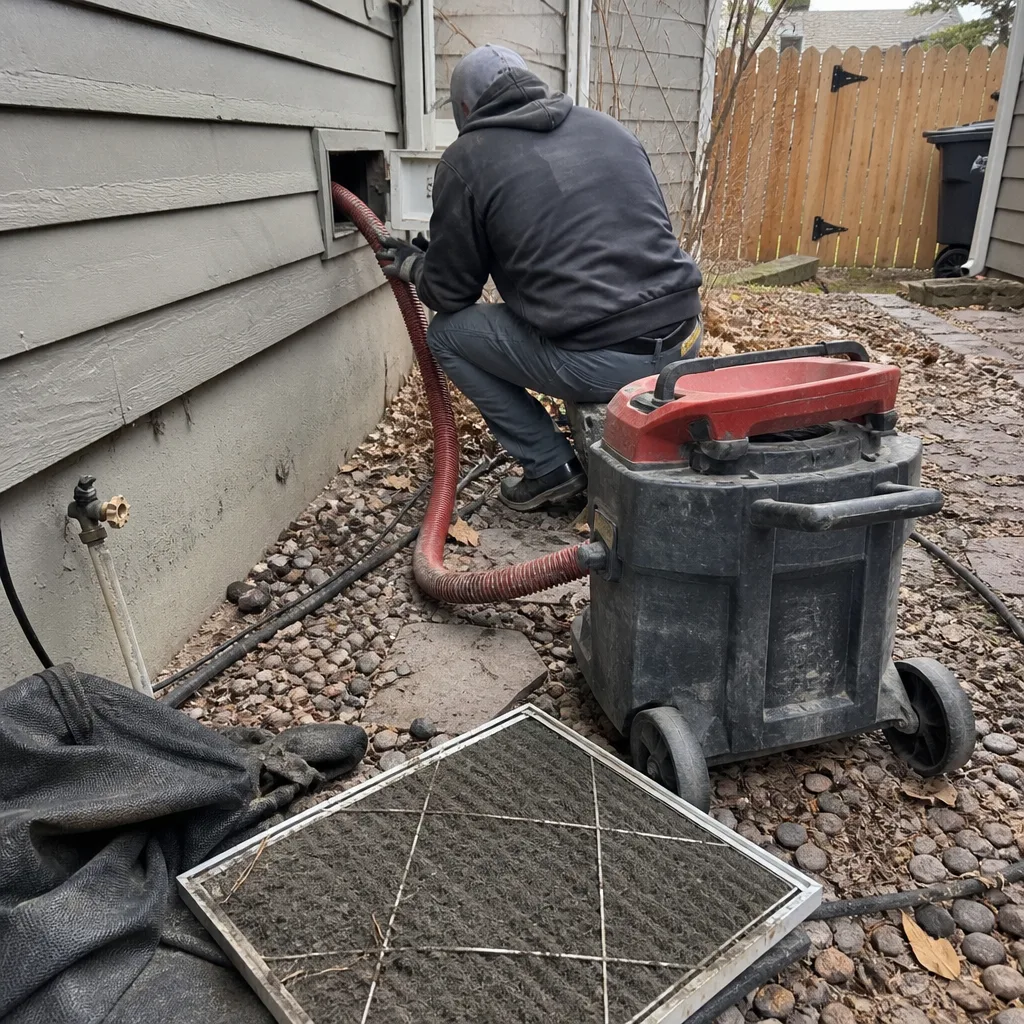 Before
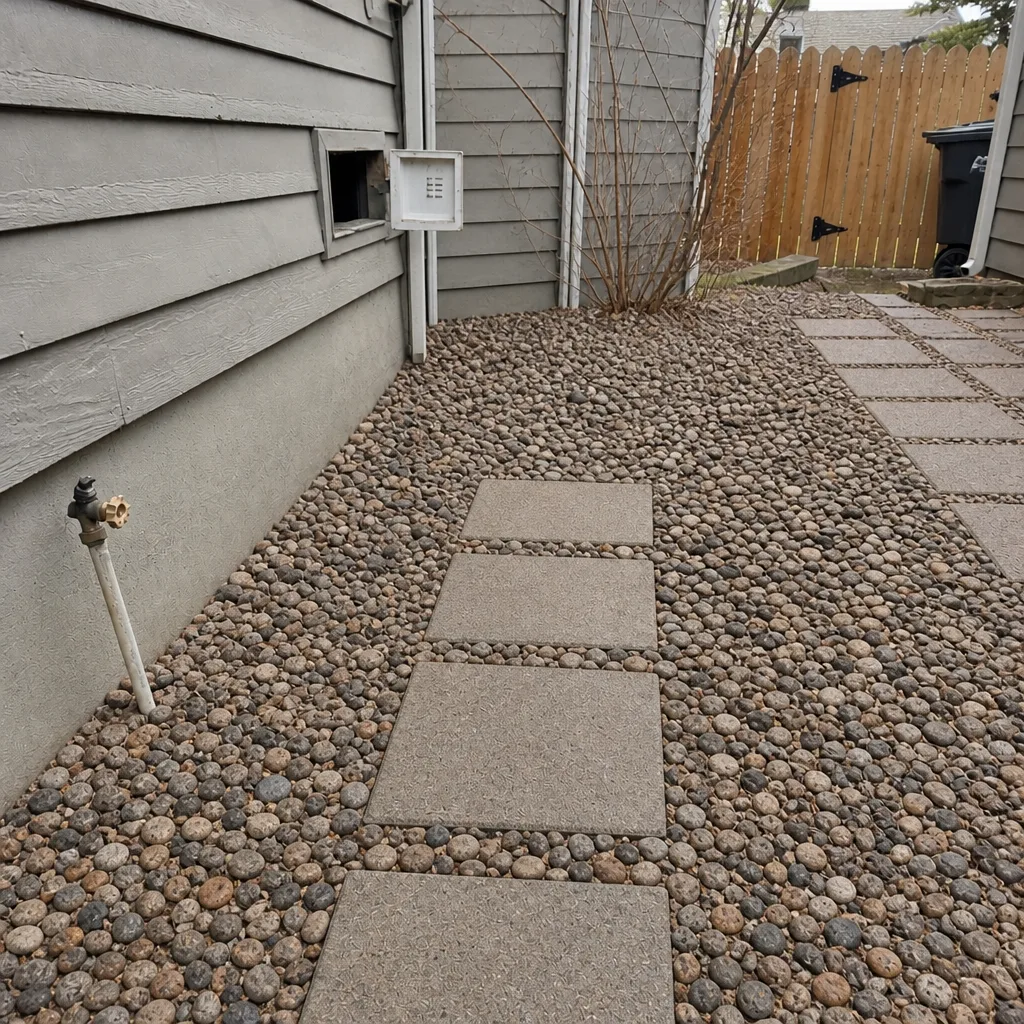 After
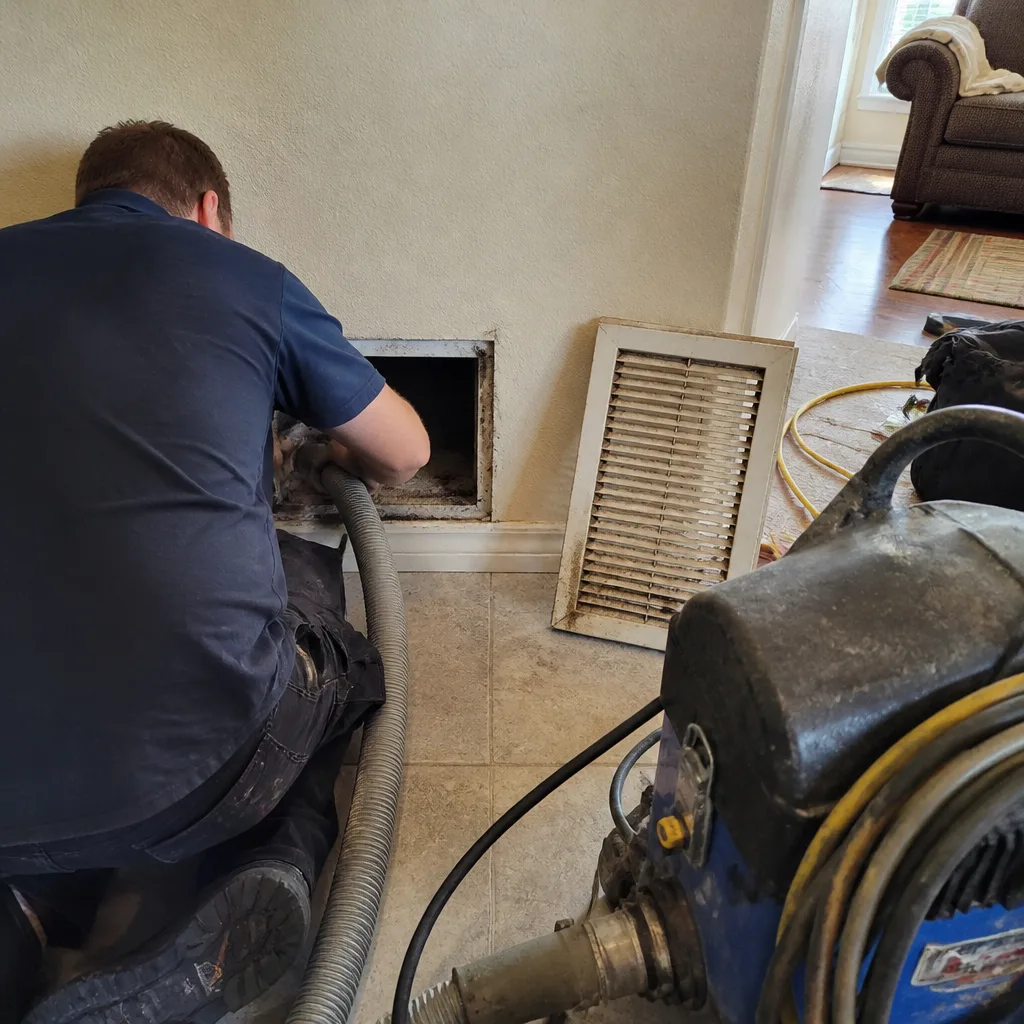 Before
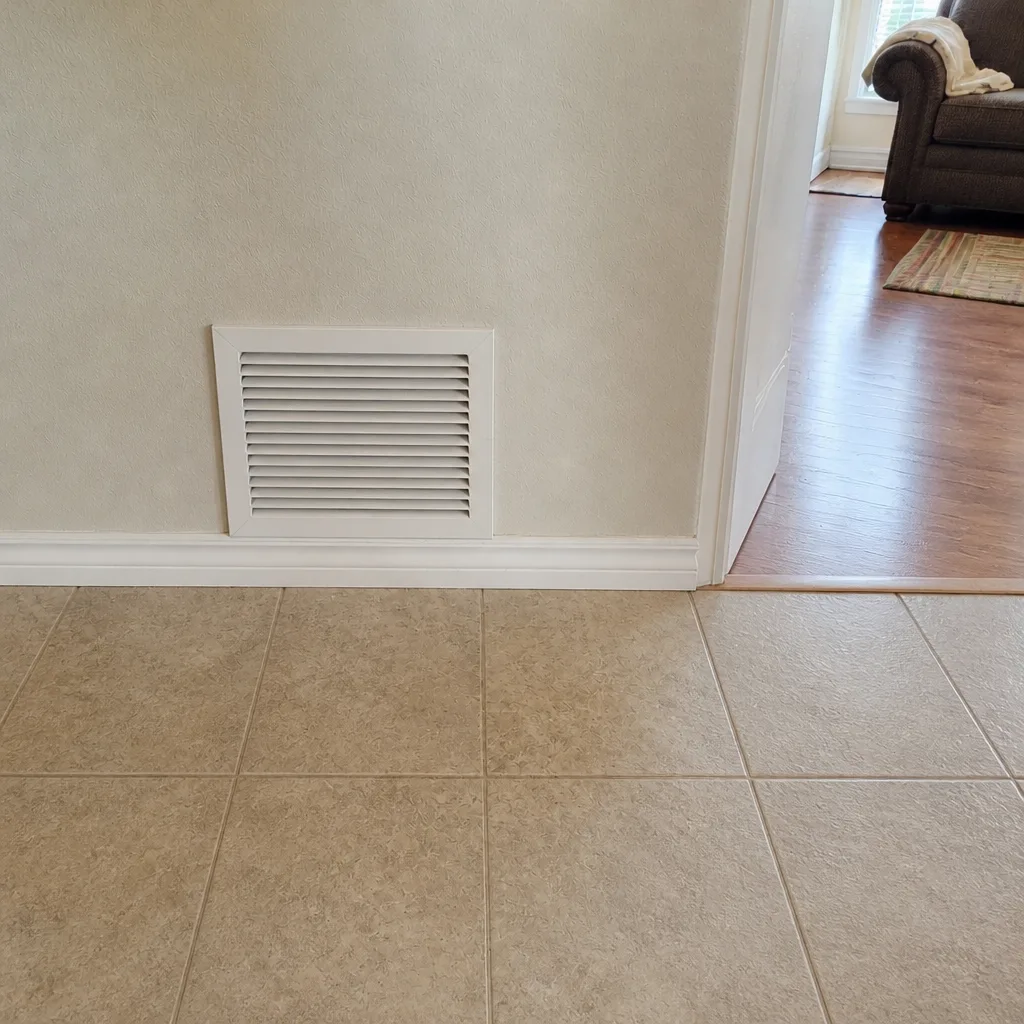 After
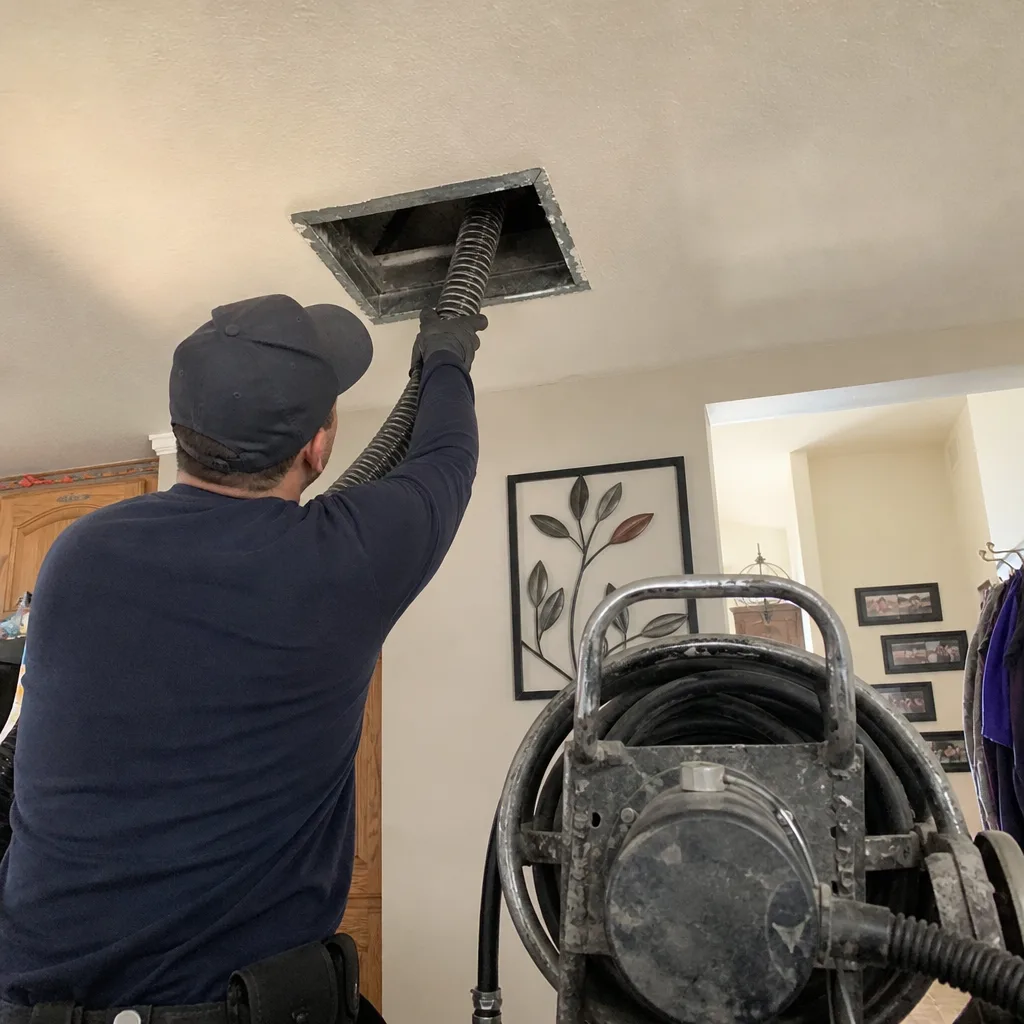 Before
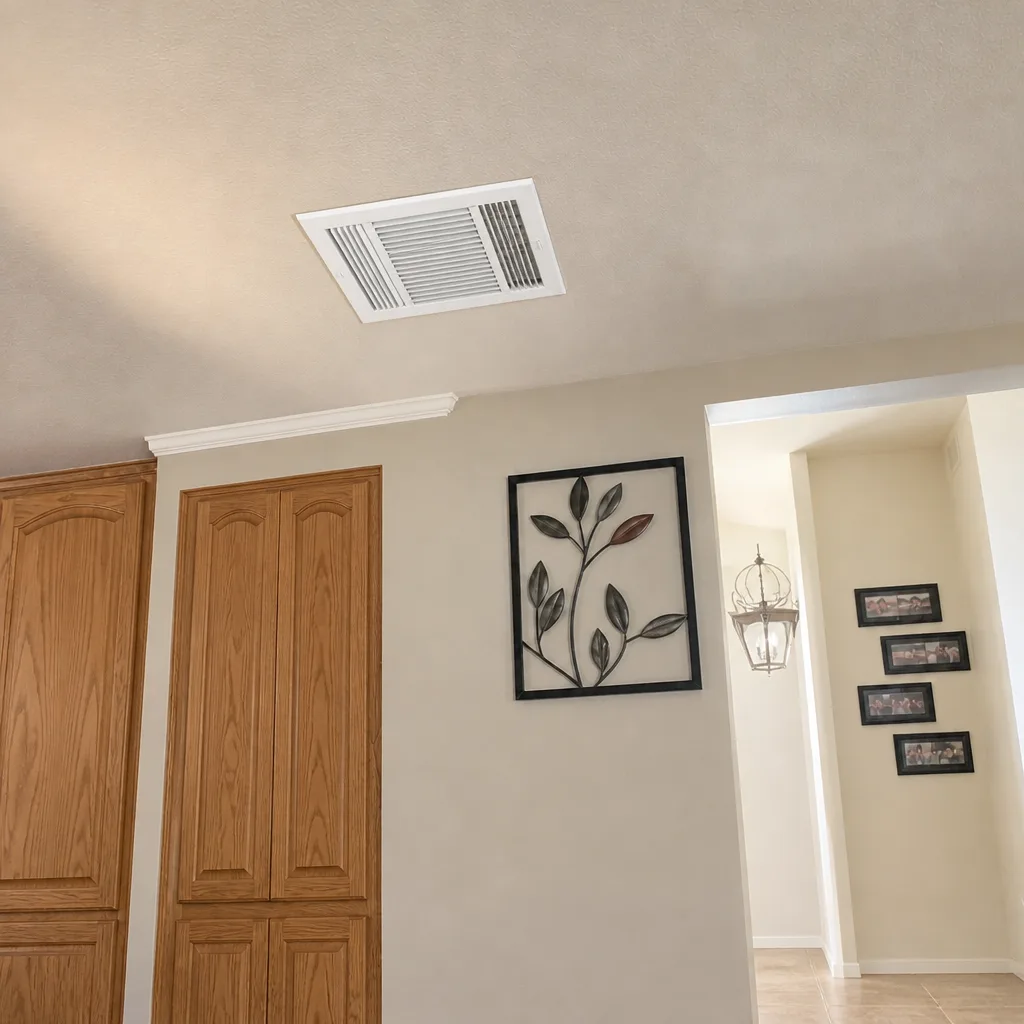 After
Tools That Actually Match the Job
One of the reasons our maintenance checklist is worth taking seriously is that we can actually address what it finds. A checklist that flags problems but can’t correct them isn’t worth much. Here’s the equipment our technicians bring to a Boulder home.
Rotobrush contact cleaning and Nikro negative-air HEPA
Contact cleaning with a Rotobrush system physically agitates and lifts settled dust from duct walls rather than just passing air through. That matters in Boulder, where fine construction dust and smoke particulate bind to duct surfaces. Pairing contact cleaning with a Nikro negative-air HEPA machine keeps the working environment contained as material is lifted. These aren’t consumer vacuums dressed up as duct cleaning rigs; they’re the same class of equipment restoration contractors use.
Abatement Technologies for contamination-level jobs
When we see evidence of mold spores or heavy fine particulate, we can bring in Abatement Technologies equipment designed for that class of work. Most residential duct cleaning doesn’t require it; when it does, having it on hand changes the scope of what’s possible in a single visit.
Honeywell and Aprilaire system fluency
Many Boulder homes run whole-home filtration from Honeywell or Aprilaire. We’re trained on these systems and understand how their media, bypass, and controls interact with duct cleaning. Cleaning around a whole-home filter without understanding the equipment is how homeowners end up with a filter cabinet that no longer seats properly.
Repair alongside cleaning
If we find a separated flex duct, a crushed run, or a damaged boot, we fix it. Our Boulder Duct Cleaning service is a clean-and-repair operation, not a clean-only one. That distinction matters when the checklist flags structural problems rather than just dust.
Common Mistakes to Avoid
- Running a MERV-16 filter “for extra protection” without checking static pressure. On older Boulder air handlers, this can strain the blower motor and hurt efficiency more than it helps air quality. Check static pressure first, or step up only to MERV-13.
- Waiting for the “three to five year” mark regardless of local conditions. That interval was written for other climates. A Boulder home that saw a heavy smoke season or sits near active construction may need inspection sooner, and one with baseline air quality may need it later.
- Cleaning only the visible registers. The dust you see on a grille is the dust that escaped the ductwork. The material most worth removing is inside the runs, on the blower wheel, and at the coil.
- Ignoring flex duct sag in the crawlspace. Sagging runs collect material at low points and vibrate loose at connections. A small inspection in January prevents a larger separation by spring.
- Treating dryer vent cleaning as optional. It isn’t – dryer vents are a documented fire safety topic, and lint accumulation is a fire hazard independent of duct maintenance for your HVAC. This is a standalone safety service, not a duct cleaning add-on.
- Hiring a low-bid cleaner with no equipment transparency. If a contractor can’t tell you what machine they’ll use and how containment works, they’re likely running a shop vacuum through a hose. Ask before you book.
- Skipping documentation. Without photos and filter logs, you can’t tell whether your maintenance is working. Six photos and a one-page log are all it takes.
When to Call a Professional
Call a professional when your own checkpoints flag something you can’t resolve: visible mold at registers, persistent odor that returns after a filter change, measurable airflow drop, caked dust on the blower wheel, or any structural damage to ductwork. Also call if it’s been several years since any professional inspection and you’ve had a heavy smoke season or nearby construction. And if your checklist has been driving cleanings at a reasonable cadence but you’re still noticing symptoms, the right move is a real assessment – we can walk your system, tell you what we see, and give you an honest scope. Boulder Duct Cleaning offers free estimates in Boulder – call (877) 550-7147. We answer 24/7. Fast dispatch from 7am to 7pm, Sunday through Friday. If a call comes in outside dispatch hours, we book it into the next opening, Sunday through Friday, 7am to 7pm.
The same goes for dryer vent cleaning – it’s a fire-safety service with its own dedicated process and equipment, and it belongs on any honest maintenance checklist. If your dryer is running hot or taking longer than usual, that’s not a duct cleaning issue and it’s not something to defer.
Frequently Asked Questions
For most Boulder homes, an inspection every two to three years with professional cleaning scheduled when the inspection shows real accumulation is a better approach than a fixed cleaning interval. Homes near active construction, homes that saw a heavy smoke season, and homes with pets or recent renovation may need earlier inspections. The right cadence follows your own documentation, not a generic schedule.
No. A MERV-16 filter captures fine particulate at the filter rack, but it cannot remove what has already settled inside the ductwork, on the blower wheel, or at the evap coil. It also adds significant static pressure that older Boulder air handlers may not tolerate. The right combination is a MERV-13 filter during smoke events and a professional cleaning when residue builds up inside the system. Call (877) 550-7147 for an exact quote – estimates are free.
Look for visible separation at connections, sagging runs, or runs that have come loose from their supports. Photo documentation each winter makes a difference. If you can’t tell, ask a technician to inspect the crawlspace or attic connections during a routine visit. Do not attempt to reseal connections yourself unless you’re certain of the duct type and the sealant compatibility.
Cheap quotes usually reflect one of three things: no real contact cleaning equipment, no containment (no HEPA negative-air setup), or a scope that only touches the visible registers. A shop vacuum with a long hose is not duct cleaning equipment. Ask any contractor what machine they’ll use, how containment works, and what the scope covers before you book. A firm price per job with equipment transparency is worth more than a low number that expands once the technician is on site.
Ask for before-and-after photos of your own ducts, not stock photos. A serious contractor will shoot photos of registers, plenum interiors, and the blower wheel before and after cleaning. We do this as standard practice because visual evidence is the only honest way to demonstrate work in a system you can’t otherwise see inside. If a contractor can’t show you your own ducts, don’t pay.
Dryer vent cleaning is a distinct service with its own equipment, process, and safety considerations. It’s a fire-hazard mitigation job, not a convenient add-on. If your dryer is running hot or taking longer to dry, that’s the signal to have the dryer vent cleaned – not your HVAC ducts. Both matter, and both are worth doing, but they’re not the same job. Call (877) 550-7147 for an exact quote on either – estimates are free.
The Bottom Line
A Boulder duct maintenance checklist works best when it’s tied to the city’s actual seasonal triggers rather than a fixed cleaning interval. Upgrade filtration before fire season in June (MERV-13, not MERV-16 unless static pressure allows), inspect for smoke residue and flex duct damage in September and January, and check the blower wheel before heating season in October. Document what you see each month so a contractor can benchmark real degradation. And when the checklist flags visible mold, persistent odor, or measurable airflow drop, you’ve moved past maintenance – call a professional with the equipment for that class of work, not the lowest bidder. We can walk your system and tell you honestly what it needs.
If you’d like help building your own home’s maintenance schedule, or if the checklist has pointed to something worth inspecting, call (877) 550-7147 for a free estimate. We answer 24/7. Fast dispatch from 7am to 7pm, Sunday through Friday. Our technicians have up to 9 years of experience with Front Range homes, and we bring Rotobrush contact cleaning, Nikro negative-air HEPA, and Abatement Technologies equipment when the job calls for it. See exactly what we use and why – the right equipment and honest scope are what actually protect your air quality.
Written by the team at Boulder Duct Cleaning.