
Last updated November 15, 2026
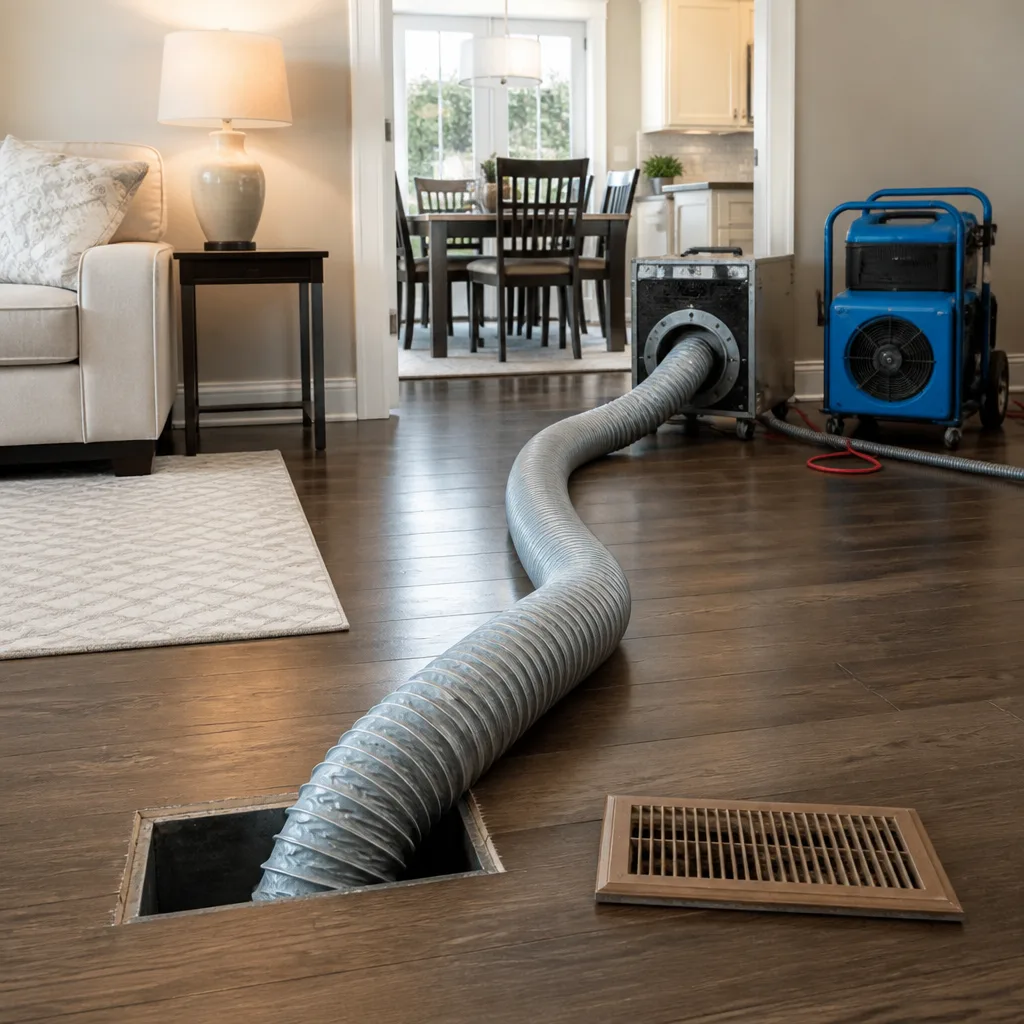 Whole-home duct cleaning
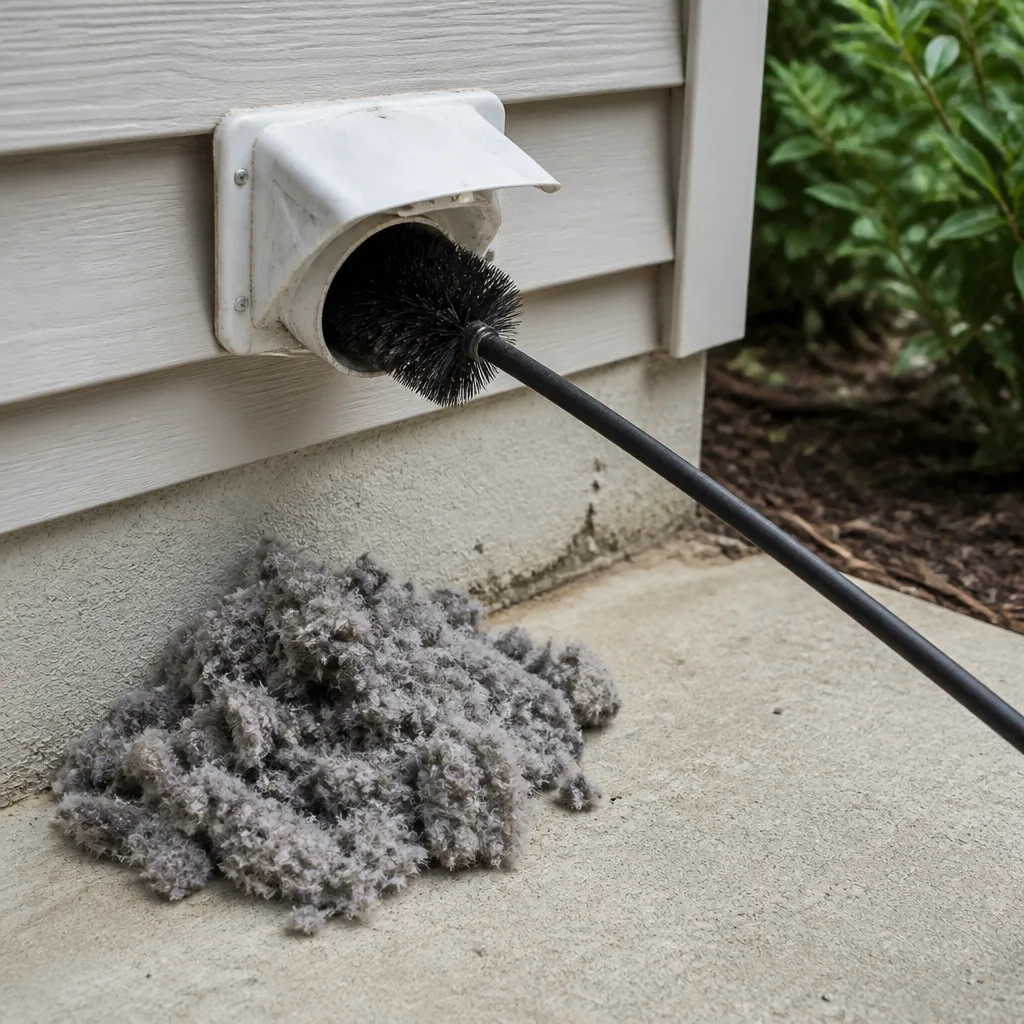 Dryer vent cleaning
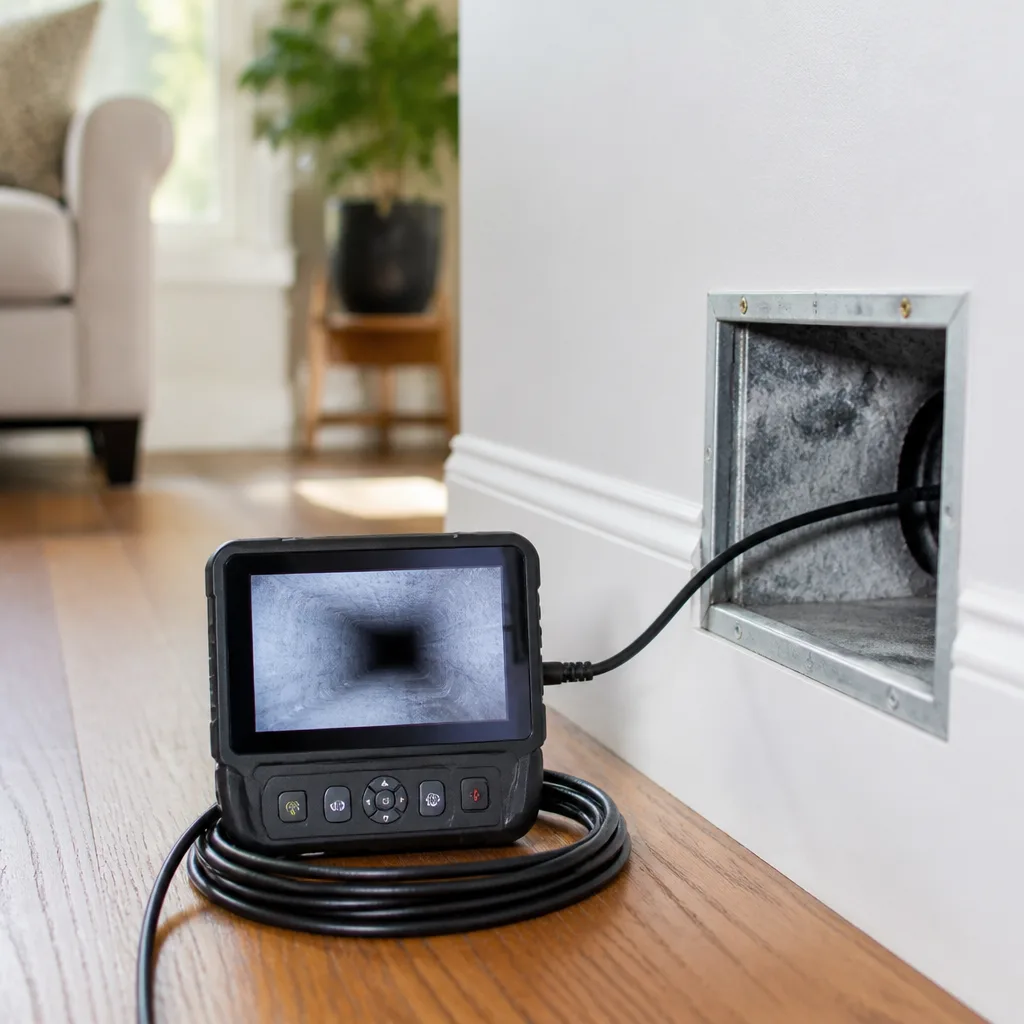 Camera inspection
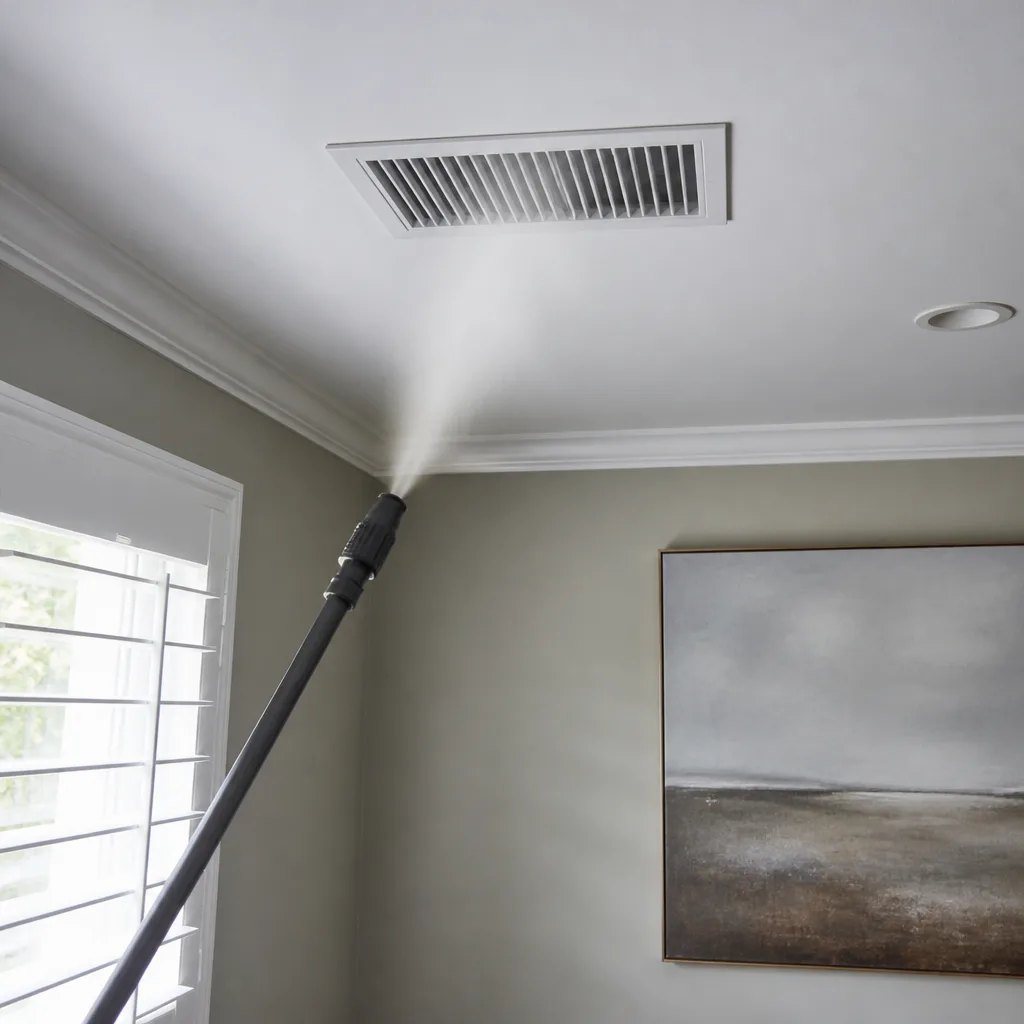 Sanitizing & deodorizing
Whole-system duct and dryer vent check with before-and-after photos - you see exactly what came out of your vents
That "$99 whole-house special" is a bait ad - the real number appears once they are in your hallway, or the "clean" is a shop-vac at the register. We photograph the inside of your ducts before and after instead.
How to Hire an Air Duct Cleaning Contractor in Boulder: A Step-by-Step Guide
The most common duct cleaning problem in Colorado isn’t a fake company that vanishes with your deposit. It’s a real company with a magnetic sign on the truck, a $99 teaser price, and a portable shop-vac rig that shows up at your door and then “discovers” a few hundred dollars of mold remediation you may or may not need. That gap between a price and a scope of work is where Boulder homeowners get hurt, and it’s almost never visible in a Google listing. This guide gives you the questions to ask, the equipment specs to verify, and the quote line items to check before anyone touches your ductwork.
Quick Answer
Hiring an air duct cleaning contractor in Boulder comes down to three checks: verify the equipment (a professional truck-mounted or negative-air unit with real CFM, a rotary contact brush system, and a borescope for before-and-after inspection), verify the process (a written scope of work with line items you understand, no surprises added on-site), and verify the contractor’s standing for the specific work involved (NADCA alignment for cleaning, a Colorado mechanical license once the job crosses into duct repair or HVAC modification).
Styles & brands we work with
- Whole-home duct cleaning
- Dryer vent cleaning
- Camera inspection
- Sanitizing & deodorizing
Table of Contents
- Why Duct Cleaning Is a Different Problem in Boulder
- The Three Equipment Questions to Ask Before You Book
- NADCA Certification and the ACR Standard, Explained
- How to Read a Duct Cleaning Quote
- Colorado Licensing: When Cleaning Becomes Mechanical Work
- Wildfire Smoke and Mold Findings: What a Credible Answer Sounds Like
- Step-by-Step: Hiring a Contractor in Under an Hour
- Common Mistakes to Avoid
Why Duct Cleaning Is a Different Problem in Boulder
Boulder sits at the base of the Flatirons where the winter air is dry, the spring wind moves a lot of fine dust, and the wildfire smoke season along the Front Range has become a predictable part of the calendar. That combination changes what’s actually inside a typical Boulder home’s ductwork. It’s less about the lint-and-hair picture duct cleaners show in brochures and more about fine particulate that settles into the return-side runs, plus the drywall and sawdust residue left behind after a remodel.
Housing stock matters too. Boulder has a wide mix: mid-century ranches with short, simple trunk-and-branch systems, older Victorians and bungalows near downtown with ducts retrofitted into spaces they weren’t designed for, and newer builds in the Gunbarrel and north Boulder areas with tighter, more complex systems and whole-home filtration. That last category often runs a Honeywell or Aprilaire filter setup, and anyone you hire should recognize those systems and know how to clean around them without dislodging filter housings or bypass dampers.
The reason this matters for hiring is simple: a contractor who’s used to one kind of job will quote you for one kind of job. If your home was built after 2000 with a whole-home filtration system, a cleaner who only handles 1970s ranch ductwork is going to be out of their depth. When you research Boulder Duct Cleaning, the questions below are what separate the operators who actually know Boulder housing from the ones who just know how to run a coupon ad.
The Three Equipment Questions to Ask Before You Book
Ask these three questions on the phone before you schedule anything. A serious contractor answers them without hesitation. A shop-vac operation either doesn’t know what you’re asking or pivots to a story about how “the equipment doesn’t really matter.” It does. These three questions will tell you in about ninety seconds which kind of company you’re dealing with.
1. What vacuum unit do you use, and what’s its CFM rating?
CFM means cubic feet per minute, and it’s the measure of how much air the vacuum moves. Portable shop-vac rigs and consumer-grade units sit in the low hundreds. Professional duct cleaning vacuums, including truck-mounted units and high-capacity negative-air machines, move substantially more. Ask the question, listen for a specific answer, and ask for the unit name. A contractor running a Nikro negative-air machine or a Rotobrush system knows the model and can tell you why they chose it. A contractor who answers “we use a really powerful vacuum” is telling you something else.
2. Do you use a rotary brush system or contact vacuum only?
These are genuinely different processes. A contact vacuum alone removes loose debris from surfaces it can reach. A rotary brush system, like the Rotobrush contact-cleaning tools, mechanically agitates the duct walls to break loose adhered dust and then pulls it into the vacuum airstream. For ducts that have collected years of fine particulate, especially in a dry climate like Boulder’s, contact agitation matters. If a contractor only offers “vacuuming,” ask how they plan to dislodge adhered material. The answer will tell you whether they’re cleaning or just dusting.
3. Do you have a borescope camera for before-and-after inspection?
A borescope is a small camera on a flexible cable that goes into the ductwork. The purpose isn’t inspection for its own sake. It’s so you can see what’s in the ducts before the work starts and what the ducts look like after the work is finished. Ask the contractor to show you both. If they can’t, or if the “before” footage looks suspiciously like stock imagery, that’s your answer. Requesting a borescope check is the single most effective way to know the work was actually done and not just billed.
NADCA Certification and the ACR Standard, Explained
The National Air Duct Cleaners Association, or NADCA, publishes a standard called ACR, currently in its 2021 edition, which is short for Assessment, Cleaning, and Restoration of HVAC systems. It describes what a competent duct cleaning job should actually involve. What most homeowners don’t realize is that ACR compliance isn’t legally required in most jurisdictions, including in Colorado, so the standard is a benchmark you use to evaluate contractors, not a license check.
Here’s what ACR compliance actually asks a contractor to do, versus what’s often skipped:
- System assessment before cleaning. A visual and, ideally, camera-based inspection of the system before work begins, documented in writing. Skipping this is the most common shortcut.
- Source removal, not encapsulation. The point is to physically remove contaminants, not seal them in place with a coating or fog the system with a sanitizer.
- Protection of components. Motors, coils, filter housings, and dampers get protected or bypassed during the work. A cleaner who doesn’t know this will leave you with a seized blower motor.
- Cleaning of the entire system, not just the visible runs. Returns, plenums, and accessible trunk lines are in scope, not just the straight runs behind the supply vents.
- Post-cleaning verification. A documented check that the system is clean and functioning, ideally with camera footage.
Many legitimate contractors are NADCA members and follow ACR. Many are not members and still do excellent work. The certification isn’t a magic stamp, but asking “are you NADCA certified, and do you follow ACR 2021?” is a good filter because it shows whether a contractor has engaged with the professional standard at all. A blank answer is informative.
How to Read a Duct Cleaning Quote
A trustworthy duct cleaning quote has line items you can map to a physical thing the contractor will do. An untrustworthy quote has buzzwords with no process behind them. The difference shows up the moment you read the estimate. Ask for the quote in writing before any work starts, and treat “we’ll work it out when we get there” as a warning sign.
Legitimate line items:
- Duct cleaning, whole system, with number of supply and return runs specified
- Rotary brush or contact cleaning of supply and return trunks and branches
- Blower motor and accessible coil cleaning (usually a separate line)
- Dryer vent cleaning, quoted separately and specifically as its own scope
- Repair work if damaged ductwork is identified, quoted after inspection
Line items that need justification:
- “Sanitizer treatment” or “anti-microbial fogging” added as a default. These may be appropriate in specific contamination situations, but they aren’t routine and shouldn’t be standard on every invoice.
- “Coating” or “encapsulation” of duct interiors. This is occasionally legitimate in restoration work but rarely justified on a routine residential cleaning, and a contractor should explain what condition makes it necessary.
- Any line item added to the quote between the phone call and the arrival. Ask what changed and why.
The single rule that protects you: one flat price for the whole system, agreed before work starts, in writing. Per-vent pricing is always a problem because it lets the contractor determine the invoice by deciding how many vents exist after the fact. Ask for the whole-system number, and ask what it includes.
Colorado Licensing: When Cleaning Becomes Mechanical Work
Duct cleaning itself is typically treated as cleaning, which doesn’t require a Colorado mechanical contractor license. Duct repair, duct modification, duct sealing that involves cutting into the system, and any work on the HVAC mechanical components (the furnace, the air handler, the coil) sit on the other side of a line. Once the job crosses into modifying the HVAC system, most municipalities require a licensed mechanical contractor, and Boulder is no exception.
What this means for you in practice:
If you’re hiring a cleaner, ask whether the scope of work includes any repair. If it does, ask whether they carry the Colorado license class that covers HVAC mechanical work, or whether they bring in a licensed mechanical contractor for that portion. A contractor who can clean and also do the repair work under the right license is a different kind of operator than one who cleans only. When we look at air duct cleaning, the honest position is this: cleaning is its own service, and duct repair is its own service, and a contractor should be explicit about which one they’re doing and what license covers it.
Don’t take a verbal assurance. Ask for the license class if the work crosses into mechanical territory. A legitimate contractor will tell you exactly which one applies.
Wildfire Smoke and Mold Findings: What a Credible Answer Sounds Like
This is where the on-site upsell lives. A duct cleaner opens a return and tells you they found “mold” or smoke contamination and recommends a treatment for a few hundred dollars. What separates a real answer from a sales pitch is whether the contractor can specify the particulate type, show you the camera footage, and explain what standard they’re applying.
A credible contractor will do all four of these:
- Name the particulate. “Fine wildfire ash residue,” “suspected biological growth on the coil face,” “construction drywall dust from a recent remodel.” A vague claim of “mold” with no specific location and no visual evidence isn’t a finding, it’s a fear tactic.
- Show the borescope footage. Live, at the moment of the finding, with the camera in your duct and you watching the screen.
- Explain the remediation standard. Which standard applies, and why the recommended scope is what it is. For a smoke or mold situation, Abatement Technologies equipment (negative-air units, HEPA filtration rated for fine particulates) is the class of tool the situation calls for. Ask whether the contractor has that class of equipment available. If the answer is “we’ll spray something,” that’s a different conversation.
- Quote the remediation as a separate written line item you can accept or decline without losing the original cleaning scope.
If a contractor can’t do all four, they can’t do remediation. They’re selling a spray.
Step-by-Step: Hiring a Contractor in Under an Hour
Here’s the process, in order, for anyone who wants to move quickly but doesn’t want to get burned:
- Define the trigger. Why are you cleaning the ducts? Recent remodel, allergy symptoms, visible debris at the registers, a dryer running hot, a new-to-you older Boulder home. Knowing the trigger helps you evaluate the scope of work you’re quoted.
- Call two or three contractors and ask the three equipment questions. Vacuum CFM, rotary brush or contact-only, borescope available. Note who answers with specifics.
- Ask each for a written scope of work, including the number of supply and return runs, the trunk-and-branch cleaning, blower and accessible coil work, and a separate line for dryer vent service if needed.
- Ask whether they are NADCA aligned and follow ACR 2021. Ask about licensing for any repair work that comes up.
- Confirm the flat whole-system price in writing before any work starts. No per-vent pricing, no add-ons after arrival.
- Request before-and-after borescope footage as part of the service.
- Ask how the contractor handles a mold or contamination finding before they find anything. Their answer tells you whether they sell remediation or spray.
This process takes about an hour of calls and reading. It’s the difference between a cleaning and a coupon.
Common Mistakes to Avoid
- Booking on price alone. The lowest quote on the board is almost always a lead-in price that becomes a much larger invoice once the truck is in the driveway. A flat whole-system number in writing is the fair comparison, not the teaser in the ad.
- Accepting a “sanitizer treatment” or “anti-microbial” add-on without explanation. These appear on nearly every upsell-driven invoice, rarely with a specific condition that justifies them. Ask what was found, where, and on what footage.
- Skipping the equipment questions. A contractor who can’t name their vacuum or tell you whether they use a rotary brush is running equipment you don’t want in your home. The CFM question alone filters out most of the market.
- Not asking for borescope footage. Without before-and-after footage, you have no way to know the work happened. This is the single oversight that costs Boulder homeowners the most money.
- Hiring a cleaner to do duct repair. Cleaning and repair are different scopes with different licensing implications. If repair is needed, verify the license class for the mechanical work before proceeding.
- Treating dryer vent cleaning as an add-on. A hot dryer or lint accumulation behind the appliance is a fire-safety item, not a convenience. It should be its own line item with its own equipment, not a quick brush pass bolted onto the duct job.
- Hiring a carpet cleaner who “also does ducts.” The equipment overlap is thinner than it looks. Ask specifically what duct cleaning equipment they own versus rent, and whether they use Abatement Technologies or Nikro-class equipment for contamination situations.
See the difference
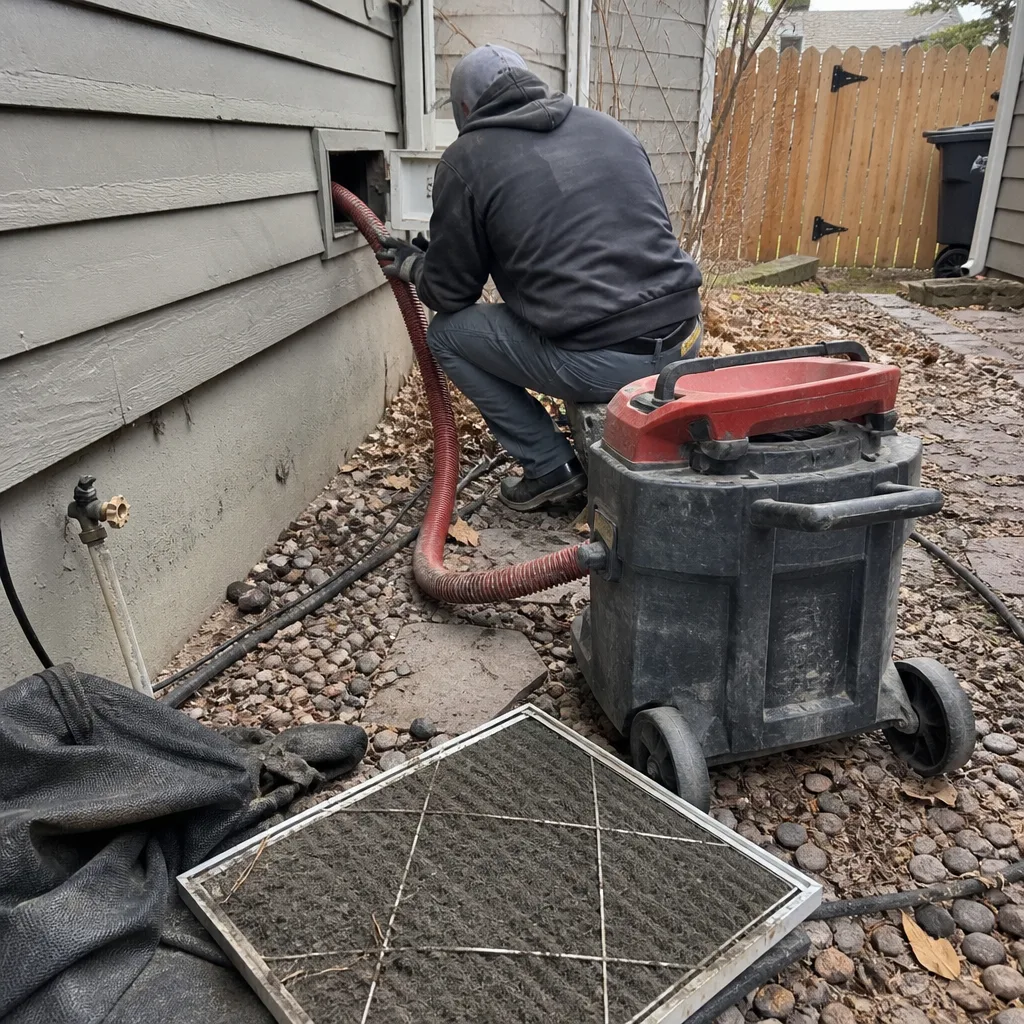 Before
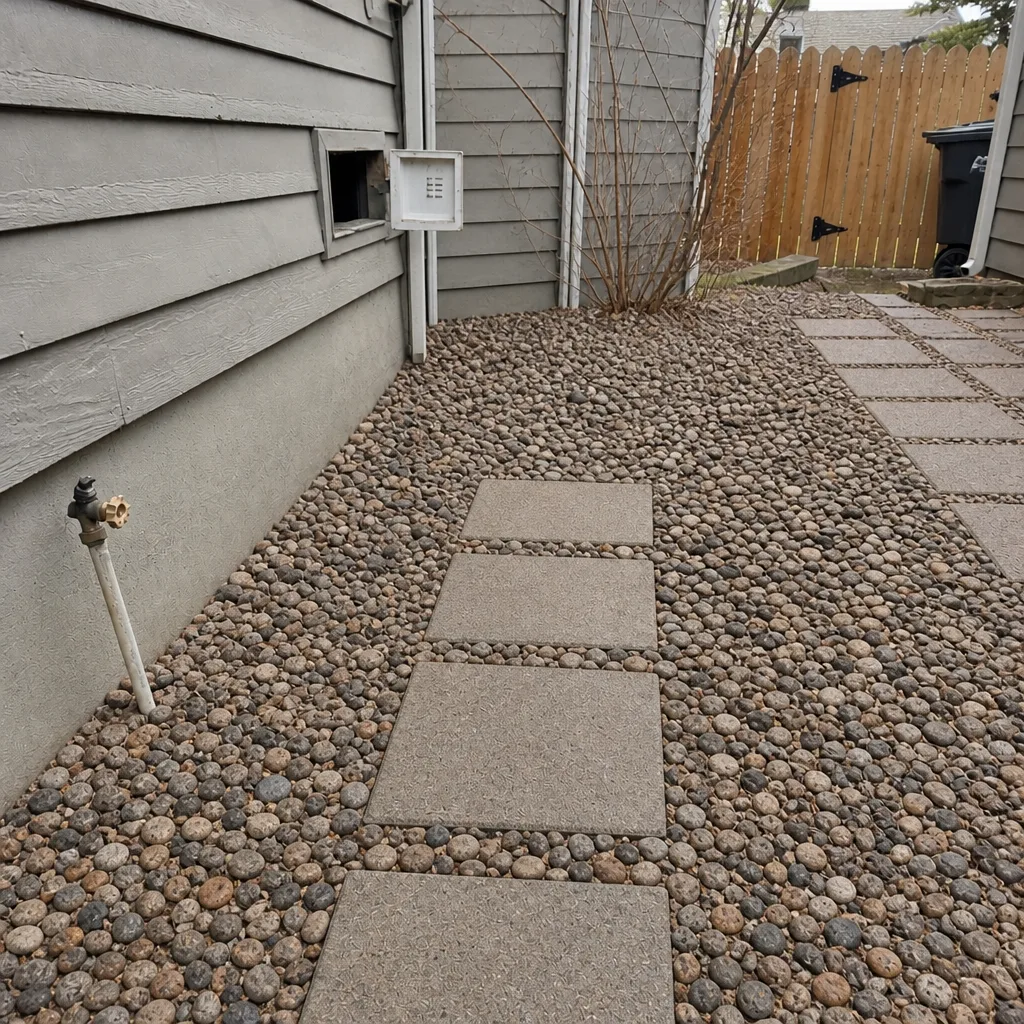 After
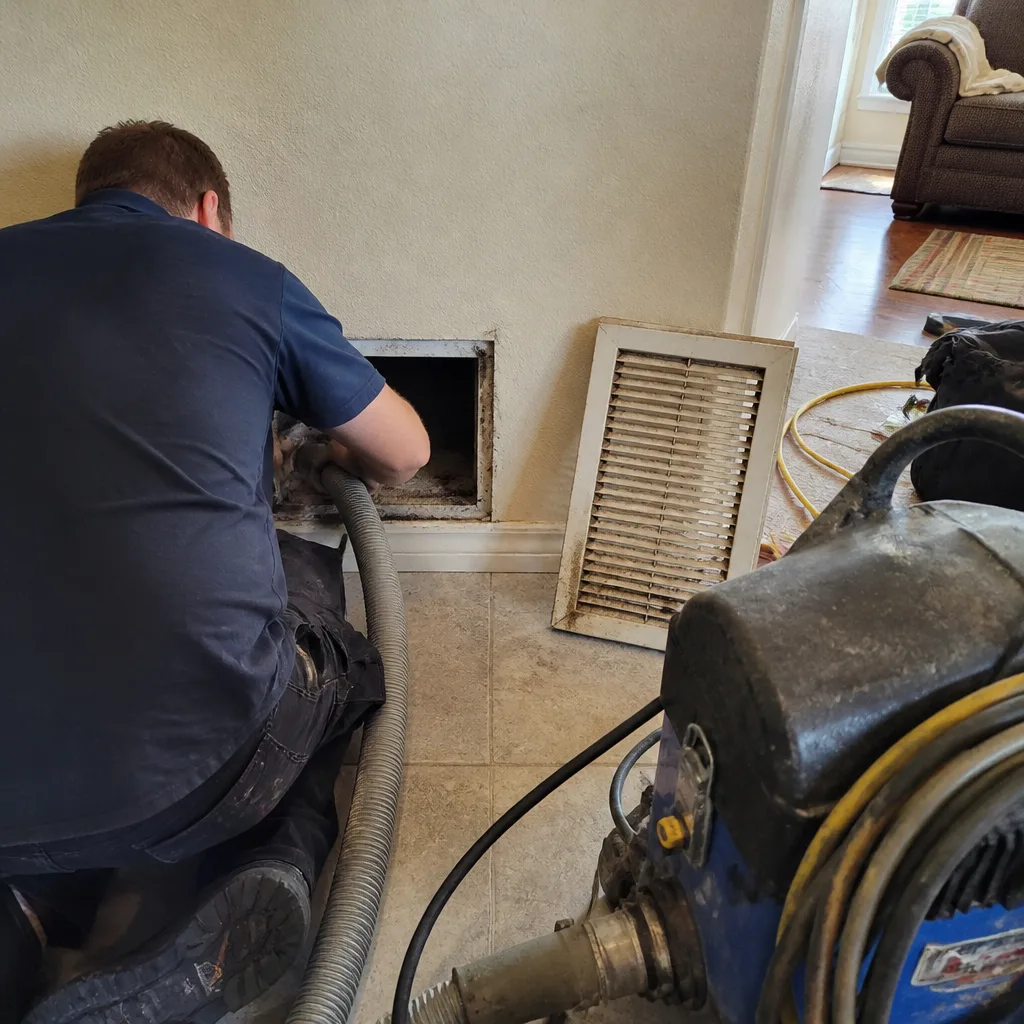 Before
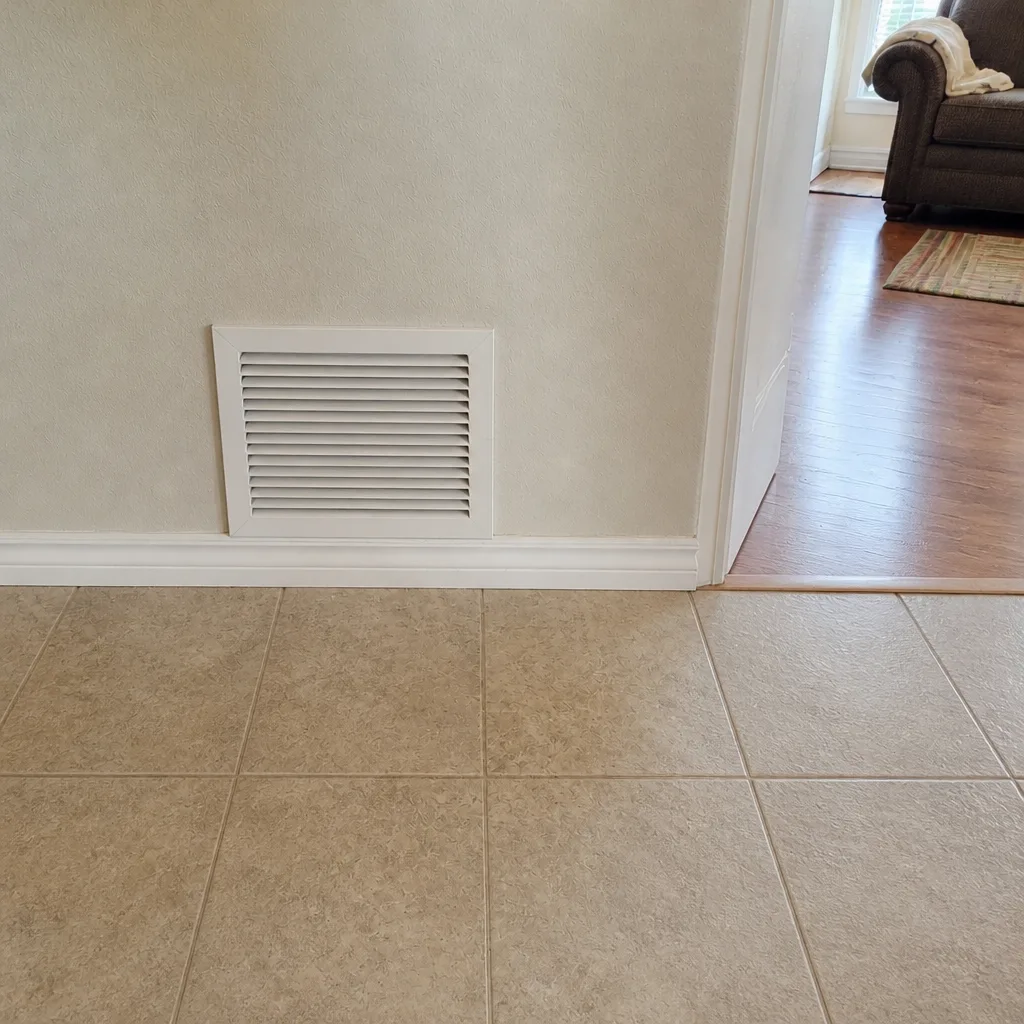 After
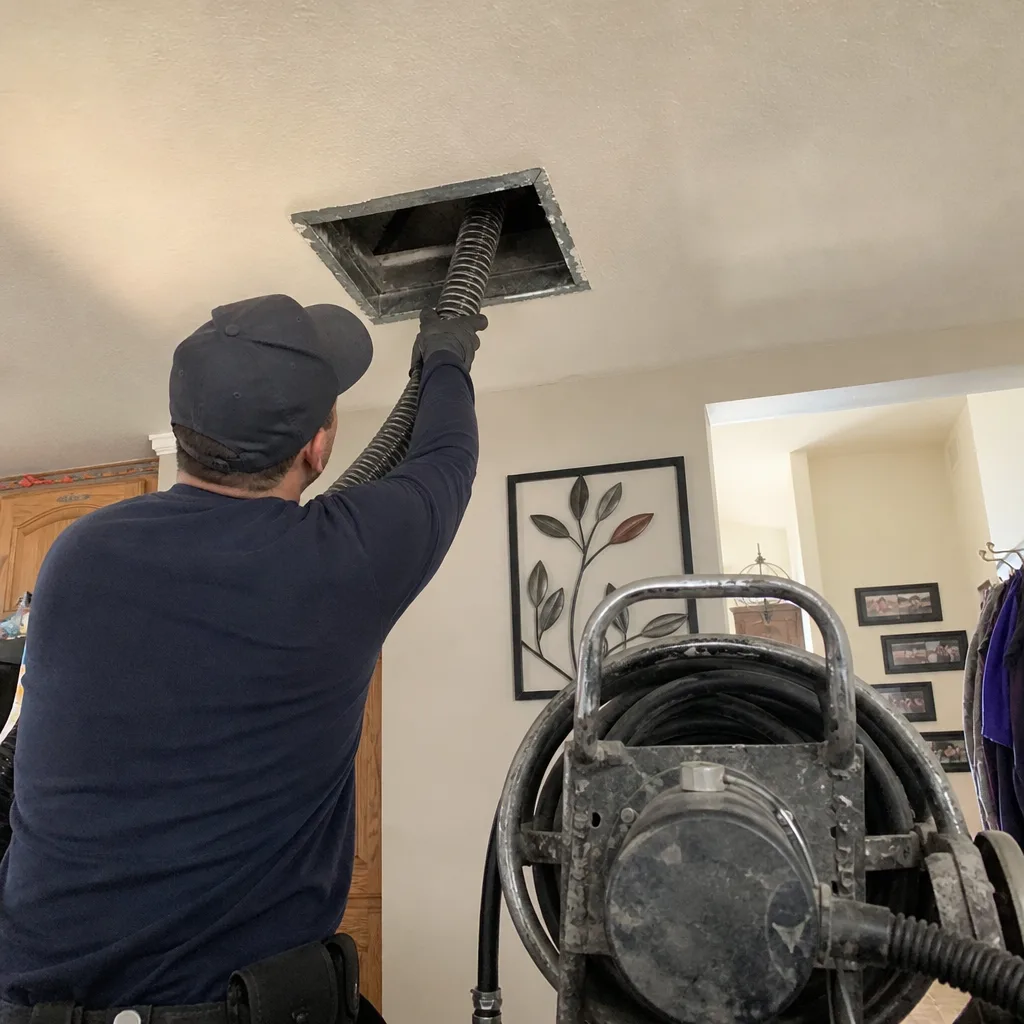 Before
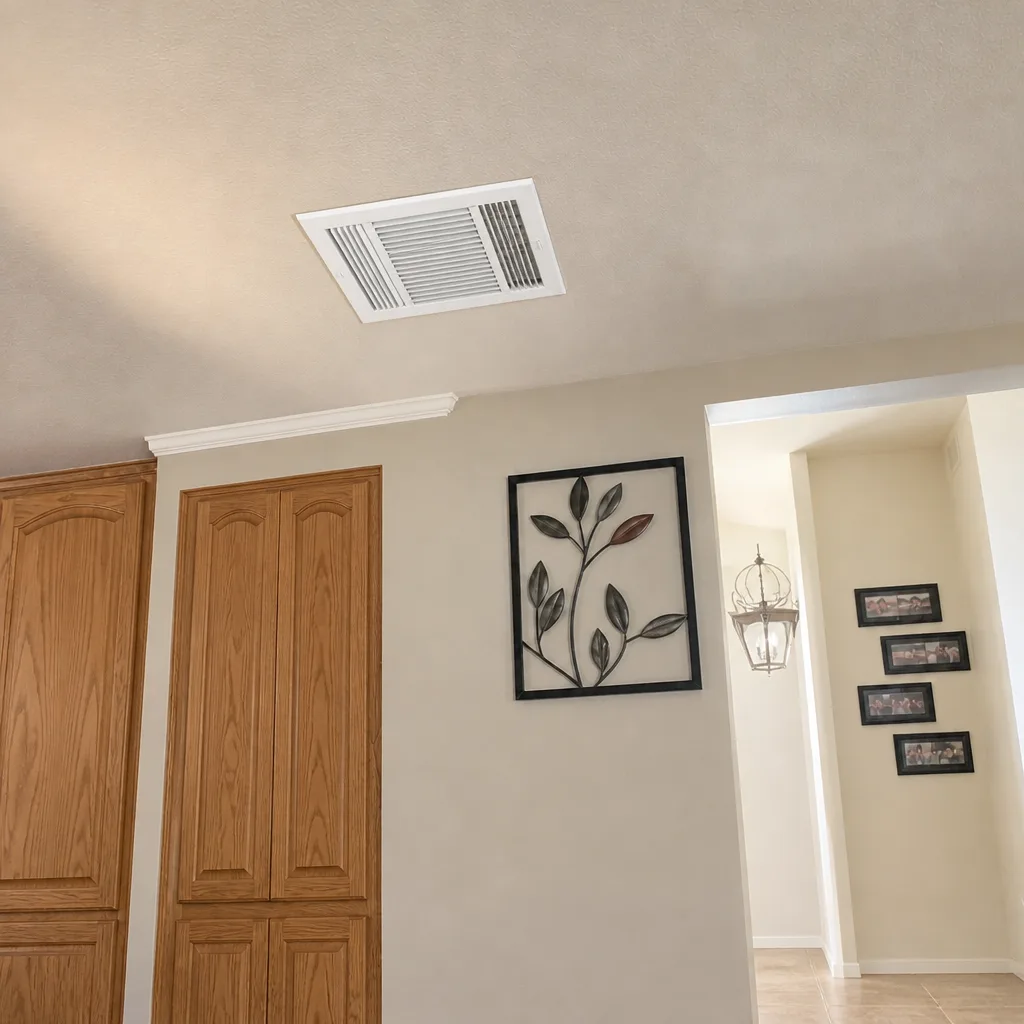 After
When to Call a Professional
Some situations are worth calling on, and some can wait. Call a professional when you’ve had a significant remodel and drywall dust is visible at the registers, when your system runs a Honeywell or Aprilaire whole-home filter and you want it cleaned as a complete system rather than as isolated runs, when the dryer runs hotter than it used to or lint is accumulating around the vent, when you’ve had a wildfire smoke event and the indoor air quality hasn’t recovered, or when a duct run is visibly disconnected or crushed and needs repair, not just cleaning. For homes in Boulder, the wildfire smoke season and the renovation cycle are the two most common reasons. Boulder Duct Cleaning offers free estimates in Boulder, and you can call (877) 550-7147 to schedule an assessment. We clean and we repair, and we use professional-grade equipment on both sides of the work.
Frequently Asked Questions
Pricing is set per job by a written estimate and depends on the size of the system, the number of supply and return runs, and whether repair or contamination-level work is involved. We don’t publish a number here because a flat whole-system quote in writing is the only fair comparison, and we don’t run coupon teaser pricing. Call (877) 550-7147 for a free estimate.
Because they aren’t quoting the same job. The cheapest quotes typically cover only visible runs with a portable vacuum, exclude the blower and coil, and rely on the on-site upsell to make the invoice profitable. Ask any low quote to specify the number of runs, the equipment, and whether the whole system is included. The gap usually closes fast.
Ask for before-and-after borescope footage as part of the service. If the contractor can’t provide it, you have no way to verify the work. This is the single most important thing to request, and any serious operator will provide it as a standard part of the job.
There’s no universal schedule. Homes with pets, recent renovation dust, or a history of wildfire smoke exposure need cleaning more often than a clean home with no triggers. Most homes fall in a multi-year cycle, and the trigger (new dust, new symptoms, visible debris, a remodel) is a better guide than a calendar. A free assessment will tell you where your system actually stands.
Cleaning itself generally isn’t licensed the way mechanical work is. But once a job crosses into duct repair, duct modification, or work on the HVAC mechanical components, most Colorado municipalities including Boulder require a licensed mechanical contractor for that portion. If the scope includes repair, ask for the license class.
Yes. We work with and service Honeywell and Aprilaire whole-home air filtration systems, including cleaning around filter housings, bypass dampers, and the duct runs those systems sit on. If your Boulder home runs one of these systems, mention it when you call so the scope of work accounts for it.
The Bottom Line
Hiring a duct cleaning contractor in Boulder isn’t about finding the cheapest ad. It’s about verifying three things: the equipment, the process, and the standing. Ask the CFM question, ask for the rotary brush answer, ask for borescope footage. Read the quote for vague “sanitizer” and “coating” line items. Ask about licensing the moment a job crosses into repair. The contractors who answer clearly are the ones who do the work. The ones who deflect are selling a coupon. Call (877) 550-7147 for a free estimate. We answer 24/7. Fast dispatch from 7am to 7pm, Sunday through Friday.
Written by the team at Boulder Duct Cleaning.