
Last updated November 15, 2026
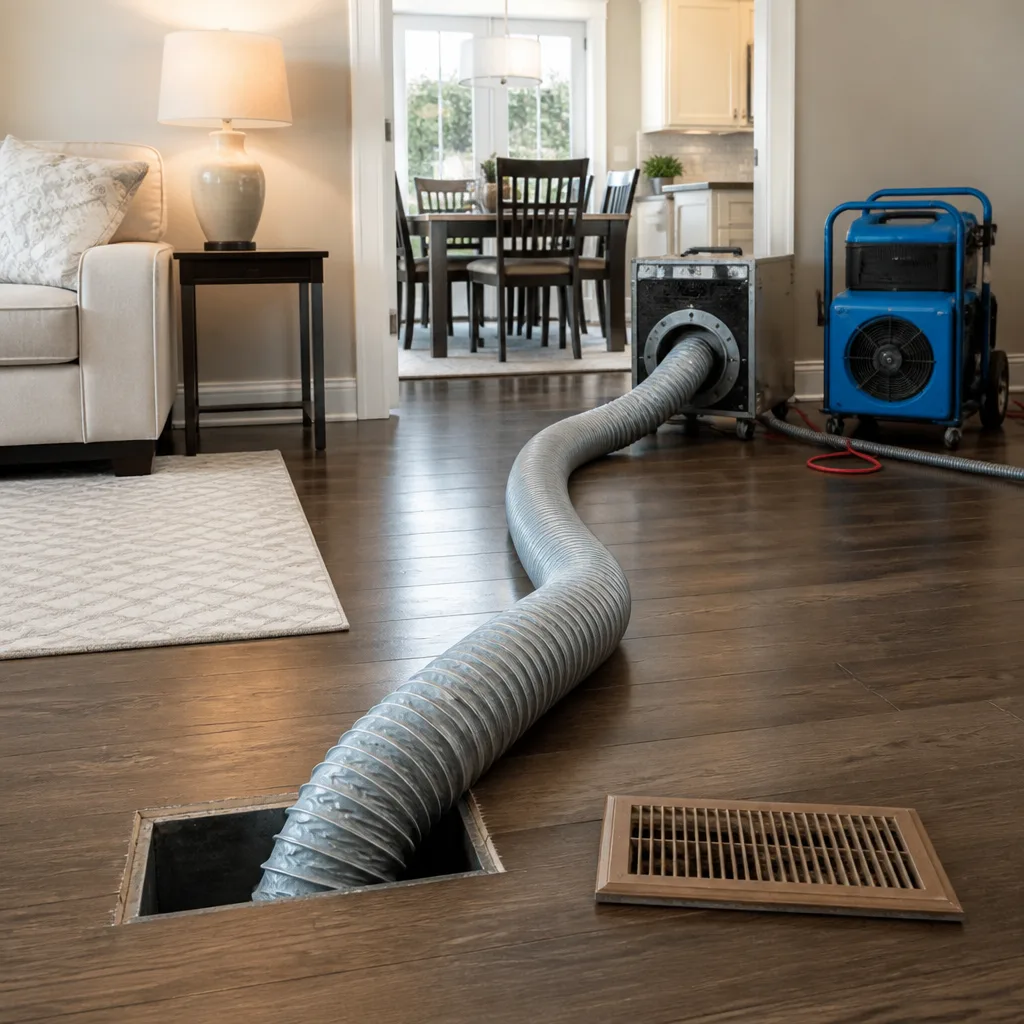 Whole-home duct cleaning
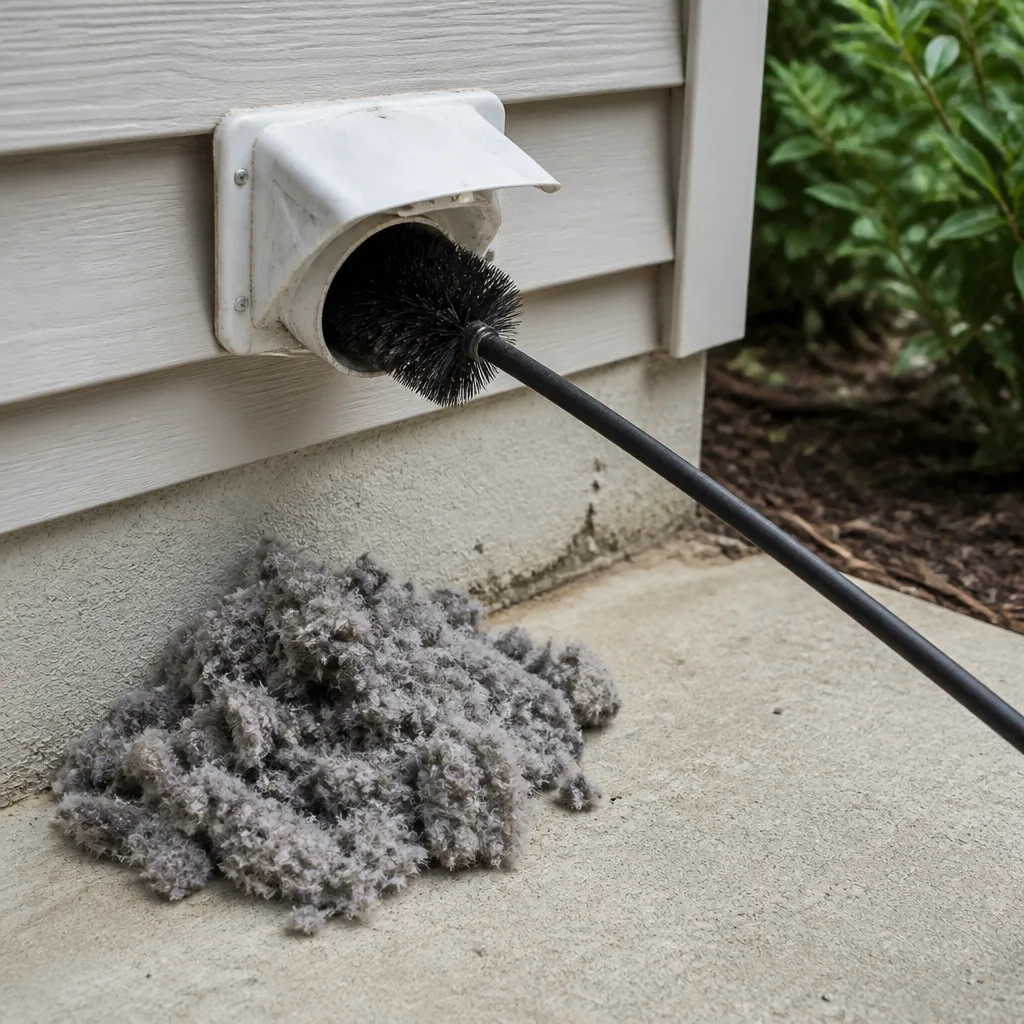 Dryer vent cleaning
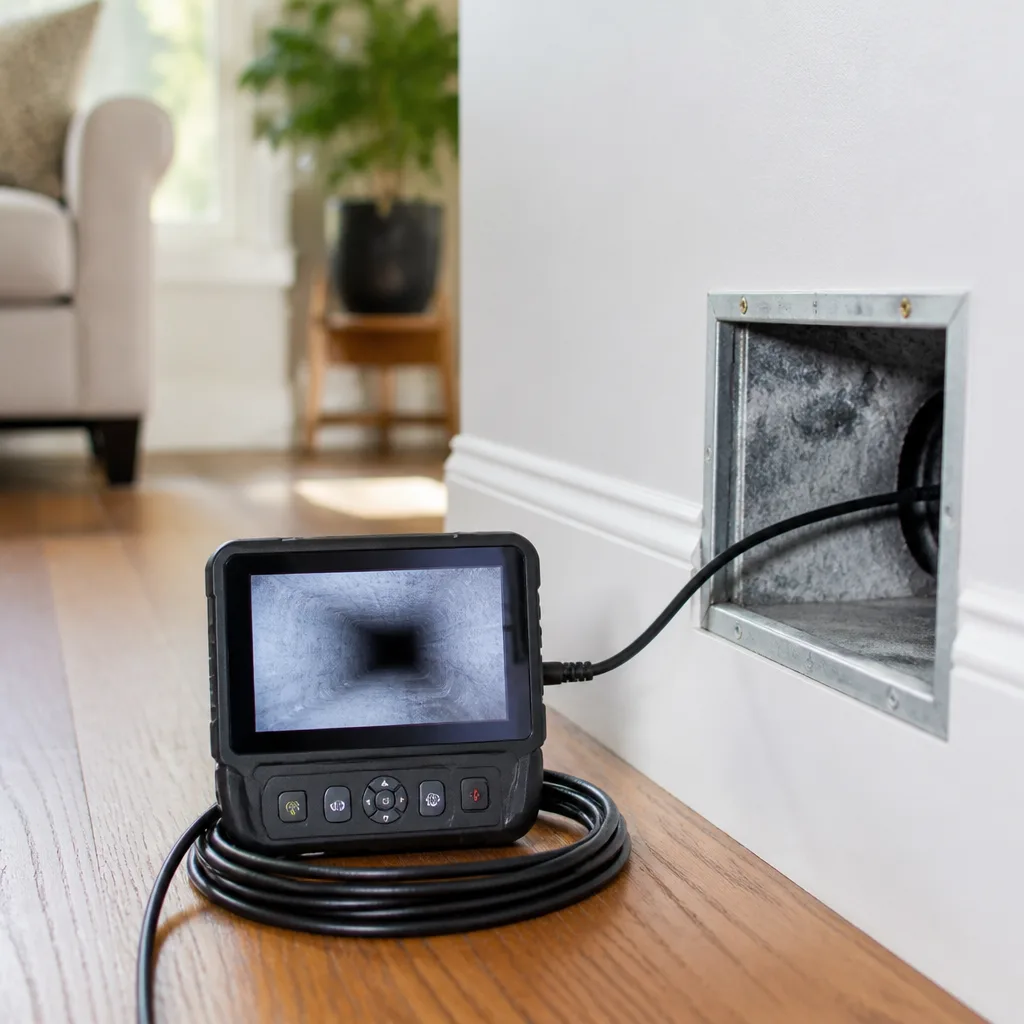 Camera inspection
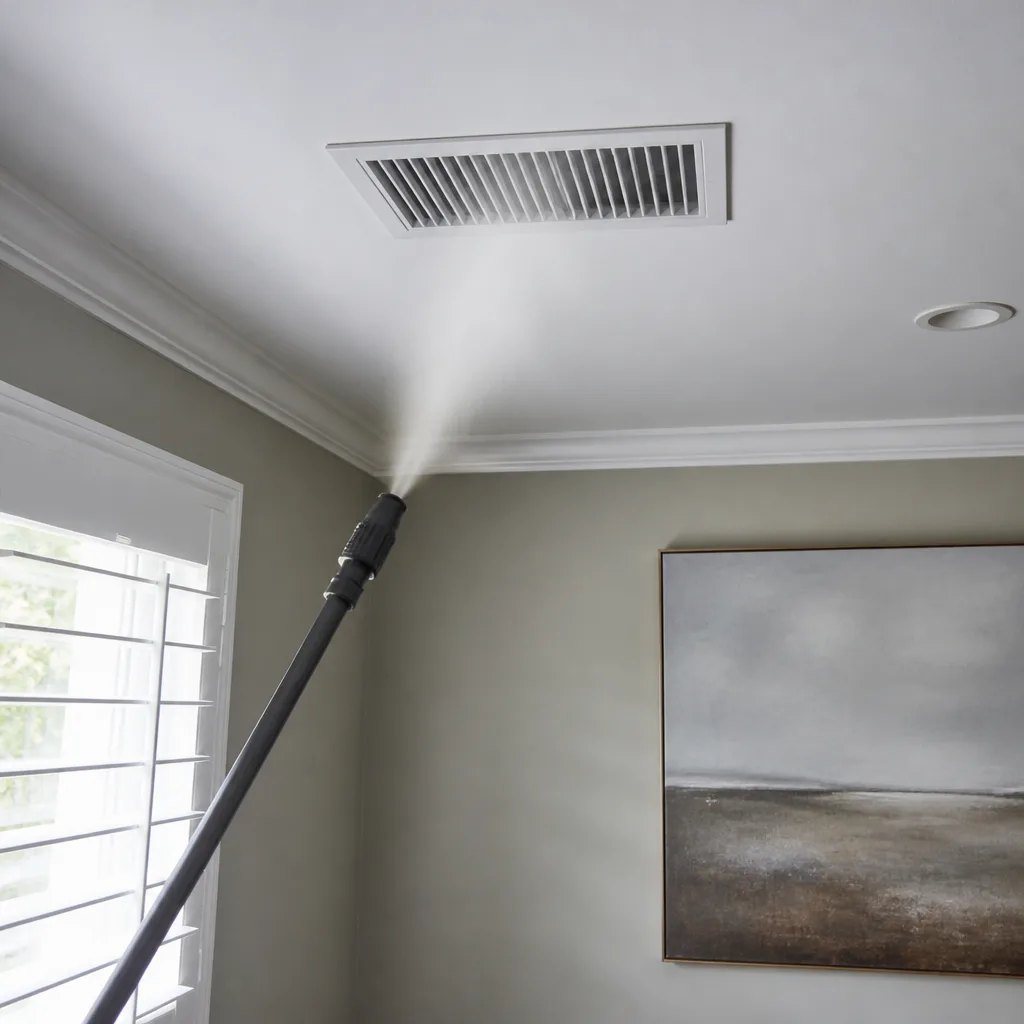 Sanitizing & deodorizing
Whole-system duct and dryer vent check with before-and-after photos - you see exactly what came out of your vents
That "$99 whole-house special" is a bait ad - the real number appears once they are in your hallway, or the "clean" is a shop-vac at the register. We photograph the inside of your ducts before and after instead.
The Complete Guide to Air Duct Cleaning in Boulder
Most Boulder homes built before 1990 have at least one duct section that hasn’t seen a brush or negative-pressure hose since installation. The 2020 and 2021 fire seasons likely pushed fine particulate past filters that weren’t rated to stop it. That combination – older galvanized trunks, decades of settled dust, and a new baseline of wildfire smoke in the air – means a lot of Boulder duct systems are carrying contamination their owners never planned for. This guide maps the whole process: the equipment, the correct sequence, and the local variables that generic cleaning advice skips. By the end you’ll know exactly what a legitimate job looks like before anyone knocks on your door.
Quick Answer
Air duct cleaning in Boulder means removing accumulated dust, debris, and fine particulate from the entire duct system using negative-pressure HEPA equipment and mechanical agitation – not just vacuuming the registers. A proper job starts with a borescope inspection, isolates the system under negative pressure, cleans zone by zone, and ends with camera verification and a static pressure check on the air handler. High-altitude conditions and wildfire smoke seasons make HEPA containment and source removal especially important here, and a contractor who can also repair damaged ductwork saves you from cleaning around a problem that will just re-contaminate.
Styles & brands we work with
- Whole-home duct cleaning
- Dryer vent cleaning
- Camera inspection
- Sanitizing & deodorizing
Table of Contents
- Why Boulder’s Climate Makes Duct Contamination Different
- How 5,430 Feet of Elevation Changes Airflow and Debris
- Wildfire Smoke and PM2.5: What Stays Behind in Your Ducts
- The Equipment a Real Duct Cleaning Job Requires
- The Correct Job Sequence, Step by Step
- What Borescope Inspection and Static Pressure Testing Reveal
- Cleaning Versus Repair: Why the Two Belong Together
- Red Flags in a Finished Job
Why Boulder’s Climate Makes Duct Contamination Different
If you’ve read a national duct cleaning guide, you’ve read advice written for a house in a humid, sea-level, temperate climate. Boulder isn’t that house. Our air is dry for most of the year, our UV load is high, and our winter heating season runs long. Those three facts change how dust behaves inside a duct system.
Dry air means dust stays airborne longer instead of clumping and settling quickly. Fine particles keep circulating through the return side until a filter catches them – and most residential filters catch far less than their owners assume. Long heating seasons mean the blower runs more total hours, so every gram of dust in the system gets more trips through the house. Combine that with the pine, juniper, and grass pollen that blankets the Front Range in spring and triggers a lot of our calls, and you get a specific accumulation pattern: fine, dry, adhesive dust that coats duct walls in an even film rather than forming the heavy clumps you’d see in a damp climate.
Older Boulder housing stock adds another layer. Homes built in the mid-to-late 20th century often have original galvanized sheet-metal trunks with flex branch runs that were added later, sometimes during a remodel or an addition. Those systems commonly have loose joints, disconnected sections hidden above finished ceilings, and branch runs that were never sealed. If you live in a neighborhood like Martin Acres, Table Mesa, or the older streets around Mapleton, there’s a good chance your system has at least one duct section that’s never been properly cleaned.
When you’re evaluating a Boulder duct cleaning company, this is the context to bring to the conversation. Ask specifically how they handle dry-climate dust films and whether they inspect joints and connections, not just the visible register openings.
How 5,430 Feet of Elevation Changes Airflow and Debris
Air at 5,430 feet is thinner than air at sea level, and that has real mechanical consequences for a forced-air system. Your blower moves a given volume of air, but because the air is less dense, the system must work against different pressure dynamics to deliver the same heating and cooling to the rooms. When ductwork has accumulated dust and the filter is loaded, static pressure climbs – and at altitude, a marginal system feels that resistance sooner than a sea-level system would.
What that means for the homeowner in practical terms:
- Uneven delivery shows up first in the far rooms. Before you blame the furnace or the thermostat, blocked or dust-loaded ductwork and a dirty filter are worth ruling out. A duct cleaning with a static pressure check on the air handler tells you where the restriction actually is.
- Higher blower effort. A restricted system makes the blower run harder, which is one reason a nominal “it still heats fine” system can still be losing efficiency quietly.
- Dust films adhere to duct walls. In our experience, dry high-altitude dust builds an even coating on galvanized surfaces that a standard shop vacuum won’t lift. It takes mechanical agitation – a rotating brush system – to break the film off the metal before the vacuum can capture it.
The takeaway: static pressure testing isn’t a bonus step. On a high-altitude system, it’s how you confirm the cleaning actually opened the system back up.
Wildfire Smoke and PM2.5: What Stays Behind in Your Ducts
Ordinary household dust is a mix of skin cells, fabric fibers, pet dander, and tracked-in soil. Wildfire smoke is different. The fine particulate in smoke is small enough to pass through standard filters, and when it does pass through, it doesn’t just disappear. It settles on duct surfaces, in plenum boxes, on the evaporator coil, and on the blower wheel. It tends to be fine, sticky, and odorous – and unlike coarse dust, it doesn’t come off with a quick vacuum pass.
If your home was closed up during a heavy smoke season, the HVAC system was recirculating that air. The filter caught what it was rated to catch; the rest went into the system. The result is often a faint smoke or char smell every time the heat kicks on, or a dust film that seems to reappear shortly after you clean the visible surfaces.
This is where equipment separates a real job from a cosmetic one. Cleanup after smoke infiltration is closer to restoration work than routine dust removal, because the goal is source removal of fine particulate from the full system under containment. A rig that exhausts back into the room can redistribute a fine particulates you’re trying to remove. That’s why HEPA-filtered negative-pressure equipment – the kind sold by Nikro and Abatement Technologies – is non-negotiable for post-wildfire cleaning. These units create containment so fine particulate is captured at the point of agitation and pulled out of the home rather than pushed into the living space.
We keep Abatement Technologies equipment on the truck inventory specifically because some situations are contamination-level rather than routine. If you’ve gone through a smoke event, an indoor mold scenario, or a major renovation with drywall dust, the cleaning protocol should be built around containment from the first minute – not fitted around a standard vacuum.
The Equipment a Real Duct Cleaning Job Requires
Ask any duct cleaning contractor what they’re bringing and you’ll learn a lot from the answer. “Professional equipment” is a phrase every website uses. Specific brand names are harder to fake, because the tools do specific things.
The core machines
- Rotobrush contact-cleaning systems. These agitate the duct walls with rotating brush heads driven into the duct through access openings, breaking dust films off the metal so the vacuum can capture them. Contact cleaning is what separates a real cleaning from a vacuum pass at the register.
- Nikro negative-air and HEPA units. Negative-air containment is what keeps fine particulate out of your living space. The vacuum pulls the system into negative pressure while the brush agitates, so loosened debris has one path out.
- Abatement Technologies equipment. Brought in when the situation calls for contamination-level handling – fine smoke particulate, mold spores, renovation dust. These units are built to capture what a standard vacuum can’t.
Filtration systems you already own
Many Boulder homes run a whole-home filtration unit or an inline media cabinet alongside the furnace. If you’ve got a Honeywell or Aprilaire system in place, cleaning the ducts without addressing the filter media, the cabinet, and the bypass is only half the job. We’re trained on both systems and service them as part of the wider indoor air quality picture, not just the duct run.
For the full scope of what we do, see air duct cleaning in Boulder.
The Correct Job Sequence, Step by Step
Sequence matters as much as equipment. A job done in the wrong order redistributes debris and leaves you with a bill and no improvement. Here’s the order a legitimate duct cleaning in Boulder follows:
- Borescope inspection before any agitation. A camera is pushed down the main trunk and into branches to see the actual condition – dust depth, debris, mold indicators, disconnected runs, animal intrusion. You should see the footage.
- Catalog every register opening. Supply and return registers are counted and mapped so the crew knows every zone before anything gets touched.
- Cut access openings where needed. On a system with a long trunk run, the crew will often cut access doors through the sheet metal at intervals to reach the full duct length. These get sealed with proper access panels after the job.
- Negative pressure isolation. The HEPA vacuum is connected and the system is pulled into negative pressure so loosened debris exits the house rather than entering the rooms.
- Zone-by-zone mechanical brushing. Rotobrush contact cleaning goes through each duct section, one at a time, with the vacuum running the whole time.
- Component cleaning. The blower wheel, evaporator coil, and plenum box get cleaned too – these are where fine dust settles most heavily.
- Post-clean camera verification. The borescope goes back in. Before-and-after footage should be part of the delivery, not something you have to ask for.
- Static pressure test on the air handler. A reading taken before and after tells you the system is actually breathing more freely.
If you’re seeing this list for the first time and wondering whether your last duct cleaning included steps three through eight, that’s exactly the skepticism to carry into your next booking.
What Borescope Inspection and Static Pressure Testing Reveal
Inspection is where a cleaning job earns its trust. A camera down the duct finds things a register view can’t: a disconnected branch in a wall cavity feeding dust into the room it’s supposed to heat, a collapsed flex run under a floor, pest intrusions, or a coil so loaded with fine particulate that the airflow restriction is working against the blower every cycle.
Static pressure testing gives you the number that corresponds to what the camera found. It’s measured at the air handler – the pressure difference between the return and supply sides – and it tells you how hard the blower has to work to move air. A restricted system reads high; a clean system reads closer to the equipment’s design range.
What’s worth asking your contractor for:
- Borescope footage of the main trunk before the cleaning starts
- The same footage from the same locations after the job
- Static pressure readings at the air handler before and after
- A written note of any access openings cut and how they were sealed
Any reputable duct cleaning contractor should be comfortable producing all four. If the request gets deflected, that tells you what you need to know.
Cleaning Versus Repair: Why the Two Belong Together
We clean and we repair, and the two aren’t separate conversations. A thorough cleaning that finds a disconnected duct joint or a crushed flex run above a finished ceiling is only half a solution if the structural problem is left in place. Debris will re-enter the system from the same opening, and the room that duct serves will keep getting less air than it should.
Air duct repair covers the structural side of that:
- Reconnecting separated joints in the trunk and branch runs
- Replacing crushed or kinked flex duct that restricts flow
- Sealing leaky connections at the air handler and plenum
- Fabricating replacement access panels where the original ones are missing or damaged
- Replacing failed duct insulation that’s breaking down into the system
When a repair is needed, we identify it during inspection and quote the work before cleaning starts, so you know the full scope and the flat price for the job rather than discovering it afterward. If the ducts are worth cleaning, they’re worth repairing – and if they need repair, cleaning without it wastes the effort.
Red Flags in a Finished Job
You don’t have to be an HVAC technician to spot a job that wasn’t done to standard. Here’s what to check when the crew says they’re finished:
- No before-and-after camera footage. The single biggest indicator. If the crew can’t show you what the duct looked like before and after, you can’t verify the work happened.
- No HEPA containment. If the vacuum is a shop-vac style unit with a plain filter bag, the fine dust from the job just went back into the air.
- No static pressure test on the air handler. Without it, there’s no proof the cleaning actually improved airflow.
- Access openings cut but not sealed. Look for open panels, loose tape, or gaps in the sheet metal after the job. Those are leaks.
- No sight of the equipment. If you never saw the Rotobrush, the Nikro vacuum, or the Abatement unit brought in, ask why.
- Registers left dusty. A proper cleaning should leave the visible register grilles clean as part of the process, not coated in the same dust you had before.
Any of these on its own is worth a conversation. Two or more, and you’re dealing with a job that was sold as a full cleaning and performed as a surface wipe.
Common Mistakes to Avoid
- Basing the decision on the coupon price. The lowest bid in any market is usually a low-ticket vacuum pass at the register, not a full system cleaning. Ask what the coupon actually covers before you book – the answer is usually “the registers,” and the ducts stay dirty.
- Booking without a borescope inspection. No legitimate contractor should quote and clean without seeing the actual duct condition. The inspection determines the scope, and skipping it means you’re paying for a guess.
- Letting a cleaning crew skip the air handler. The blower wheel and evaporator coil are where fine particulate settles most heavily. If those aren’t cleaned, the system is still contaminated even after the ducts are done.
- Ignoring the furnace filter while you’re at it. A high MERV filter on a system with dirty ducts loads fast. Get the ducts cleaned and then step up the filter rating, not the other way around.
- Skipping the dryer vent because it “still works.” A dryer vent is a fire-safety service, not a convenience add-on. If your dryer runs hot or takes multiple cycles, the vent is likely restricted – and that restriction is a hazard, not just an inefficiency.
- Not checking on filtration equipment during the visit. If you have a Honeywell or Aprilaire whole-home system in place, have it serviced during the same visit. Cleaning the ducts but leaving a failing filter cabinet in place is a partial job.
- Choosing a contractor who won’t repair. Boulder’s older housing stock has plenty of duct systems with disconnected runs and crushed flex. If the only service you’re offered is cleaning, ask how they plan to handle the repair that inspection will find.
See the difference
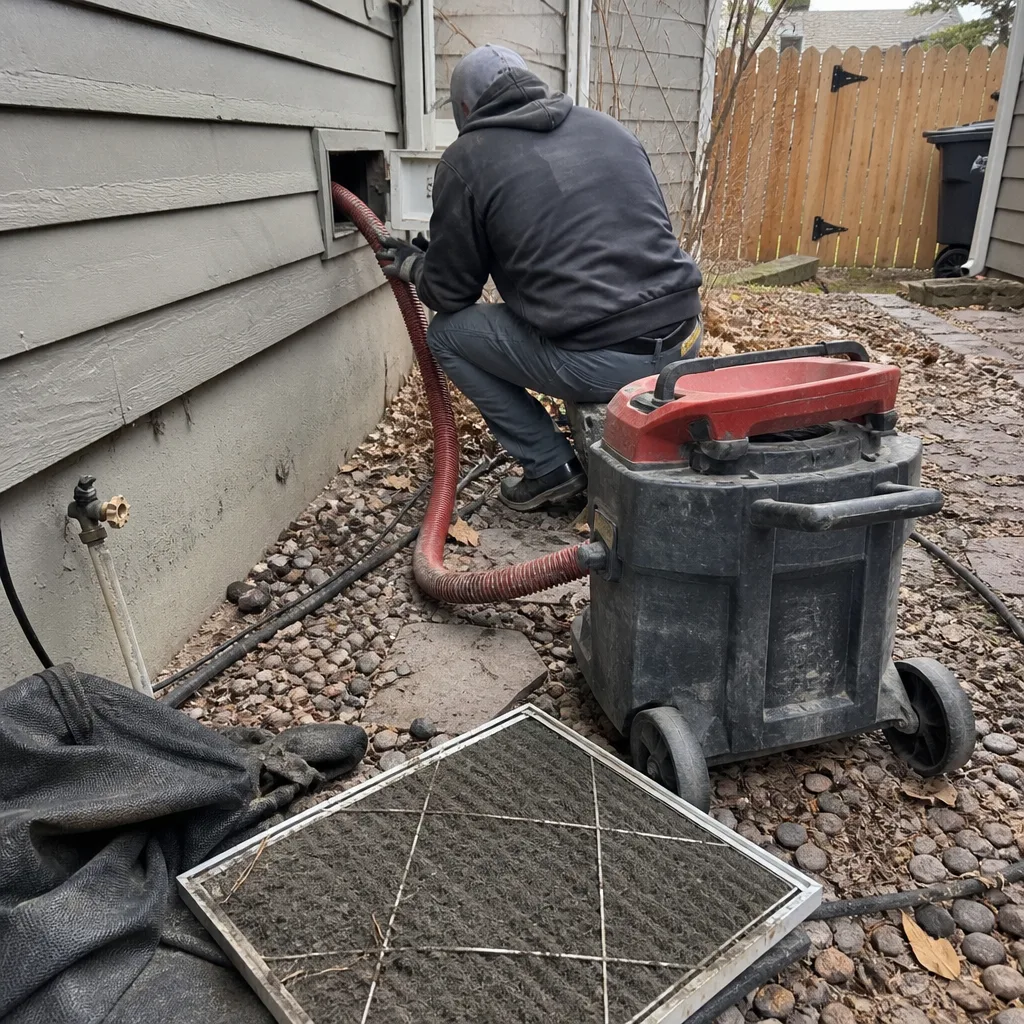 Before
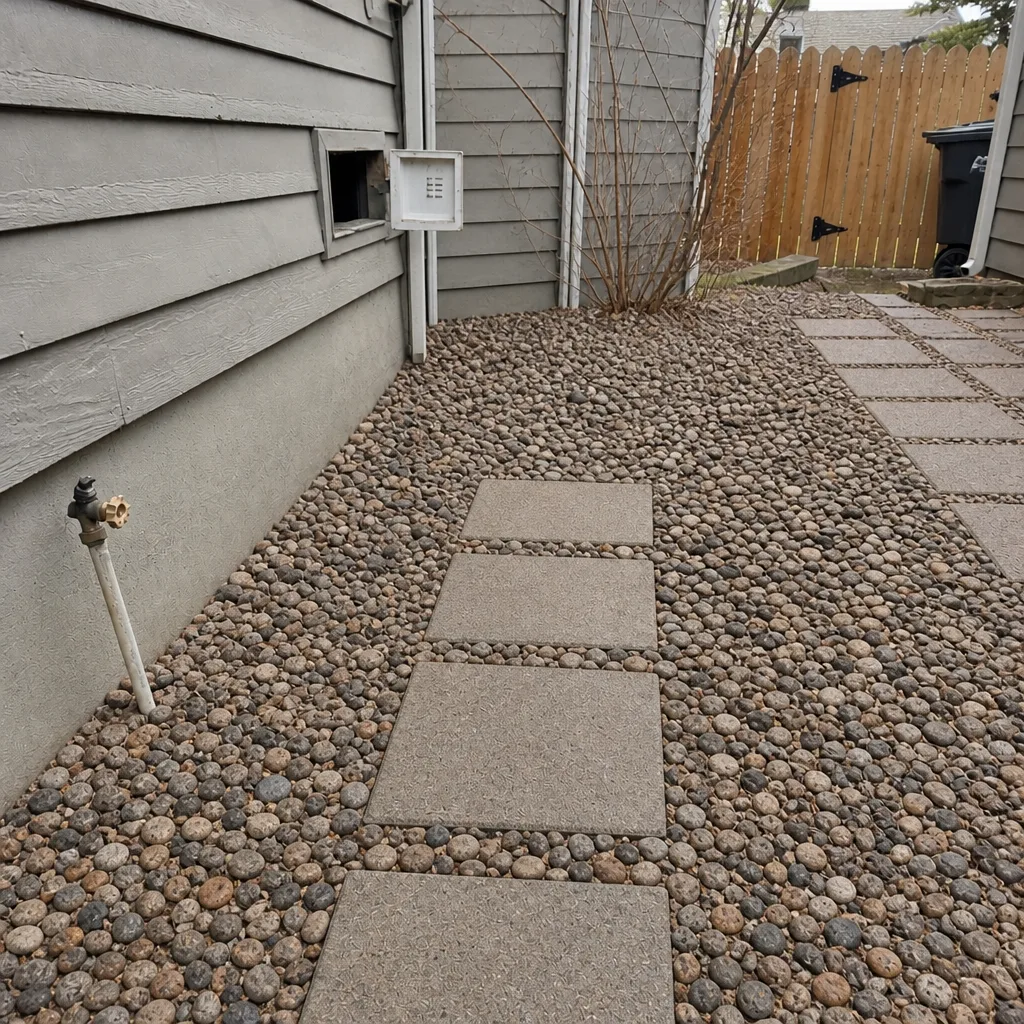 After
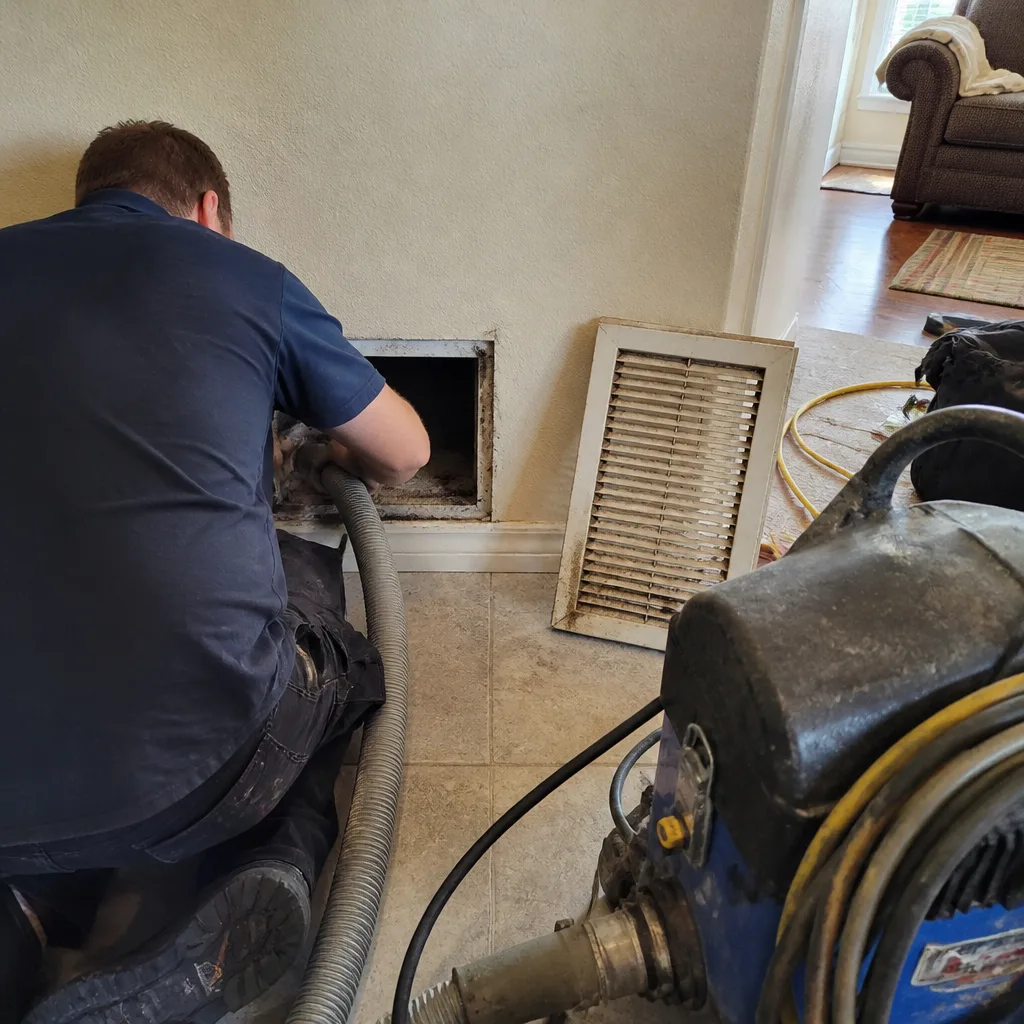 Before
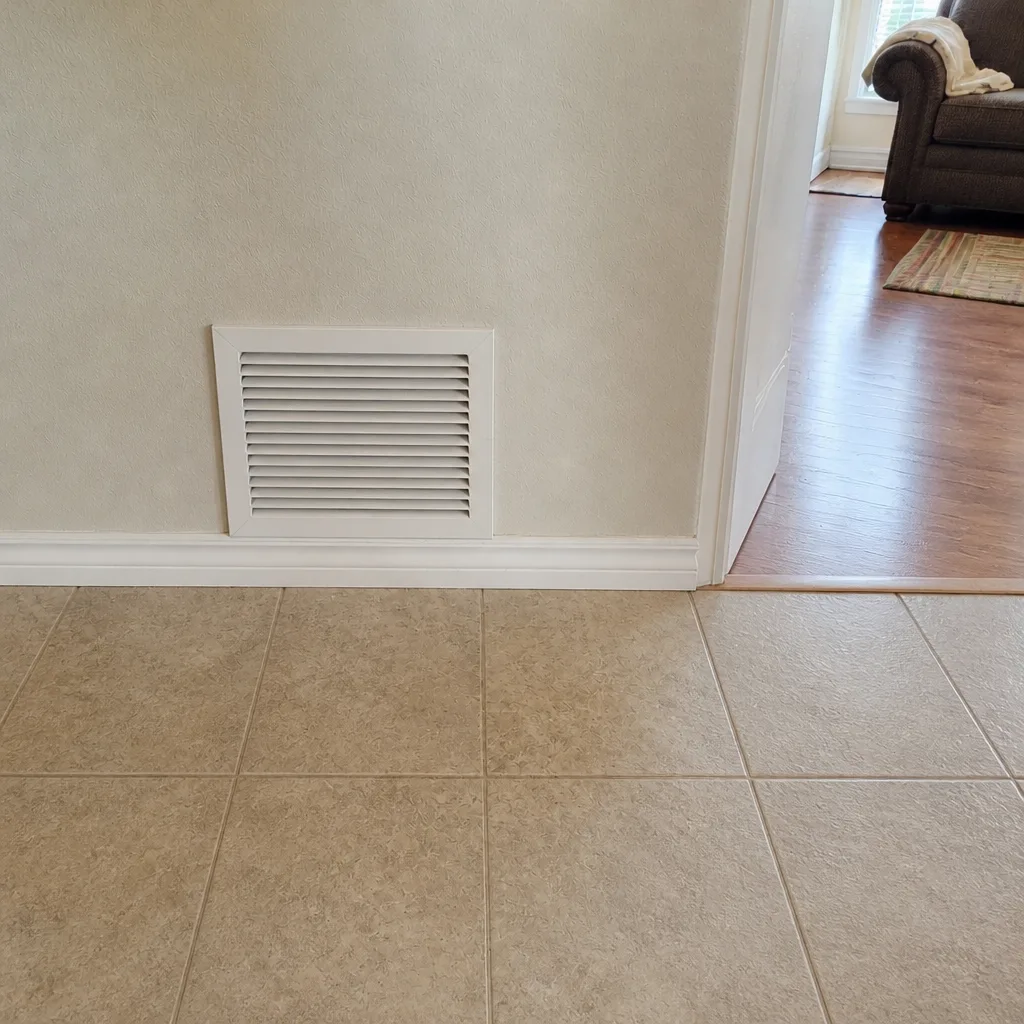 After
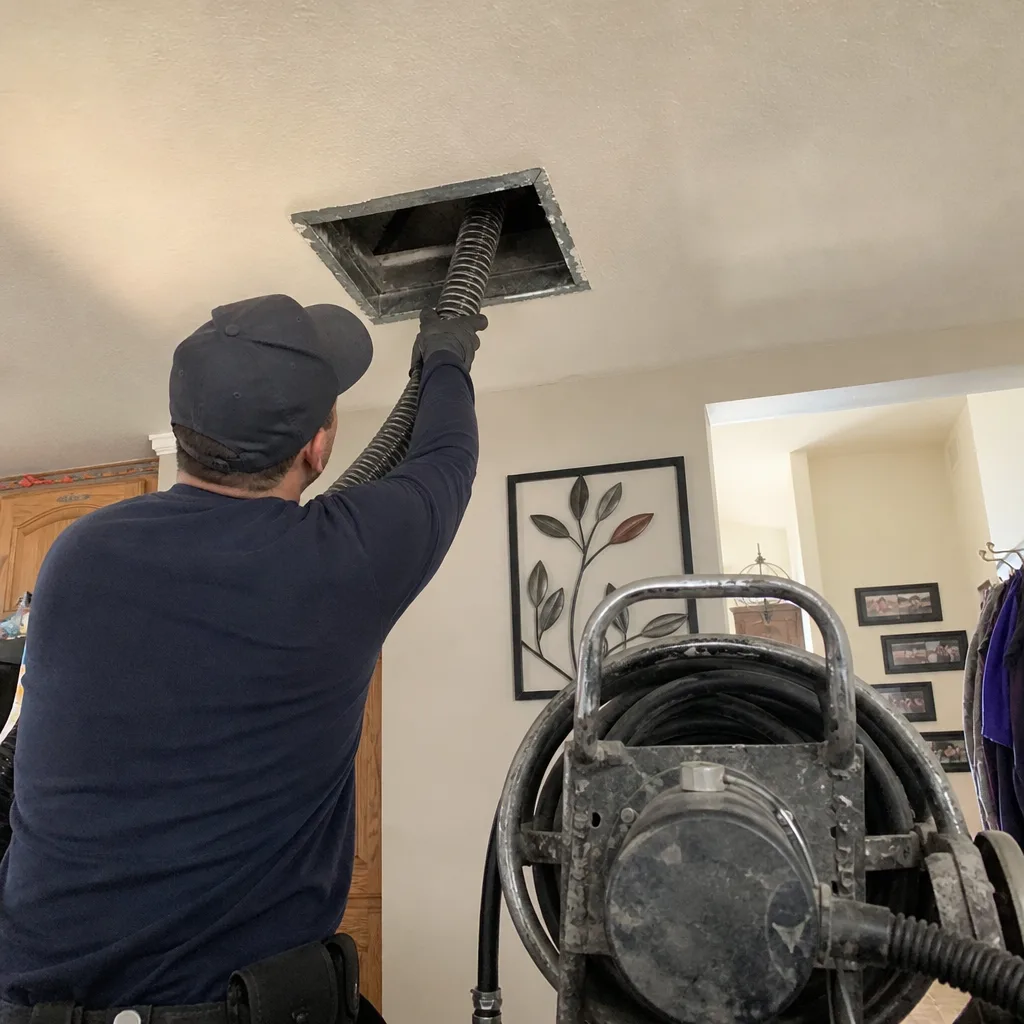 Before
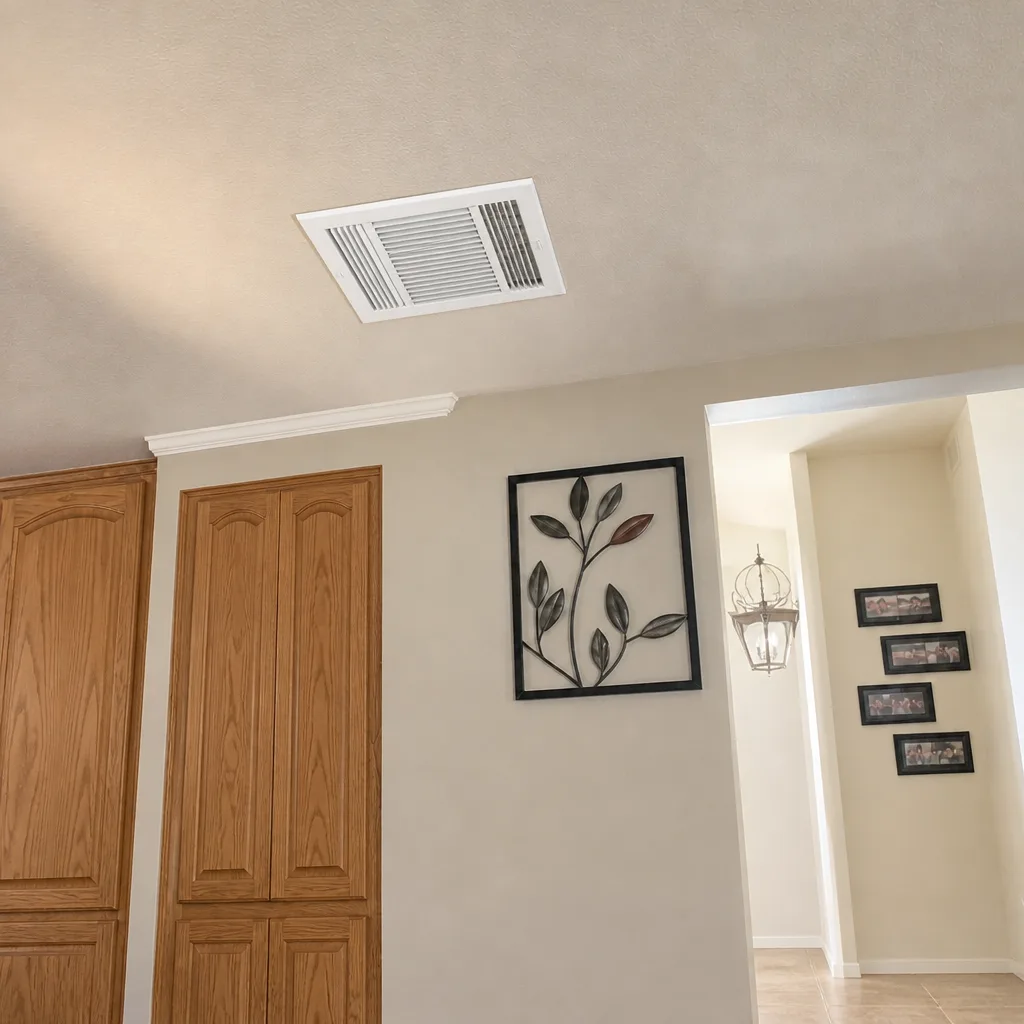 After
When to Call a Professional
Some situations call for a professional visit rather than a wait-and-see approach. If you notice a persistent dust film reappearing on surfaces shortly after cleaning, a faint smoke or char smell every time the heat comes on, or a string of allergy symptoms that track with your HVAC cycling, the system is worth inspecting. If your dryer runs hot to the touch or takes more than one cycle to dry a load, treat that as a fire-safety reason to book a dryer vent cleaning visit. If you’ve had a renovation with drywall dust, a smoke event, or visible mold near registers, the cleaning protocol needs containment from the first minute. And if a previous contractor left you with unsealed access openings or a doubt that the work happened at all, an inspection will tell you what’s actually in the system. Boulder Duct Cleaning offers free estimates in Boulder – call (877) 550-7147.
Frequently Asked Questions
Typical pricing is a flat price per system, agreed in writing before work starts, based on the number of registers, system size, and condition found during inspection. We don’t quote per-vent prices or teaser coupon figures, because those numbers are what turn into a much larger invoice once the technician is on site. The written estimate sets the final price. Call (877) 550-7147 for an exact quote – estimates are free.
Because they’re usually not quoting the same job. A low quote typically covers a vacuum pass at the visible registers, often with a shop-style vacuum that doesn’t provide HEPA containment, and with no borescope inspection, no mechanical contact cleaning, no static pressure test, and no repair capability. A full cleaning with negative pressure, contact brushing, and post-clean verification takes a crew and equipment that a low bid doesn’t bring. Call (877) 550-7147 for an honest scope and a flat price.
You ask for the evidence at the end of the job. A legitimate duct cleaning leaves you with borescope footage of the duct before and after the cleaning, static pressure readings at the air handler before and after, and a written note of any access openings cut and sealed. If you can point to the equipment used (Rotobrush contact cleaning, Nikro or Abatement negative pressure) and watch the inspection camera, you know what was done. Call (877) 550-7147 to book a cleaning with verification built in.
For a typical Boulder home, every three to five years is a reasonable starting point, but the answer depends on your system, your filter rating, whether you have pets, and whether you’ve been through a smoke event or renovation. Dry-climate dust accumulation, long heating seasons, and wildfire smoke seasons push some homes toward the shorter end. If you’ve never had the system inspected, an inspection now establishes the baseline. Call (877) 550-7147 for a free estimate.
Yes, in two ways. Thinner air at 5,430 feet means your blower works against different pressure dynamics than a sea-level system, so a marginal restriction from dust-loaded ducts shows up sooner. And dry high-altitude dust builds an even film on duct walls that a standard vacuum won’t lift, which is why mechanical contact cleaning matters here. Call (877) 550-7147 to schedule an inspection with a static pressure check.
If your home was closed up through a heavy smoke event, fine particulate from the smoke was likely pushed past your filters and into the duct system, where it settles as a sticky film that a routine vacuum pass won’t remove. The correct protocol uses HEPA-filtered negative-pressure equipment (Nikro and Abatement Technologies units) to contain the fine particulate during cleaning. If you’ve noticed a faint smoke smell when the heat comes on, that’s the system telling you. Call (877) 550-7147 for an evaluation.
The Bottom Line
Boulder’s combination of altitude, dry air, older housing stock, and wildfire smoke seasons creates duct conditions that generic cleaning advice doesn’t cover. The correct job is the full sequence: borescope inspection, negative pressure isolation, zone-by-zone mechanical brushing with a system like Rotobrush, component cleaning, post-clean camera verification, and a static pressure check on the air handler. A contractor who can also repair ductwork and service Honeywell and Aprilaire filtration systems gives you a complete solution rather than a partial one. When you’re ready to book, ask specifically what equipment arrives and what proof leaves with the crew.
Call (877) 550-7147 for a free estimate on air duct cleaning, dryer vent cleaning, or air duct repair in Boulder. We answer 24/7. Fast dispatch from 7am to 7pm, Sunday through Friday, and we’re closed Saturday. You’ll get a written estimate before any work starts, so the price you agree to is the price on the invoice.
Written by the team at Boulder Duct Cleaning.